Criminal Law & Bail | Blog | Bijlani & Co.
Quick Answer
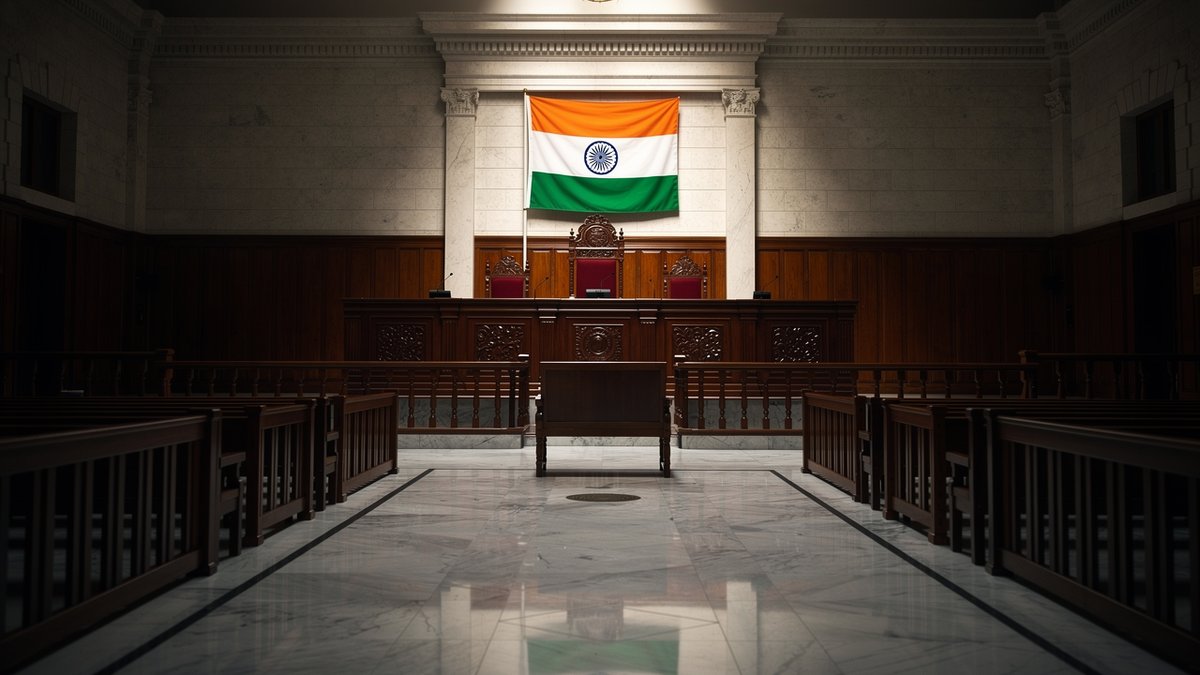
Criminal Law Blog in Delhi
Professional legal representation at Delhi courts. 48-hour filing. Call 085958 09471.
Bijlani & Co. handles criminal matters across Delhi NCR - FIR responses, regular and anticipatory bail, FIR quashing, NDPS cases, cyber crime under the IT Act, and trial defence before the district courts of Ghaziabad, Gurgaon, Noida, Faridabad and Delhi, with appeals at the Delhi High Court. This hub gathers the firm’s criminal law explainers in one place, so you can read the full journey from FIR to verdict before you book a consultation.
Understanding FIRs
An FIR - the First Information Report - is the legal starting point of any criminal investigation in India. Under Section 173 of the Bharatiya Nagarik Suraksha Sanhita (BNSS, 2023), the police must register an FIR for every cognizable offence reported to them and share a copy with the complainant. In Delhi NCR, the FIRs that affect our clients most often arise out of false or exaggerated complaints in business and matrimonial disputes, recovery of dues by coercive means, and property-related allegations. If you find your name in an FIR - even as an accused rather than a complainant - the immediate questions are: what sections are cited, whether the offence is bailable, which police station has the station diaries, and what the next procedural step is. The first 24-48 hours after an FIR is filed determine the shape of the defence that follows. Read our guides on what to do if you get an FIR in Ghaziabad, what to do if you are named in an FIR, and what happens after an FIR is filed for the step-by-step walkthrough.
Where the FIR is unfounded - built on a fabricated complaint, a withdrawn statement, or a matter that was never cognizable - the remedy is an application to quash the FIR before the High Court under Section 482 CrPC, read with Section 528 of the BNSS. Quashing is discretionary: the court asks whether continuing the prosecution would work an injustice, not whether the accused is actually innocent. Our guides on grounds for FIR quashing in Ghaziabad, FIR quashing in Noida, and FIR quashing in Gurgaon set out the argument patterns that succeed.
Bail Process in Delhi NCR
Bail in a criminal matter is not one application but a family of them. Regular bail comes after arrest, under Section 481-483 BNSS; anticipatory bail is pre-arrest protection under Section 482 BNSS where the apprehension of arrest is specific and documented; and special bail in NDPS matters is governed by Section 37-39 BNSS and is deliberately harder to obtain because the statute presumes the gravity of drug offences. Each type has its own conditions - surety amounts, surrender of passports, reporting at the local police station - and its own timing logic. For the full procedure in each district court, read the bail process in Noida district court and the bail process in Gurgaon district court, plus our guide to applying for anticipatory bail in Ghaziabad. For representation, the firm maintains dedicated pages for bail lawyers in Ghaziabad, bail lawyers in Noida, bail lawyers in Gurgaon, bail lawyers in Faridabad, and bail lawyers in Delhi.
Criminal Trial Procedure
After charge-sheeting under Section 187 BNSS, a criminal trial in a metropolitan area like Delhi NCR runs through charge, evidence, prosecution witnesses, cross-examination, defence, final arguments, and judgment - typically before the court of the Chief Metropolitan Magistrate, the Chief Judicial Magistrate, or the Sessions Court for offences carrying sentences above the magistrate’s ceiling. The practical stakes at trial are procedural: adjournment management, production of documents, and the accused’s attendance strategy. For an overview of how the Delhi courts actually move, start with Delhi court procedures explained, and for the live position of a pending matter use the online case status guides for Ghaziabad and Gurgaon. The criminal defence itself spans criminal lawyers in Ghaziabad, criminal lawyers in Delhi, criminal lawyers in Noida, and criminal lawyers in Gurgaon.
NDPS Cases
Narcotic drug cases under the NDPS Act, 1985 move on a different footing from ordinary criminal trials: the statute presumes consciousness of possession, the evidentiary chain is strict at the sampling and weighing stage, and bail is governed by the special regime of Section 37-39 BNSS. The difference between a small-quantity personal-use defence and a charge-sheet under the commercial-quantity threshold is often the difference between years of custody and immediate bail. Our explainer on filing an NDPS bail application in Ghaziabad and the guide to NDPS cases in Gurgaon cover both. District-specific representation is available through NDPS lawyers in Ghaziabad, NDPS lawyers in Noida, NDPS lawyers in Gurgaon, and the NDPS lawyer in Delhi guide.
Cyber Crime
Cyber crime in Delhi NCR straddles the criminal and IT Act tracks: the cyber cell of the relevant police station takes cognizance, the complainant files through the national cyber crime reporting portal, and the offence is prosecuted under Sections 43, 60, 66, 67 of the IT Act and the corresponding penal provisions of the BNS. Fraud, social media harassment, data theft, and unauthorised access each have distinct charging patterns. For the reporting side, see our guides to reporting cyber crime in Delhi and filing a cybercrime complaint in Ghaziabad; the dedicated cyber crime lawyer in Ghaziabad and cyber crime lawyer in Delhi pages carry the defence side. For the full IT Act section-by-section breakdown, head to the Cyber Crime & IT Act blog hub.
Frequently Asked Questions
What is the difference between regular bail and anticipatory bail?
Regular bail is applied for after you have been arrested, before the court holding the trial. Anticipatory bail is applied for in advance, before any arrest happens, and it directs the police to release you on bail if they do arrest you. The anticipatory application must show a specific, documented apprehension of arrest - a vague fear is not enough.
Can an FIR be cancelled by the police or the court?
Only the magistrate who ordered the FIR can cancel it; the police cannot unilaterally delete a registered FIR. The standard route is instead a High Court application to quash the FIR under Section 482 CrPC (read with Section 528 BNSS) where the FIR is manifestly baseless or an abuse of process.
How long does a criminal trial in Delhi NCR typically take?
From charge-sheeting to judgment, a district or sessions court trial usually spans one to three years depending on witness production and adjournments. Matters are faster when the accused is on bail and cooperation between parties is documented. The 2026 court calendars in Ghaziabad and Gurgaon have a noticeable backlog in the sessions court benches.
Is NDPS bail harder to get than regular bail?
Yes. Section 37 of the NDPS Act (Section 37-39 BNSS in the 2023 renumbering) allows the court to decline bail where the accused is a habitual offender or the offence involves large commercial quantities. Small-quantity personal-use cases with clean records fare better, and the chain-of-custody evidence at sampling is the usual attack point.
Explore the Firm’s Criminal Law Service Pages
Beyond this blog, Bijlani & Co. maintains dedicated service pages for each district court and matter type:
- NDPS lawyer in Noida and NDPS lawyer in Faridabad for drug-matter defence
- Criminal lawyer in Faridabad for district court and sessions court representation
- Bail lawyer in Delhi covering both regular and anticipatory bail applications
- FIR quashing lawyer in Noida for High Court applications under Section 482
Talk to a Criminal Lawyer in Delhi NCR
Discuss your criminal matter with Bijlani & Co.
If you or a family member is facing an FIR, arrest, or trial in Delhi, Ghaziabad, Gurgaon, Noida or Faridabad, the firm’s criminal practice team can review the police charge sheet, advise on bail, and prepare the defence before the district court and the High Court.
Contact Bijlani & Co. | Patiala House, New Delhi | +91 85958 09471
Frequently Asked Questions
What happens after an FIR is registered in Delhi NCR?
After FIR registration, the police must investigate under Section 176 BNSS. You are entitled to a copy of the FIR. If the investigation is biased or the FIR is false, you can apply for quashing at the High Court under Section 528 BNS. Our criminal lawyers in Delhi NCR handle FIR quashing applications regularly.
How long does a criminal trial take in Delhi NCR?
A criminal trial in Delhi NCR typically takes 6-18 months depending on court list and case complexity. Magistrate cases: 3-6 months. Sessions court cases: 12-24 months. The timeline compresses where the prosecution’s evidence is weak or the accused pleads guilty.
Can I get anticipatory bail before an FIR is filed?
Yes. Anticipatory bail under Section 482 BNS can be applied for even before an FIR is registered. You need to show a specific apprehension of arrest, not a general fear. The Sessions Court or High Court are the forums for filing.
Further Reading
- Bail Conditions by Offence: What the Court Will Require
- Can I Fight This Case Without a Lawyer?
- What Happens If You Miss Your Court Date
- NDPS Bail: The 3-Question Test
Key Resources in This Topic
The most important pages in this topic cluster:
- Bail Conditions by Offence: What the Court Will Require
- Tis Hazari Court Timings & Filing Schedule
- Gurgaon Sessions Court Timings & Filing
- What Happens If You Miss Your Court Date
- BNS Offence Bailable Checker (355 Sections)
- NDPS Bail: The 3-Question Test
Need a Lawyer? Call Now
Free 30-minute consultation. No fees, no obligation.
Explore More from Bijlani & Co.
Our team handles all practice areas across Delhi NCR courts. Explore our core services:
- Criminal Lawyer in Delhi - FIR, bail and quashing
- Divorce Lawyer in Delhi - Mutual, Contested & Custody
- Property Lawyer in Delhi - RERA, Title & Registration
- Corporate Lawyer in Delhi - MCA, GST & Compliance
- Cheque Bounce Lawyer in Delhi - Section 138 NI Act
How It Works
- Free 30-minute consultation (call or WhatsApp)
- Case assessment + written timeline
- Filing at the correct court within 48 hours
- Regular updates at each hearing
- Order + compliance management
Areas We Serve in Ghaziabad
Bijlani & Co. serves clients across Ghaziabad, including the following localities and sectors:
- Indirapur
- Kushalpur
- DND City
- Narela
- Vaishali
- Ghaziabad City Centre
- Patel Nagar
- Sahibabad
- Ghitamau
- Gautam Buddha Nagar
- Raja Nagar
- Kundli
- Babarpur
- Tikaria