

Not every FIR leads to a valid criminal case. Under Section 528 of the Bharatiya Nyaya Sanhita, 2023 (formerly Section 482 CrPC), the Allahabad High Court has the power to quash an FIR and prevent abuse of the criminal justice process. If you have been named in an FIR that was filed with mala fide intentions, or if the allegations do not disclose any offence, you can file a quashing petition in the High Court. This guide explains the grounds for FIR quashing in Ghaziabad and how our lawyers can help.
What Is a Quashing Petition?
A quashing petition is a legal remedy that allows the High Court to dismiss an FIR and prevent the criminal prosecution from continuing. The High Court can quash an FIR if it is satisfied that:
- The FIR does not disclose any offence
- The FIR was filed with mala fide intentions or to harass the accused
- The dispute is civil in nature and does not involve any criminal offence
- The parties have settled the dispute and there is no likelihood of the trial resulting in a conviction
- The FIR is based on false, frivolous, or vexatious allegations
Grounds for FIR Quashing in Ghaziabad
1. FIR Does Not Disclose an Offence
The most common ground for quashing an FIR is that the allegations, even if taken at face value, do not constitute any offence under law. For example, if the FIR alleges a breach of contract but frames it as cheating under Section 318 of the BNS, the High Court may quash the FIR because a breach of contract is a civil dispute, not a criminal offence.
2. Mala Fide Intentions
If the FIR was filed solely to harass, intimidate, or extract money from the accused, the High Court can quash it. Evidence of mala fide intentions includes: a history of disputes between the complainant and the accused, a delay in filing the FIR, and inconsistencies in the complainant’s version of events.
3. Settlement Between Parties
In compoundable offences, the parties can settle the dispute and file a joint application for quashing. The High Court is generally inclined to quash the FIR if the parties have genuinely settled and the offence is compoundable. For non-compoundable offences, the High Court may still quash the FIR if it finds that continuing the prosecution serves no useful purpose.
4. FIR Filed With Malicious Intent
FIRs filed with the sole intention of settling scores or pressuring the accused in a civil dispute are a common ground for quashing. The High Court examines whether the FIR was filed at the instance of a disgruntled party to gain an unfair advantage in a civil case.
How to File a Quashing Petition in Ghaziabad
Step 1: Gather the FIR and Related Documents
Obtain a certified copy of the FIR and all related documents, the police report, statements recorded under Section 173 BNS, and any other relevant evidence. Our FIR quashing lawyers in Ghaziabad will analyse these documents to identify the strongest grounds for quashing.
Step 2: Draft the Quashing Petition
The quashing petition must be drafted carefully, setting out the grounds for quashing and supporting them with relevant case law. The petition is filed in the Allahabad High Court, which has jurisdiction over Ghaziabad.
Step 3: Court Hearing
The High Court issues notice to the complainant and the State of Uttar Pradesh. Both sides present their arguments. The court may also ask the police to file a status report. If the court is satisfied that the FIR deserves to be quashed, it passes an order quashing the FIR.
Compoundable vs. Non-Compoundable Offences
Not all offences can be compounded. Compoundable offences are those where the parties can settle the dispute and compromise the case, for example, simple assault, defamation, and certain property offences. Non-compoundable offences cannot be compromised, for example, murder, rape, and offences under the NDPS Act. Our criminal lawyers in Ghaziabad can advise on whether your case involves a compoundable or non-compoundable offence.
Who Can File a Quashing Petition in Ghaziabad?
A quashing petition under Section 528 of the Bharatiya Nyaya Sanhita, 2023 (formerly Section 482 CrPC) can be filed by:
- The accused person named in the FIR
- The complainant who filed the FIR (in cases where they want to withdraw the complaint)
- Any person aggrieved by the FIR or the investigation process
The petition must be filed before the Allahabad High Court at its Lucknow Bench. The High Court has original jurisdiction to hear quashing petitions, and no lower court can entertain a petition for quashing an FIR. The petition is typically filed by a criminal lawyer in Ghaziabad or Allahabad High Court on your behalf.
If the FIR was filed in Ghaziabad but the case is at an early stage, the High Court may transfer the matter to the Ghaziabad Sessions Court for a preliminary hearing before deciding on the quashing petition. This helps reduce the burden on the High Court and ensures local judicial oversight.
Process for Filing a Quashing Petition in Allahabad High Court
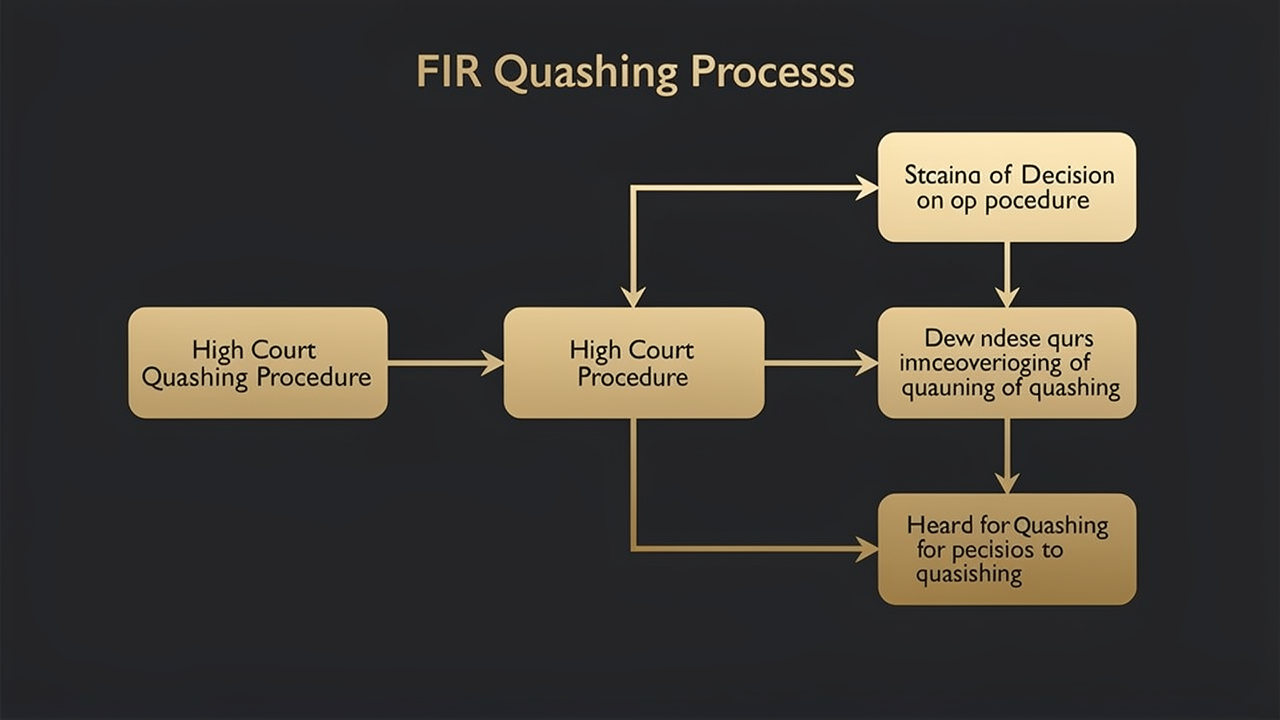
The process for filing a quashing petition in the Allahabad High Court involves the following steps:
- Drafting the petition: Your lawyer drafts a detailed petition stating the grounds for quashing, along with supporting documents including the FIR copy, police report, and any evidence of settlement or mala fide intent
- Filing fee: The filing fee for a quashing petition in the Allahabad High Court is typically ₹500–₹1,000 depending on the nature of the case
- Admission hearing: The High Court admits the petition and issues notice to the State of Uttar Pradesh (through the Advocate General) and the complainant
- Counter-affidavit: The prosecution files a counter-affidavit opposing the quashing petition
- Final hearing: The court hears arguments from both sides and passes an order either quashing the FIR or dismissing the petition
The entire process typically takes 3–6 months in the Allahabad High Court. Interim relief (temporary stay of arrest or investigation) can be sought and is often granted at the initial stage.
Settlement-Based Quashing in Compoundable Offences
One of the most common grounds for quashing an FIR in Ghaziabad is settlement between the parties. Under Section 528 BNS, the High Court can quash criminal proceedings if the parties have settled the dispute and there is no longer a public interest in pursuing the case.
This is particularly relevant for:
- Section 138 NI Act (cheque bounce): If the complainant and accused settle the dues and the complainant files an affidavit confirming the settlement, the High Court often quashes the FIR
- Matrimonial disputes: If the husband and wife reconcile or reach a settlement on alimony, maintenance, and custody, the FIR under Section 498A or domestic violence laws can be quashed
- Property disputes: If the civil dispute underlying the FIR is resolved through arbitration or mutual agreement
- Simple assault or hurt: Offences under Sections 115, 122, or 131 BNS that are compoundable with the court’s permission
Our criminal lawyers in Ghaziabad have successfully quashed hundreds of FIRs through settlement-based petitions before the Allahabad High Court.
Quashing FIRs Filed with Malafide Intentions
In Ghaziabad, FIRs are sometimes filed with malafide intentions — to harass, extort money, or settle personal scores. The Allahabad High Court has the power to quash such FIRs under Section 528 BNS. Courts look for the following indicators of malafide intent:
- Unusually long delay between the alleged incident and the filing of the FIR without satisfactory explanation
- Overwhelming documentary evidence in favour of the accused that contradicts the FIR allegations
- Vague and improbable allegations that do not disclose any specific offence
- FIR filed as a counter-blast to a civil complaint or a legitimate business dispute
- Multiple FIRs filed by the same complainant against the same accused for the same incident
If you have been falsely implicated in an FIR in Ghaziabad, our bail lawyers in Ghaziabad can help you file a quashing petition and also seek anticipatory bail to protect you from arrest.
BNS 2023: What Changed for FIR Quashing in Ghaziabad
The Bharatiya Nyaya Sanhita (BNS) 2023 replaced the Indian Penal Code (IPC) and introduced new provisions for quashing FIRs. Here’s what changed:
Section 528 BNS replaces Section 482 CrPC:
The power to quash FIRs now rests under Section 528 of the BNS, effective July 1, 2024. The Allahabad High Court exercises this power in Ghaziabad cases. The grounds for quashing remain largely the same — abuse of process, malicious intent, false allegations, and settlement between parties.
New grounds under BNS:
The BNS introduced specific provisions that can form additional grounds for quashing: compoundable offences where parties have settled (Section 336 allows compounding of certain offences), family dispute settlements, and cases where the FIR does not disclose a cognisable offence.
Timeline for filing quashing petition:
File the quashing petition as early as possible — ideally before the police complete the investigation and file a charge sheet. Quashing petitions filed before charge sheet have a significantly higher success rate.
Recent Allahabad High Court trends (2024-2025):
The Allahabad High Court has been actively quashing FIRs in cases involving: matrimonial disputes where parties have reconciled, commercial disputes mischaracterised as criminal offences, and FIRs filed with mala fide intent to pressure the accused.
Our FIR quashing lawyers in Ghaziabad track these trends and use them in petitions.
Related Legal Guides
Need Expert Legal Representation in Ghaziabad?
Advocate Nilesh Bijlani and the team at Bijlani & Co. handle all practice areas across Delhi NCR courts.
Consult an Advocate in GhaziabadFrequently Asked Questions
Related Legal Guides
Need Expert Legal Representation in Ghaziabad?
Advocate Nilesh Bijlani and the team at Bijlani & Co. handle all practice areas across Delhi NCR courts.
Consult an Advocate in GhaziabadHow long does it take to get an FIR quashed in Ghaziabad?
An FIR quashing petition in the Allahabad High Court typically takes 3-6 months for a decision, depending on the court’s schedule and the complexity of the case. Some petitions are decided within a few weeks if the grounds are strong and the FIR is clearly an abuse of process. Others take longer if the prosecution opposes the petition and the court needs to examine the evidence in detail. Our FIR quashing lawyers in Ghaziabad can file the petition urgently and request an early hearing date.
Can FIR quashing be done for cognisable offences?
Yes, FIR quashing is available for both cognisable and non-cognisable offences. The court has the power to quash any FIR under Section 528 of the BNS if it finds that the FIR is an abuse of the process of law, even for serious cognisable offences. The power to quash is exercised sparingly — the court will not quash an FIR if there is a prima facie case against the accused. However, if the FIR is clearly false or malicious, the court can and does quash it regardless of the offence’s nature.
What happens if the court rejects your FIR quashing petition?
If the Allahabad High Court rejects your quashing petition, you can still defend yourself in the trial court. The rejection of a quashing petition does not mean you are guilty — it means the court found that a prima facie case exists that needs to be tried. You can apply for bail and defend the case on its merits. Our lawyers will continue to represent you and explore all available defences. In some cases, a second quashing petition can be filed if new grounds emerge.
Can any FIR be quashed in Ghaziabad?
Not every FIR can be quashed. The High Court exercises its quashing power sparingly and only in exceptional cases where continuing the prosecution would be an abuse of the court’s process. Consult our FIR quashing lawyers in Ghaziabad to assess whether your case qualifies for quashing.
How long does a quashing petition take in the Allahabad High Court?
Quashing petitions typically take 3–6 months for a final hearing. Interim relief (staying the arrest or investigation) can be obtained within days or weeks, depending on the urgency.
Can I file a quashing petition in the Sessions Court in Ghaziabad?
No. Only the High Court has the power to quash an FIR under Section 528 of the BNS. However, you can approach the Sessions Court for anticipatory bail or regular bail while the quashing petition is pending.
What if the police refuse to close the FIR even after settlement?
Even after settlement, the police may refuse to close a non-compoundable FIR. In such cases, filing a quashing petition in the High Court is the appropriate remedy. The High Court can quash the FIR even if the police do not agree.
Need Help Quashing an FIR in Ghaziabad?
Filing a quashing petition requires a thorough understanding of criminal law and strong legal arguments. Our FIR quashing lawyers in Ghaziabad have successfully quashed hundreds of FIRs in the Allahabad High Court. Consult an advocate in Ghaziabad today.
Frequently Asked Questions
1. How do I quash an FIR in Ghaziabad under BNS 2023?
File a quashing petition under Section 528 BNS in the Allahabad High Court. The petition must demonstrate the FIR is frivolous, malicious, false, or an abuse of process. File BEFORE the police submit the charge sheet for best results. Our FIR quashing lawyers in Ghaziabad prepare complete petitions with supporting evidence and legal precedents.
2. What are the grounds for FIR quashing under Section 528 BNS?
Grounds include: (1) Malicious intent to harass or pressure the accused. (2) False allegations with no supporting evidence. (3) FIR does not disclose a cognisable offence. (4) Parties have settled the dispute (compoundable offences). (5) Abuse of process of law. (6) FIR based on misinterpretation of facts or law. (7) FIR filed with mala fide intent for personal vendetta.
3. What changed in BNS 2023 for FIR quashing?
Section 528 BNS replaced Section 482 CrPC effective July 1, 2024. Changes: (1) New compounding provisions under Section 336 for additional offence categories. (2) Family dispute settlements explicitly recognised as grounds. (3) Streamlined procedure for quashing FIRs in matrimonial disputes. (4) High Courts can now quash FIRs even after charge sheet if prima facie case is weak.
4. How long does FIR quashing take in Allahabad High Court?
Timeline varies: urgent matters (anticipatory bail pending): 1-2 weeks for hearing. Regular quashing petitions: 3-6 months for a hearing date. If quashed at first hearing: 1-2 months. Complex cases requiring evidence: 6-12 months. File as early as possible — before charge sheet submission significantly improves success rate.
5. Can FIR be quashed after charge sheet is filed?
Yes, but it is harder. Under Section 528 BNS, the High Court can quash an FIR even after charge sheet if the evidence is manifestly weak or the prosecution case is absurd on its face. However, success rate drops significantly after charge sheet. Our FIR quashing lawyers in Ghaziabad analyse the charge sheet to identify weaknesses.
6. What is the cost of FIR quashing in Ghaziabad?
FIR quashing petitions typically cost Rs25,000 to Rs75,000 depending on complexity. Simple cases with clear grounds: Rs25,000-Rs40,000. Complex cases requiring extensive research and multiple hearings: Rs50,000-Rs75,000. Court fee is nominal (Rs200-Rs500). This includes petition drafting, hearing representation, and follow-up.
7. Can I file FIR quashing for a non-compoundable offence?
Yes, FIR quashing is available for both compoundable and non-compoundable offences. For non-compoundable offences, you need stronger grounds — typically abuse of process or lack of prima facie case. The High Court has inherent powers under Section 528 BNS to quash any FIR where justice requires it.
8. What happens if the FIR quashing petition is rejected?
If rejected, you can: (1) File a review petition within 30 days. (2) File a curative petition in the Supreme Court. (3) Defend the case during trial — your lawyer can use the same grounds for acquittal. (4) Explore settlement if the offence is compoundable. Consult your FIR quashing lawyer immediately after rejection to plan next steps.


