
FIR Quashing Lawyer in Ghaziabad: Section 482 BNS Petitions and Legal Remedies
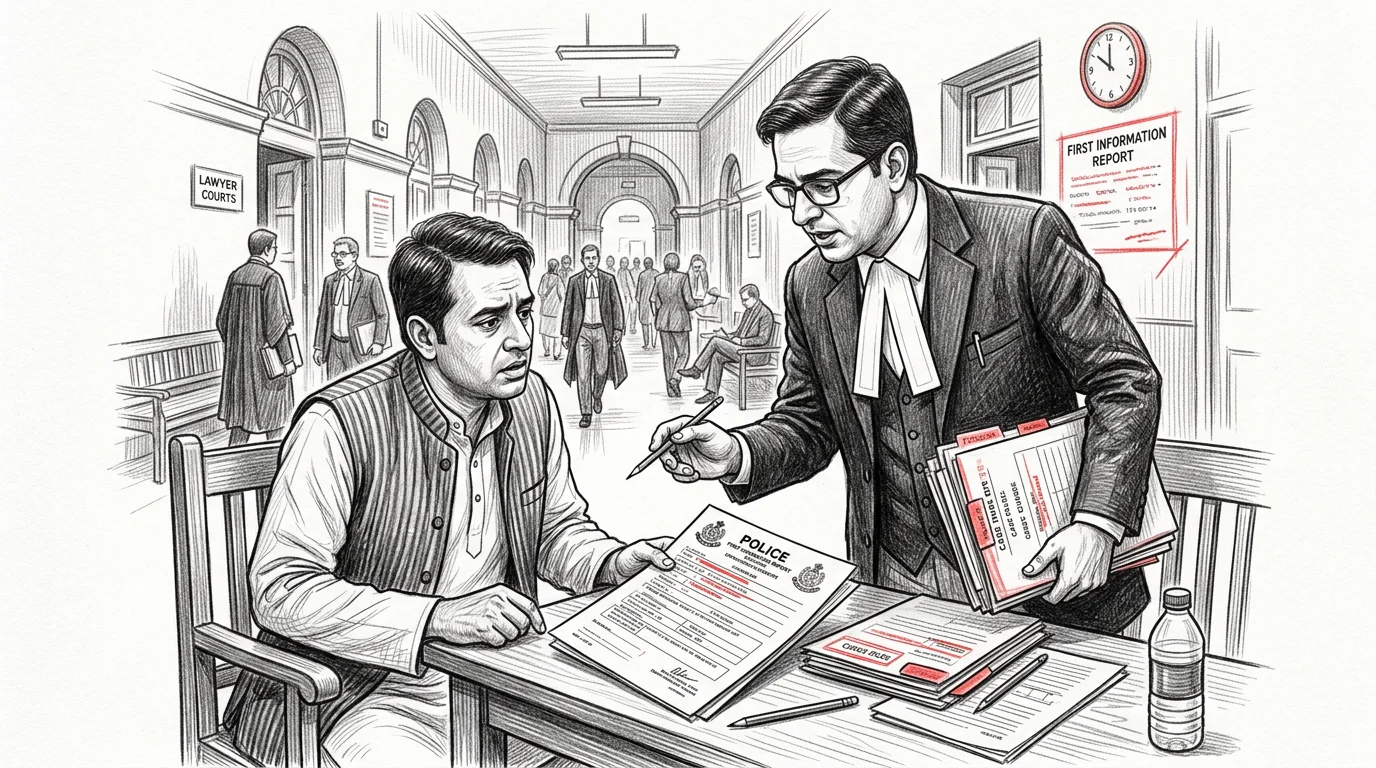
Not every FIR that is filed in Ghaziabad leads to a legitimate criminal case. Some FIRs are filed to settle personal scores, to pressure someone in a matrimonial dispute, or as a harassment tactic in a property dispute. When an FIR does not disclose any offence, when the allegations are patently absurd, or when the proceeding is an abuse of the court’s process, Section 482 of the Bharatiya Nyaya Sanhita provides a remedy. The Allahabad High Court has inherent powers to quash FIRs and criminal proceedings to prevent the abuse of the court’s process and to secure the ends of justice.
Bijlani & Co. files and defends Section 482 quashing petitions in the Allahabad High Court for cases arising from Ghaziabad. We also advise clients on the strategic decision between filing a quashing petition and filing an anticipatory bail application — both are available, but they serve different purposes and are appropriate at different stages of the case. Our FIR quashing lawyers in Ghaziabad have successfully quashed FIRs in matrimonial disputes, property disputes, and false criminal complaints across a wide range of statutes.
When Can an FIR Be Quashed Under Section 482 BNS?
The Allahabad High Court exercises its inherent powers under Section 482 to quash FIRs and criminal proceedings in specific circumstances. The most common grounds for quashing are: no offence is made out from the allegations in the FIR, the FIR and the chargesheet disclose no offence under any law, the proceedings constitute an abuse of the court’s process, the parties have settled the dispute and continuing the prosecution serves no purpose, the FIR is patently absurd and improbable on its face, or the FIR was filed with mala fide intentions to harass the accused.
Matrimonial disputes are one of the most common categories where FIRs are quashed. When an FIR under Section 498A IPC (now Section 85 BNS) is filed during a divorce proceeding, and the allegations are general and vague without specific instances of cruelty, the Allahabad High Court has consistently held that the FIR can be quashed. The rationale is that matrimonial disputes are better resolved through civil proceedings under the Hindu Marriage Act rather than through the criminal process. Property disputes are another common ground for quashing. When an FIR for criminal breach of trust, cheating, or forgery is filed in the context of a property dispute, and the real dispute is civil in nature, the High Court can quash the FIR.
Procedure for Filing a Section 482 Quashing Petition
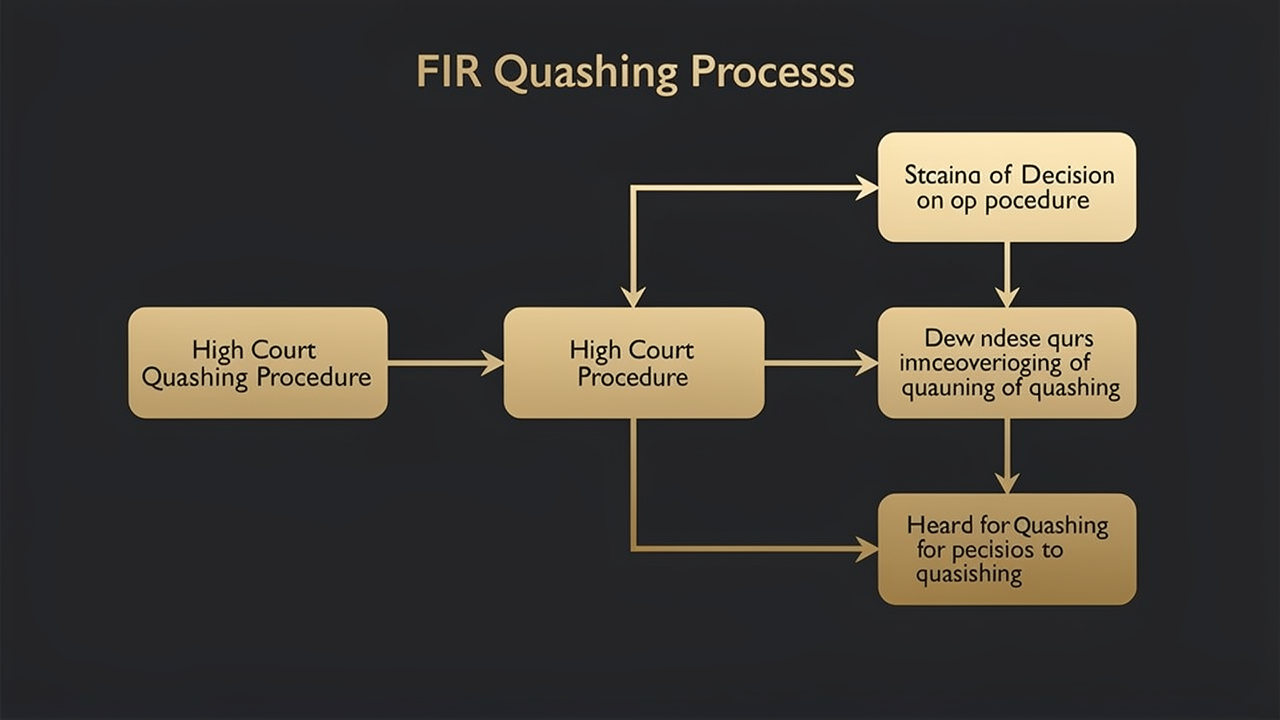
A Section 482 quashing petition is filed before the Allahabad High Court. The petition must include a certified copy of the FIR, a copy of the chargesheet if filed, an affidavit from the petitioner explaining the grounds for quashing, supporting documents that establish the settlement or the absence of an offence, and a list of authorities — previous judgments of the Allahabad High Court and the Supreme Court on similar facts. The High Court typically issues a notice to the respondent and fixes a date for hearing. The respondent files a counter-affidavit. The court then hears arguments from both sides and passes an order.
In appropriate cases, the High Court can pass an interim stay on the investigation or trial pending the final decision on the quashing petition. The timeline for a Section 482 petition varies. Simple cases with clear grounds for quashing can be disposed of within 3-6 months. Complex cases requiring detailed hearing may take 6-12 months. Our FIR quashing lawyers in Ghaziabad prioritise urgent cases where the accused is in custody or where the investigation is causing ongoing harassment.

FIR Quashing vs Anticipatory Bail: Which Remedy to Choose
FIR quashing and anticipatory bail serve different purposes. Anticipatory bail under Section 438 BNS protects you from arrest — it does not remove the FIR or the criminal proceedings. FIR quashing under Section 482 removes the FIR and terminates the criminal proceedings entirely. If your primary concern is avoiding arrest while the case proceeds, anticipatory bail is the appropriate remedy. If you want the FIR itself to be quashed and the criminal proceedings to end, a Section 482 petition is the right approach.
In some cases, both remedies are used together: an anticipatory bail application is filed immediately to secure protection from arrest, and a Section 482 petition is filed simultaneously to quash the FIR. Our FIR quashing lawyers in Ghaziabad advise clients on the strategic decision between these remedies, based on the specific facts of the case, the stage of the proceedings, and the strength of the grounds for each remedy.
Common Grounds for Quashing FIRs in Ghaziabad
False FIRs in matrimonial disputes are the most common category. When an FIR under Section 498A or Section 85 BNS is filed with vague and general allegations without specific dates, times, or details of the alleged cruelty, the Allahabad High Court can quash it. Our FIR quashing lawyers prepare detailed petitions that contrast the vague allegations in the FIR with the specific evidence of a consensual separation or mutual divorce proceeding.
FIRs in property disputes turned criminal are another common ground. When the real dispute is about property title, possession, or partition, and the FIR alleges criminal breach of trust or cheating without establishing criminal intent, the High Court can quash the FIR. The dividing line between a civil dispute and a criminal offence is that a civil dispute involves a breach of contract or civil wrong, while a criminal offence involves a violation of a penal statute with criminal intent.
What Happens After an FIR Is Quashed
When the Allahabad High Court quashes an FIR under Section 482, the criminal proceedings before the Magistrate Court or the Sessions Court come to an end. The accused is discharged, and the chargesheet, if filed, is set aside. The quashing order is final and binding on the lower court. The complainant cannot continue the prosecution unless the High Court’s order is appealed and set aside by a higher court. It is important to note that quashing an FIR does not prevent the complainant from filing a civil suit on the same facts if a civil cause of action exists. Quashing only terminates the criminal proceedings.
Can any FIR be quashed in Ghaziabad?
No. FIRs can be quashed only in specific circumstances: when no offence is made out, when the FIR is an abuse of process, when the parties have settled, or when the FIR is patently absurd. The Allahabad High Court does not quash FIRs merely because the allegations are weak — the court will allow the investigation to proceed if there is a prima facie case. Our FIR quashing lawyers assess the strength of your case before filing a petition.
Can I file a Section 482 petition before the chargesheet is filed?
Yes. A Section 482 petition can be filed at any stage — before the chargesheet, after the chargesheet, or even after the trial has commenced. Filing before the chargesheet is often more effective because the court can quash the FIR before a full investigation is conducted, saving the accused from prolonged harassment.
What is the difference between quashing and withdrawal of FIR?
Quashing under Section 482 is a judicial process — the High Court examines the FIR and decides whether it discloses an offence. Withdrawal of FIR is an executive process — the police or the complainant can withdraw the FIR with the court’s permission. Quashing is more powerful because it terminates the proceedings judicially and prevents the complainant from re-filing a similar FIR on the same facts.
How long does a Section 482 petition take in the Allahabad High Court?
Simple cases with clear grounds can be disposed of within 3-6 months. Cases requiring detailed hearing may take 6-12 months. Our FIR quashing lawyers prioritise urgent cases and request early hearing dates wherever possible.
Need FIR Quashing in Ghaziabad?
Bijlani & Co. files Section 482 petitions in the Allahabad High Court for Ghaziabad cases. Contact us for immediate assistance.
Phone: 085958 09471
Email: write@bijlani.in
Office: 141 Patiala House Courts, New Delhi
Related Practice Areas
Section 154 CrPC: FIR Registration and Your Right to Approach the High Court
Every information relating to the commission of a cognizable offence must be registered as an FIR under Section 154 CrPC. This is mandatory — the police have no discretion to refuse FIR registration. If the Ghaziabad police refuse to register your FIR, you have several remedies: file a complaint to the Superintendent of Police under Section 154(3) CrPC, file a criminal complaint before the Magistrate Court under Section 200 CrPC, or approach the Allahabad High Court directly under Article 226 of the Constitution for a writ of mandamus directing the police to register the FIR. An FIR quashing lawyer in Ghaziabad will assess whether your case is better suited for a Section 482 petition (if an FIR has already been registered and is baseless) or for a writ petition (if the FIR is not being registered). The choice of remedy depends on the specific facts and the stage at which you are seeking intervention.
Section 482 BNS: Inherent Powers of the High Court
Section 482 of the Bharatiya Nyaya Sanhita, 2023 (previously Section 482 CrPC) confers inherent powers on the High Court to make orders as may be necessary to give effect to any order under the BNS, to prevent abuse of the process of any court, or to secure the ends of justice. The power is wide but must be exercised with great caution. The Allahabad High Court exercises this power to quash FIRs and criminal proceedings when: no offence is made out on the face of the FIR, the allegations, even if accepted as true, do not constitute any offence, the FIR is an abuse of the court’s process, or the parties have settled and continued prosecution serves no public interest. Your FIR quashing lawyer in Ghaziabad will frame a Section 482 petition that demonstrates how your case fits within these established categories.
Malicious FIR and Abuse of Process: Constitutional Remedy
A malicious FIR is one filed with an ulterior motive — typically to settle a personal score, to harass the accused in a matrimonial dispute, or to gain advantage in a civil dispute (such as a property dispute). The Allahabad High Court takes a serious view of malicious FIRs and has repeatedly held that criminal proceedings should not be used as a weapon to settle civil disputes. Your FIR quashing lawyer in Ghaziabad will identify the malicious intent by examining the timing of the FIR (filed immediately after a civil dispute arises), the relationship between the complainant and the accused (former business partners, estranged spouses), and the absence of any credible evidence supporting the FIR. In cases of malicious FIR, your lawyer will file a Section 482 BNS petition before the Allahabad High Court seeking quashing of the FIR, along with a counter-complaint for filing a false FIR under Section 182 IPC (now Section 178 BNS). The High Court can also award compensation to the victim of a malicious FIR.
Compounding of Offences: Settlement and Quashing
Certain offences under the BNS 2023 are compoundable — meaning the parties can settle the dispute and the court will close the proceedings upon application by both parties. Compoundable offences include minor assault, defamation, and certain categories of cheating. When the complainant and the accused reach a settlement, your FIR quashing lawyer in Ghaziabad will file a joint application for compounding before the court. The court will verify that the settlement is genuine and voluntary, and then close the criminal proceedings. For non-compoundable offences, the settlement does not automatically close the case — you must file a Section 482 BNS petition for quashing. The Allahabad High Court has established that a genuine settlement between the parties is a ground for quashing FIRs under Section 482, even for non-compoundable offences, provided the court is satisfied that the settlement serves the ends of justice. Your FIR quashing lawyer will prepare a complete settlement affidavit, evidence of the settlement terms, and legal arguments demonstrating why continued prosecution is not in the public interest.
Timeline and Cost of Section 482 Quashing in Allahabad High Court
Filing a Section 482 BNS petition before the Allahabad High Court typically takes 2-4 weeks for initial hearing, and 3-6 months for final disposal, depending on the complexity of the case and the court’s schedule. The filing fee is nominal (typically ₹500-₹1,000), but lawyer fees vary significantly based on the complexity of the case and the seniority of the advocate. A Section 482 petition requires: the FIR copy, chargesheet copy (if filed), vakalatnama, an affidavit by the petitioner setting out the grounds for quashing, and supporting documents. Your FIR quashing lawyer in Ghaziabad will prepare all documentation and argue the petition before the High Court. In cases where the High Court is satisfied that the FIR is baseless, it can pass an immediate order staying the investigation or directing the police to file a closure report. In other cases, the High Court issues notice to the State and the complainant, who must then respond. The lawyer’s experience in presenting Section 482 petitions before the Allahabad High Court is the single most important factor in the success of the application.
Need a lawyer? Consult our advocate in Ghaziabad for expert legal representation across all practice areas. We also specialise in Fir Quashing Lawyer Ghaziabad | Bijlani matters.
Related Legal Guides
Need Expert Legal Representation in Ghaziabad?
Advocate Nilesh Bijlani and the team at Bijlani & Co. handle all practice areas across Delhi NCR courts.
Consult an Advocate in GhaziabadRelated Practice Areas
Explore our full range of legal services across Delhi NCR.