NDPS Lawyer in Ghaziabad: Narcotics Defence Under the NDPS Act, 1985
Cases under the Narcotic Drugs and Psychotropic Substances Act, 1985 carry some of the harshest penalties in Indian criminal law. Possession of even small quantities of certain narcotics can result in rigorous imprisonment of up to 10 years and fines of up to one lakh rupees. For commercial quantities, the punishment extends to rigorous imprisonment of up to 20 years and fines of up to two lakh rupees. Section 37 of the NDPS Act makes bail particularly difficult. An NDPS lawyer in Ghaziabad who understands the Act’s structure, the bail provisions, and the defence strategies that have succeeded in the Allahabad High Court is essential when you are facing narcotics charges.
Bijlani & Co. defends clients in NDPS cases across Ghaziabad courts and the Allahabad High Court. Our NDPS lawyers have experience in bail applications, trial defence, and appeals in matters involving cannabis, heroin, cocaine, pharmaceutical drugs, and psychotropic substances. We understand the procedural requirements of the NDPS Act, the evidence standards that the prosecution must meet, and the grounds on which NDPS cases can be challenged. Early engagement of an NDPS lawyer is critical because the strength of the prosecution’s case is determined largely by the recovery procedure and the forensic evidence.
Understanding the NDPS Act Structure and Drug Categories
The NDPS Act classifies drugs into three categories based on their potential for abuse and medical utility. The classification determines the quantity thresholds that distinguish between possession for personal consumption, commercial quantity, and intermediate quantities. The Act covers a wide range of offences. Possession is the most commonly charged offence under Section 18. Trafficking falls under Sections 21, 27, and 29. Cultivation of cannabis is penalised under Section 20. Financing narcotics activities falls under Section 28. Conspiracy to commit any of these offences falls under Section 29.
For cannabis, the small quantity threshold is 1 kg, intermediate is 20 kg, and commercial is 40 kg. For heroin, the small quantity threshold is 5 grams, intermediate is 250 grams, and commercial is 1 kg. For cocaine, the small quantity threshold is 2 grams. For opium, the small quantity threshold is 25 grams. The classification of the quantity is critical because it determines the applicable punishment range and the bail threshold under Section 37. Our NDPS lawyers in Ghaziabad carefully verify the quantity alleged in each case, challenging the prosecution’s measurement and weighing procedures where appropriate.
Bail Under Section 37 NDPS: The Dual Condition Challenge
Section 37 of the NDPS Act imposes a dual condition for bail: the court must be satisfied that the accused is not guilty of the offence AND that the accused will not commit any similar offence while on bail. This is a significantly higher threshold than the bail standard under the Bharatiya Nyaya Sanhita, where bail is the rule. Under the NDPS Act, bail is the exception. Our NDPS bail strategy in Ghaziabad courts focuses on two parallel arguments. First, we demonstrate that the prosecution’s prima facie case is weak — challenging the recovery procedure, the chain of custody, the absence of independent witnesses, and the reliability of the forensic laboratory report. Second, we demonstrate that our client is not a flight risk and will not commit similar offences while on bail, through evidence of stable employment, family ties, and roots in the community.
In cases involving commercial quantities, the bail threshold is even higher. The Allahabad High Court has held that bail in commercial quantity cases should be granted only in exceptional circumstances. Our NDPS lawyers prepare exceptional-circumstance briefs that address the specific facts of each case — the nature of the alleged recovery, the reliability of the prosecution’s evidence, and the personal circumstances of the accused.
What to Do If Arrested Under the NDPS Act in Ghaziabad
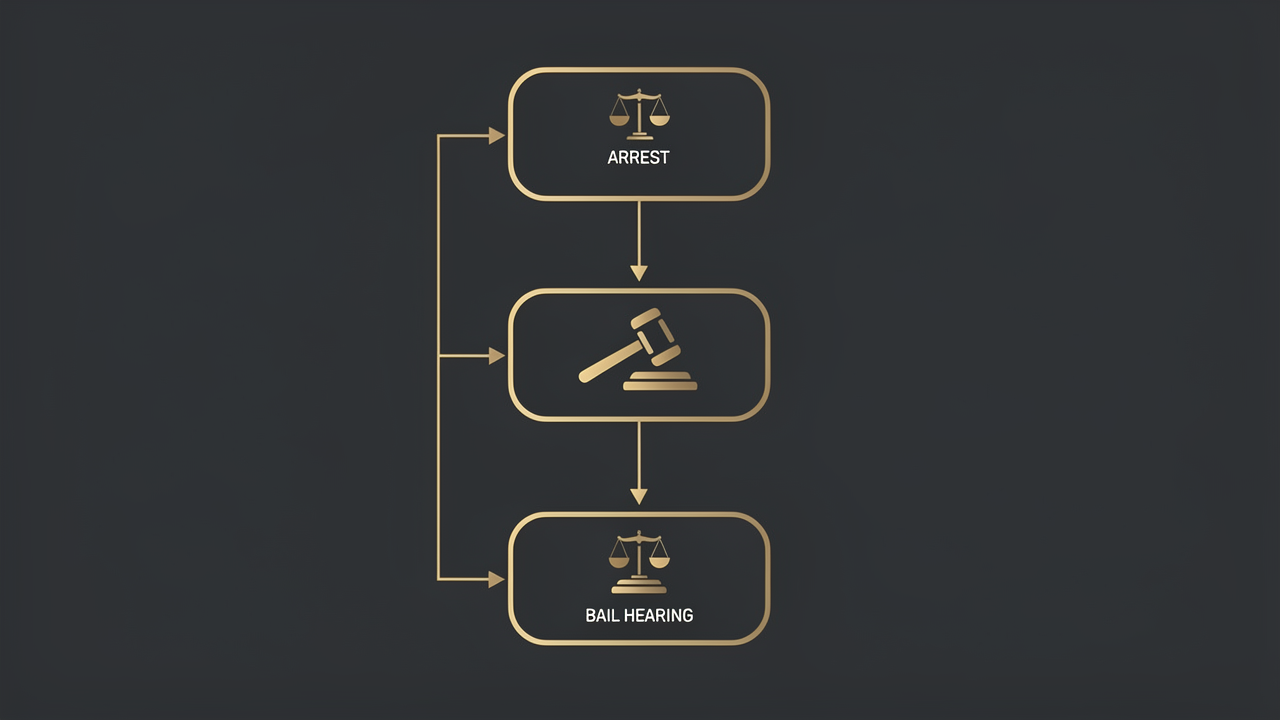
If you or someone you know has been arrested under the NDPS Act in Ghaziabad, the first priority is bail. The NDPS Act imposes strict timelines for bail applications, and delay weakens the application. Contact an NDPS lawyer immediately. Do not make any statements to the investigating officer without legal counsel present. The second priority is preserving evidence. Our NDPS lawyers immediately request copies of the FIR, the seizure memo, the property list, and the forensic laboratory report under Section 50 NDPS Act and Section 172 BNS.
Defence Strategies in NDPS Cases
The prosecution’s case in NDPS trials rests on three pillars: the recovery of the narcotic substance, the chain of custody from recovery to forensic laboratory to court, and the identification of the accused as the person from whom the substance was recovered. Our NDPS defence strategy targets each of these pillars systematically. Chain of custody is the most common weakness in NDPS cases. Any break — a missing seal number, a gap in the custody log, a discrepancy between the weight recorded at recovery and the weight recorded at the forensic laboratory — can create reasonable doubt. Conscious possession is another critical element. Under the NDPS Act, the prosecution must prove that the accused was in conscious possession of the narcotic substance. If the substance was found in a shared vehicle, a shared room, or premises occupied by multiple people, the prosecution must establish that the accused specifically knew about and controlled the substance. Search and seizure procedure is a third defence ground. Section 50 NDPS Act requires that a search be conducted in the presence of two independent witnesses.
Sentencing Under the NDPS Act: Quantity-Based Penalties
Sentencing under the NDPS Act depends on the quantity of the narcotic substance and the category of the drug. For small quantities, the punishment is imprisonment of up to one year or a fine of up to ten thousand rupees, or both. For intermediate quantities, imprisonment of up to 10 years and a fine of up to one lakh rupees. For commercial quantities, rigorous imprisonment of up to 20 years and a fine of up to two lakh rupees. Section 37 imposes a minimum sentence of 10 years rigorous imprisonment for offences involving commercial quantities. Our NDPS lawyers argue for the minimum sentence where conviction is unavoidable, presenting mitigating circumstances such as the accused’s age, family responsibilities, and lack of criminal history.
NDPS Cases in Ghaziabad Courts: Local Context and Strategy
Ghaziabad’s proximity to Delhi and its position on key transport routes make it a transit point for narcotics trafficking. The Ghaziabad police regularly register NDPS cases under Sections 18, 20, 21, 27, and 29 of the Act. Cases typically arise from searches conducted at checkpoints, raids on residential premises, or interdiction of vehicles on the Delhi-Meerut Expressway. The evidence in these cases often depends on the testimony of police witnesses, which can be challenged on grounds of reliability and consistency. Our NDPS lawyers in Ghaziabad have appeared before the District Court, the CJM Court, and the Allahabad High Court in NDPS matters.
Appeals in NDPS Cases: Sessions Court and Allahabad High Court
If the trial court convicts under the NDPS Act, the convicted person can file an appeal before the Sessions Court for appeals from Magistrate Court orders, and before the Allahabad High Court for appeals from Sessions Court orders. The appeal can challenge the conviction, the sentence, or both. Our NDPS lawyers handle appeals at both levels, presenting legal arguments and additional evidence that was not available at the trial stage. We also file bail applications pending appeal, arguing that the convicted person is entitled to suspension of sentence while the appeal is being heard.
Forensic Evidence and Laboratory Challenges in NDPS Trials
Forensic evidence is the backbone of the prosecution’s case in NDPS trials. The seized substance must be sent to a forensic laboratory for analysis, and the laboratory report must confirm that the substance is a narcotic drug or psychotropic substance under the NDPS Act. Our NDPS lawyers challenge the forensic evidence on several grounds. First, we verify that the substance was sent to the laboratory within the required timeframe. Delays in sending the seized material for forensic analysis can create reasonable doubt about the integrity of the evidence. Second, we challenge the laboratory’s testing methodology — whether the correct tests were conducted, whether the equipment was calibrated, and whether the analyst was qualified. Third, we compare the weight recorded in the seizure memo with the weight recorded in the laboratory report. Any discrepancy between these two weights undermines the prosecution’s case.
Can bail be granted in NDPS cases in Ghaziabad?
Yes, but it is more difficult than in regular criminal cases. Section 37 NDPS requires the court to be satisfied that the accused is not guilty AND will not commit a similar offence while on bail. We prepare NDPS bail applications that challenge the prima facie case and demonstrate that our client is not a flight risk. Bail has been granted in NDPS cases in the Allahabad High Court when the recovery procedure was found to be defective.
What should I do if my family member is arrested under NDPS?
Contact an NDPS lawyer immediately. The first 48 hours after arrest are critical. Do not delay. Our NDPS lawyers in Ghaziabad are available for emergency bail applications and can be at the court within hours of engagement.
What is the punishment for possession of small quantity of narcotics?
For small quantities, the punishment under the NDPS Act is imprisonment of up to one year or a fine of up to ten thousand rupees, or both. The definition of small quantity varies by drug — for cannabis, it is 1 kg; for cocaine, it is 2 grams; for heroin, it is 5 grams. The classification of the quantity is critical because it determines the applicable punishment range.
Can an NDPS case be defended on technical grounds?
Yes. Common technical grounds include failure to comply with Section 50 NDPS Act search and seizure procedure, break in chain of custody, non-compliance with Section 55 reporting requirements, and failure to send the seized material for forensic analysis within the required timeframe. Our NDPS lawyers identify and argue these technical grounds systematically.
Need an NDPS Lawyer in Ghaziabad?
Bijlani & Co. defends clients in NDPS cases across Ghaziabad courts and the Allahabad High Court. Contact us for immediate assistance.
Phone: 085958 09471
Email: write@bijlani.in
Office: 141 Patiala House Courts, New Delhi
Related Practice Areas
NDPS Bail Before Chargesheet: When the Police Have Not Completed Investigation
Under Section 36(2) of the NDPS Act, the court can grant bail even before the police file a chargesheet, provided the court is satisfied that the accused is not guilty and is not likely to commit similar offences while on bail. This is a significant advantage for NDPS accused who are in custody during the investigation period, which can last several months. The Ghaziabad NDPS courts entertain pre-chargesheet bail applications regularly. The accused’s lawyer will argue that the investigation is progressing slowly and that continued custody is unjustified, or that the evidence collected so far does not support the prosecution’s case. If the court grants bail at this stage, the accused is released subject to conditions such as regular reporting to the investigating officer and not tampering with evidence. An NDPS lawyer in Ghaziabad will file a complete bail application with supporting affidavits and evidence to maximise the chances of pre-chargesheet bail.
Attending Court: Practical Guidance for NDPS Accused
Attending court as an NDPS accused requires discipline and organisation. Every hearing date must be marked in your calendar, and you must appear on every date without fail — missing a court date can result in a non-bailable warrant being issued against you. When you appear in court, arrive at least 30 minutes before the scheduled time, dress neatly, and cooperate with the court staff. Bring your lawyer with you to every hearing. The Ghaziabad special NDPS courts have specific timings and procedures that your lawyer will know well. Your lawyer will also manage the production of evidence, the examination of witnesses, and the arguments on your behalf. NDPS cases in Ghaziabad typically take 2-5 years to reach final judgment, and your consistent attendance at every hearing is essential to maintaining your bail and presenting an effective defence.
Drug Rehabilitation vs Criminal Prosecution: NDPS in Ghaziabad Courts
The NDPS Act provides a distinction between drug consumers and drug traffickers. A person found with a small quantity of drugs for personal consumption is treated differently from a person found with commercial quantities for trafficking. Section 64A of the NDPS Act empowers the court to send a drug-dependent person to a de-addiction centre instead of sending them to prison, provided the person voluntarily undergoes de-addiction treatment and is not found to be a drug trafficker. The Narcotics Control Bureau (NCB) and State Police Drug Departments in Ghaziabad maintain a register of de-addiction centres, and the court can order treatment at any of these centres. Your NDPS lawyer in Ghaziabad will present evidence that your client is a drug user, not a trafficker, and will seek an order under Section 64A directing treatment at a certified de-addiction centre. This remedy is particularly important for young people and first-time offenders who are genuinely struggling with addiction.
Need a lawyer? Consult our advocate in Ghaziabad for expert legal representation across all practice areas. We also specialise in Ndps Lawyer Ghaziabad | Bijlani & C matters.
Related Legal Guides
Need Expert Legal Representation in Ghaziabad?
Advocate Nilesh Bijlani and the team at Bijlani & Co. handle all practice areas across Delhi NCR courts.
Consult an Advocate in GhaziabadRelated Practice Areas
Explore our full range of legal services across Delhi NCR.