Criminal Lawyer in Ghaziabad: BNS 2023, CrPC 1973, Bail, FIR quashing, and Trial Defence
Criminal cases in Ghaziabad require both knowledge of the substantive law and practical familiarity with local court procedures. The Bharatiya Nyaya Sanhita, 2023 replaced the Indian Penal Code, 1860 with new sections and terminology. The Code of Criminal Procedure, 1973 continues to govern investigation, bail, trial, and appeal procedures. A criminal lawyer in Ghaziabad who understands both the BNS 2023 provisions and the CrPC 1973 framework can identify procedural advantages, challenge irregularities in the investigation, and present a defence that meets the standards expected by Ghaziabad judges. Bijlani & Co. handles criminal defence across Ghaziabad District Court, CJM Court, Sessions Court, and the Allahabad High Court. Our criminal lawyers have experience in bail applications, anticipatory bail under Section 438 BNS, FIR quashing petitions under Section 482 BNS, trial defence, and criminal appeals. We represent clients under the BNS 2023 sections and special statutes including the NDPS Act, 1985, POCSO Act, 2012, and Prevention of Corruption Act.
Our criminal lawyers in Ghaziabad handle cases arising from Raj Nagar, Kavi Nagar, Vasundhara, Indirapuram, Sahibabad, Loni, and all other parts of Ghaziabad. We appear regularly before the Ghaziabad District Court for Magistrate and Sessions Court matters, and before the Allahabad High Court for bail in serious cases and Section 482 quashing petitions. We understand the local court system — the hearing schedules, the registry procedures, the judge-specific practices — and this knowledge translates into faster and more effective representation for our clients.

bail and anticipatory bail Under the Bharatiya Nyaya Sanhita
If you have been named in an FIR, securing your release should be the first priority. Regular bail under Section 437 BNS is available when you are in custody. The court considers the nature of the offence, the strength of the prosecution’s prima facie case, the likelihood that you will abscond, the risk of witness tampering, and the likelihood of similar offences while on bail. Bail is the rule for most offences, but the court can refuse bail for offences punishable with death or life imprisonment, particularly when the evidence appears strong.
Anticipatory bail under Section 438 BNS is available before arrest. You file an application before the Sessions Court or the High Court, and the court can direct that you not be arrested for a specified period while the investigation proceeds. Anticipatory bail is particularly useful when you anticipate being named in an FIR but have not yet been arrested — in escalating disputes, matrimonial cases where the other side has threatened a criminal complaint, or property disputes that are turning criminal. Our criminal lawyers in Ghaziabad file anticipatory bail applications as soon as the threat of arrest becomes apparent.
What to Do If You Are Named in an FIR in Ghaziabad
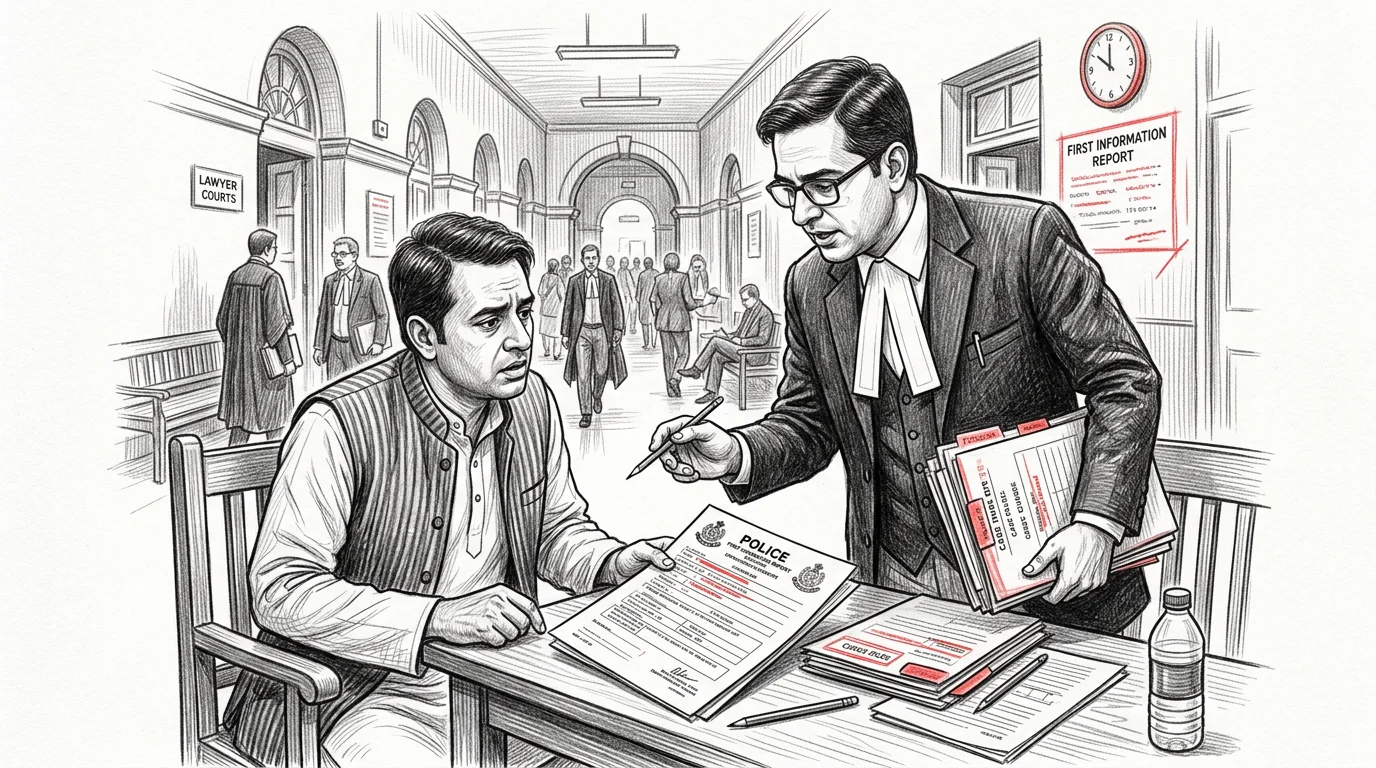
The steps you take immediately after being named in an FIR can significantly affect the outcome of your case. First, do not make any statements to the police without legal counsel present. Anything you say can be used against you in court. Second, engage a criminal lawyer immediately. The first 48 hours after arrest are critical for bail applications, and delay weakens your position. Third, gather your documents — identity proof, alibi evidence, witness contact information, and any documentation that supports your version of events. Fourth, do not contact the complainant or any witnesses without your lawyer’s advice. Contacting a complainant or witness can be construed as witness tampering under Section 196 BNS.
Fifth, request copies of the FIR, seizure memo, property list, and witness statements under Section 172 BNS. These documents are the foundation of your defence, and you need them as early as possible. Sixth, assess whether a Section 482 BNS quashing petition is viable. If the FIR does not disclose any offence or is an abuse of process, a quashing petition before the Allahabad High Court can end the proceedings without the need for a full trial. Our criminal lawyers in Ghaziabad follow this checklist at the beginning of every criminal defence engagement.
FIR Quashing Under Section 482 BNS
When an FIR does not disclose any offence, when the allegations are patently absurd, or when the proceeding is an abuse of the court’s process, Section 482 of the Bharatiya Nyaya Sanhita empowers the Allahabad High Court to quash the FIR and terminate the criminal proceedings. The High Court exercises this power sparingly, but it does quash FIRs in cases where the prosecution’s case is legally unsustainable. Common grounds for quashing include: no offence is made out from the allegations in the FIR, the parties have settled the dispute and continuing the prosecution serves no purpose, the FIR was filed with mala fide intentions to harass the accused, and the FIR is an abuse of the court’s process. Our criminal lawyers in Ghaziabad file Section 482 petitions alongside bail applications where appropriate, giving our clients the best chance of an early resolution.

Trial Defence: Challenging the Prosecution’s Case
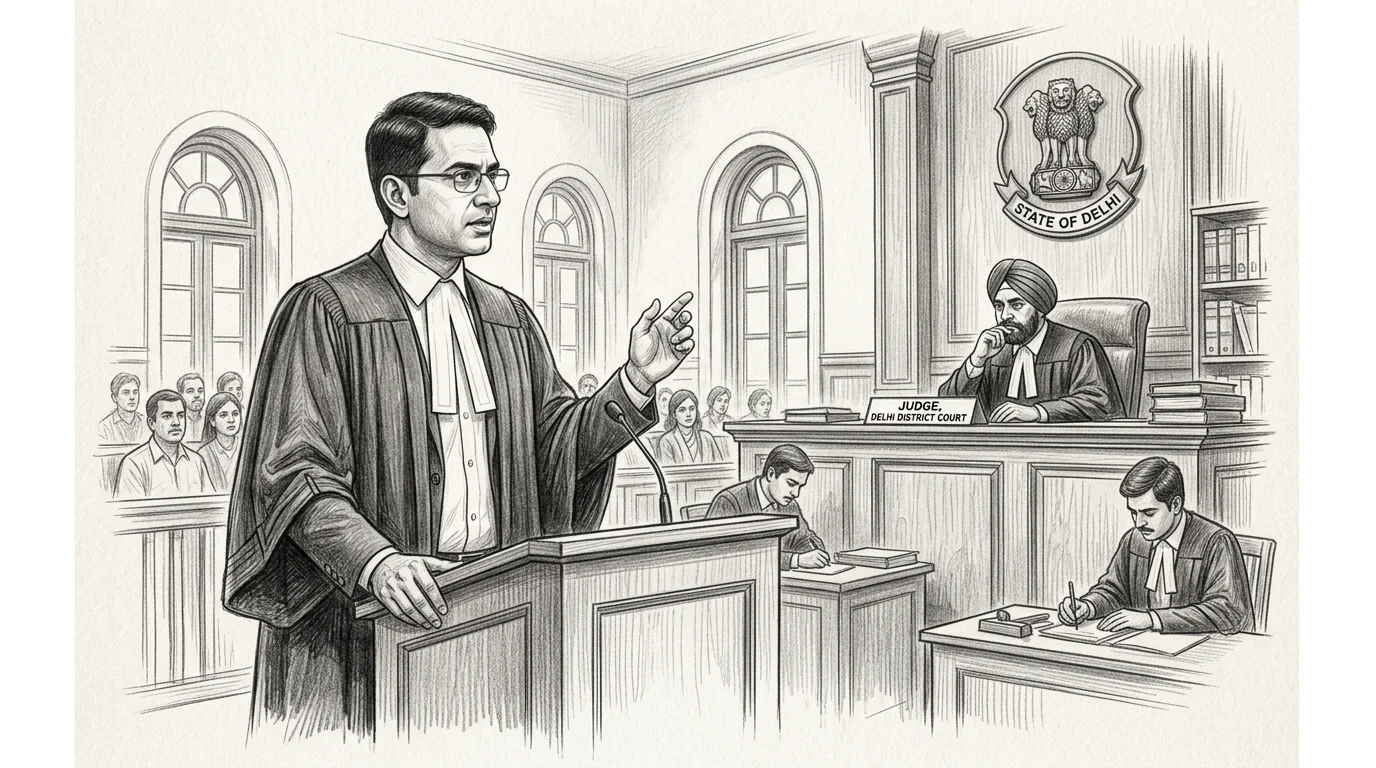
Criminal trials in Ghaziabad require rigorous cross-examination of prosecution witnesses, careful examination of documentary evidence, and strategic presentation of the defence case. The prosecution must prove each element of the offence beyond reasonable doubt. Our criminal lawyers identify weaknesses in the prosecution’s case and present evidence that creates reasonable doubt. We examine the FIR for inconsistencies with the prosecution’s later version of events. We cross-examine police witnesses on the investigation procedure — whether the FIR was filed promptly, whether evidence was collected properly, whether the chargesheet was filed within the required timeframe. We examine medical witnesses on the adequacy of the medical examination, forensic witnesses on the reliability of the laboratory report, and eyewitnesses on the reliability of their identification.
Specialised Criminal Defence: NDPS, POCSO, Cheque Bounce, and White Collar Crime
Certain types of criminal cases require specialised defence strategies. NDPS cases under the Narcotic Drugs and Psychotropic Substances Act, 1985 carry harsh mandatory sentences and Section 37 imposes a high bail threshold. Our NDPS lawyers challenge the recovery procedure, the chain of custody, and the forensic evidence. POCSO cases require careful handling because of the sensitivity of the allegations and the severity of the mandatory sentences. Our criminal lawyers defend POCSO cases while ensuring that the investigation is fair and the evidence is properly examined. Cheque bounce cases under Section 138 of the Negotiable Instruments Act involve the intersection of criminal and civil law. Our criminal lawyers negotiate settlements and challenge the prosecution’s case on technical grounds when appropriate. White collar crime — cheating, forgery, and fraud cases — often involves complex financial transactions that require detailed documentary analysis. Our criminal lawyers work with forensic accountants where necessary to examine the financial evidence.
Criminal Appeals: Sessions Court and Allahabad High Court
If the trial court convicts or sentences unfairly, you can file an appeal before the Sessions Court for Magistrate Court orders or before the Allahabad High Court for Sessions Court orders. The appeal challenges the conviction, the sentence, or both. Our criminal lawyers handle appeals at both levels, presenting legal arguments and additional evidence that was not properly considered at the trial stage. We also file bail applications pending appeal, arguing that the convicted person is entitled to suspension of sentence while the appeal is being heard.
When can I apply for anticipatory bail in Ghaziabad?
Anticipatory bail can be applied for when you have reason to believe you will be named in an FIR — typically when a dispute is escalating or a criminal complaint has been threatened. Our criminal lawyers file anticipatory bail applications before the Sessions Court or Allahabad High Court, depending on the seriousness of the anticipated charges.
How long does a criminal trial take in Ghaziabad?
Criminal trials in Ghaziabad typically take 1-3 years depending on the number of witnesses and complexity. Our criminal lawyers prepare witness lists in advance, cross-examine efficiently, and present the defence case without unnecessary delay.
Can a criminal FIR be quashed before the trial begins?
Yes. Section 482 BNS empowers the Allahabad High Court to quash FIRs that do not disclose any offence, are patently absurd, or constitute an abuse of process. Our criminal lawyers file quashing petitions alongside bail applications where appropriate.
What should I do if I receive a police notice under Section 41A CrPC?
Contact a criminal lawyer immediately. A Section 41A notice requires you to appear before the investigating officer. You have the right to have your lawyer present. Our criminal lawyers advise on responding appropriately while protecting your rights.
Need a Criminal Lawyer in Ghaziabad?
Bijlani & Co. handles bail, anticipatory bail, FIR quashing, and criminal trials across Ghaziabad courts and the Allahabad High Court. Contact us for immediate assistance.
Phone: 085958 09471
Email: write@bijlani.in
Office: 141 Patiala House Courts, New Delhi
Related Practice Areas
Bail Lawyer Ghaziabad
Anticipatory bail, regular bail, and NBW cancellation under BNS 2023 and CrPC 1973.
NDPS Lawyer Ghaziabad
Narcotics defence, bail under Section 37 NDPS, and quantity-based sentencing strategy.
FIR Quashing Lawyer Ghaziabad
Section 482 BNS petitions to quash FIRs before the Allahabad High Court.
FIR Filing and Investigation: Understanding Your Rights
When you are named in an FIR, your first step should be to understand the specific allegations and the sections invoked. The FIR is the foundation of the prosecution case, and any weaknesses in the FIR can be leveraged by your criminal lawyer. Section 41A CrPC (now Section 35 BNS) allows the police to issue a notice instead of arresting you, provided you cooperate with the investigation. If the police do arrest you, they must produce you before the Magistrate within 24 hours. Your criminal lawyer in Ghaziabad will ensure that your rights at each stage of the investigation are protected: the right to be informed of the grounds of arrest, the right to legal representation, the right against self-incrimination, and the right to bail. The investigation stage is critical — the evidence collected during investigation determines the strength of the prosecution case at trial.
POCSO Offences: Special Courts and Enhanced Sentencing in Ghaziabad
The Protection of Children from Sexual Offences Act, 2012 is a complete law that defines and punishes sexual offences against children. The POCSO Act creates special courts for speedy trial of child sexual abuse cases, mandates that trials be completed within one year, and prescribes enhanced minimum sentences for aggravated offences. The Ghaziabad POCSO court hears cases under this Act and follows special procedures designed to protect the child victim from further trauma: the child’s testimony can be recorded at their home, in-camera trial provisions apply, and the identity of the child is protected from media disclosure. A criminal lawyer in Ghaziabad defending a POCSO case will focus on challenging the prosecution’s evidence, cross-examining witnesses to expose inconsistencies, and ensuring that the special procedures designed to protect the child are not misused to prejudice the defence. False POCSO allegations are increasingly common in custody and matrimonial disputes, and a criminal lawyer will present evidence of fabrication or ulterior motive.
White Collar Crime: Fraud, Cheating, and Forgery Defence
White collar crime covers a range of offences including cheating under Section 420 IPC (now Section 318 BNS), criminal breach of trust under Section 406-409 IPC, forgery under Section 463-470 IPC, and money laundering under the Prevention of Money Laundering Act, 2002. These cases typically involve complex financial transactions, and the defence strategy requires meticulous examination of bank records, contracts, emails, and financial statements. A criminal lawyer in Ghaziabad handling white collar crime will engage forensic accountants to analyse the financial evidence, challenge the prosecution’s interpretation of transactions, and demonstrate that the accused acted in good faith. In many white collar cases, the dispute is genuinely civil in nature (a business dispute, a contract disagreement, or a family property matter) but has been converted into a criminal case by the complainant to exert pressure. Your criminal lawyer will demonstrate this abuse of process and seek quashing of the FIR under Section 482 BNS.
Evidence Collection: What Your Criminal Lawyer Needs From You
The strength of your defence depends largely on the evidence you can provide to your criminal lawyer in Ghaziabad. Start gathering evidence immediately — do not wait for the trial to begin. Relevant evidence includes: any documents that prove your alibi (attendance records, travel tickets, CCTV footage), communications with the complainant that show the nature of your relationship (text messages, emails, WhatsApp chats), witness statements from people who can corroborate your version of events, medical records if you have been injured (relevant in cases of self-defence), and any documents that challenge the prosecution’s evidence (photographs, receipts, contracts). Your lawyer will also conduct an independent investigation: visiting the scene of the alleged offence, identifying additional witnesses, and collecting documentary evidence that the police may have missed. In criminal cases, evidence that is not presented at the trial stage is lost forever — the court will not permit new evidence after the trial concludes.
Need a lawyer? Consult our advocate in Ghaziabad for expert legal representation across all practice areas. We also specialise in Criminal Lawyer Ghaziabad | Bijlani  matters.
Related Legal Guides
Need Expert Legal Representation in Ghaziabad?
Advocate Nilesh Bijlani and the team at Bijlani & Co. handle all practice areas across Delhi NCR courts.
Consult an Advocate in GhaziabadRelated Practice Areas
Explore our full range of legal services across Delhi NCR.
