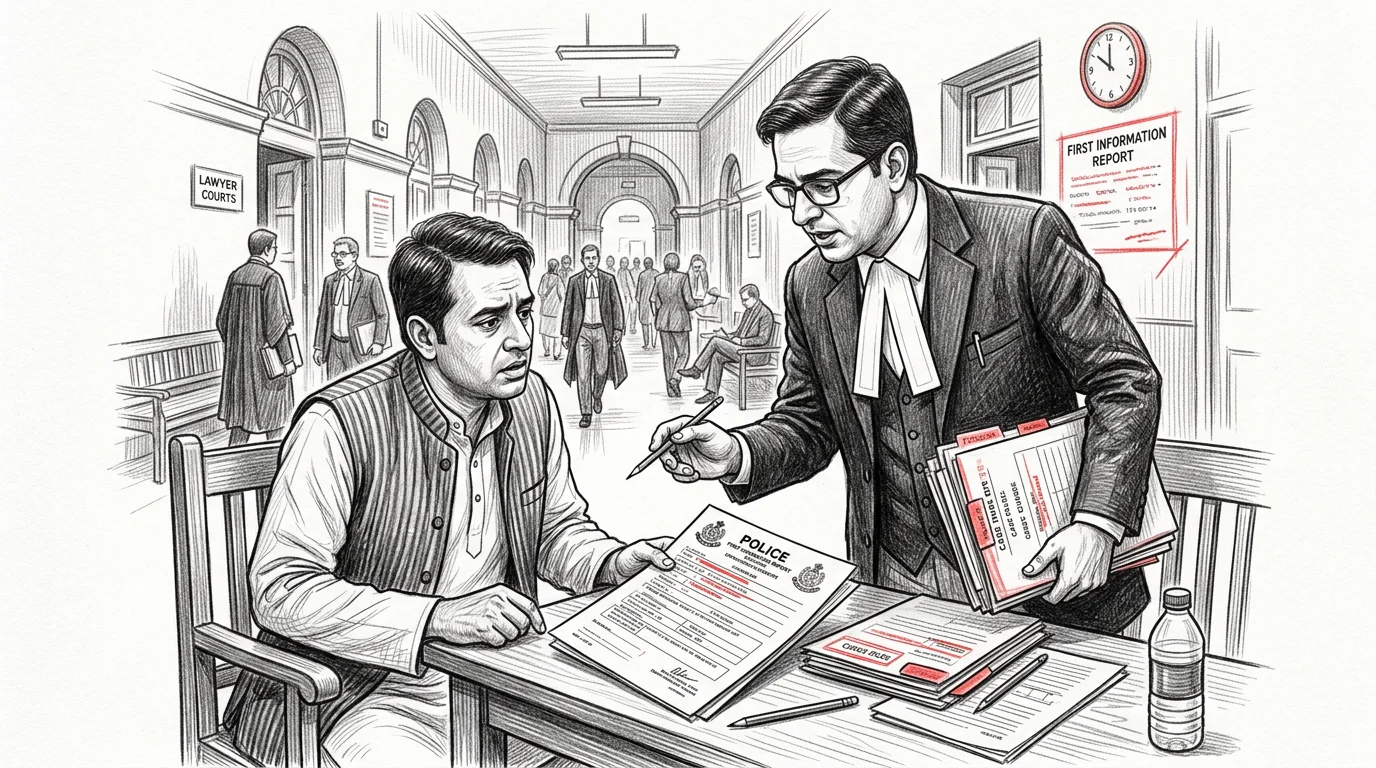

Cyber Crime Lawyer in Ghaziabad: IT Act Defence, Digital Evidence, and Online Fraud
Cyber crime complaints in Ghaziabad have grown significantly over the past five years. The Ghaziabad cyber crime police station, the UP Cyber Cell, and the National Cyber Crime Reporting Portal handle cases involving online fraud, identity theft, social media defamation, data breaches, cyber stalking, and violations of the Digital Personal Data Protection Act, 2023. If you have been accused under the Information Technology Act, 2000, or if you are a victim of online fraud seeking relief, a cyber crime lawyer in Ghaziabad who understands both the substantive law and the technical aspects of digital evidence is essential.
Bijlani & Co. represents both victims seeking relief and individuals accused under the Information Technology Act, 2000. Our cyber crime lawyers in Ghaziabad handle online fraud complaints, identity theft cases, social media defamation defence, data breach claims, cyber stalking petitions, and DPDP Act compliance matters. We guide clients through the evidence preservation steps that strengthen your case from day one, including digital evidence collection, chain of custody documentation, and coordination with cyber forensics when needed.
Information Technology Act, 2000: Key Offences and Defences
The Information Technology Act, 2000 is the primary legislation governing cyber crime in India. Section 66 of the IT Act covers computer-related offences — hacking, identity theft, cheating using computer resources, and violating privacy and security measures. The punishment under Section 66 is imprisonment of up to three years or a fine of up to five lakh rupees, or both. Section 43 covers civil liability for damage to computer systems — if a person accesses a computer system without permission and causes damage, they are liable to pay compensation to the affected party. Section 66A, which previously penalised sending offensive messages through communication services, was struck down by the Supreme Court in 2015 as unconstitutional.
Online fraud is one of the most common categories of cyber crime complaints in Ghaziabad. Fraud complaints typically involve fake websites, phishing emails, fraudulent investment schemes, and social media impersonation. Victims of online fraud can file complaints at the Ghaziabad cyber crime police station or through the National Cyber Crime Reporting Portal. Our cyber crime lawyers in Ghaziabad assist victims in filing complaints, preserving digital evidence, and pursuing recovery of funds through legal channels. We also represent accused persons who have been falsely implicated in online fraud cases, challenging the digital evidence and establishing that the accused was not involved in the alleged transaction.
Digital Evidence and Section 65B of the Evidence Act
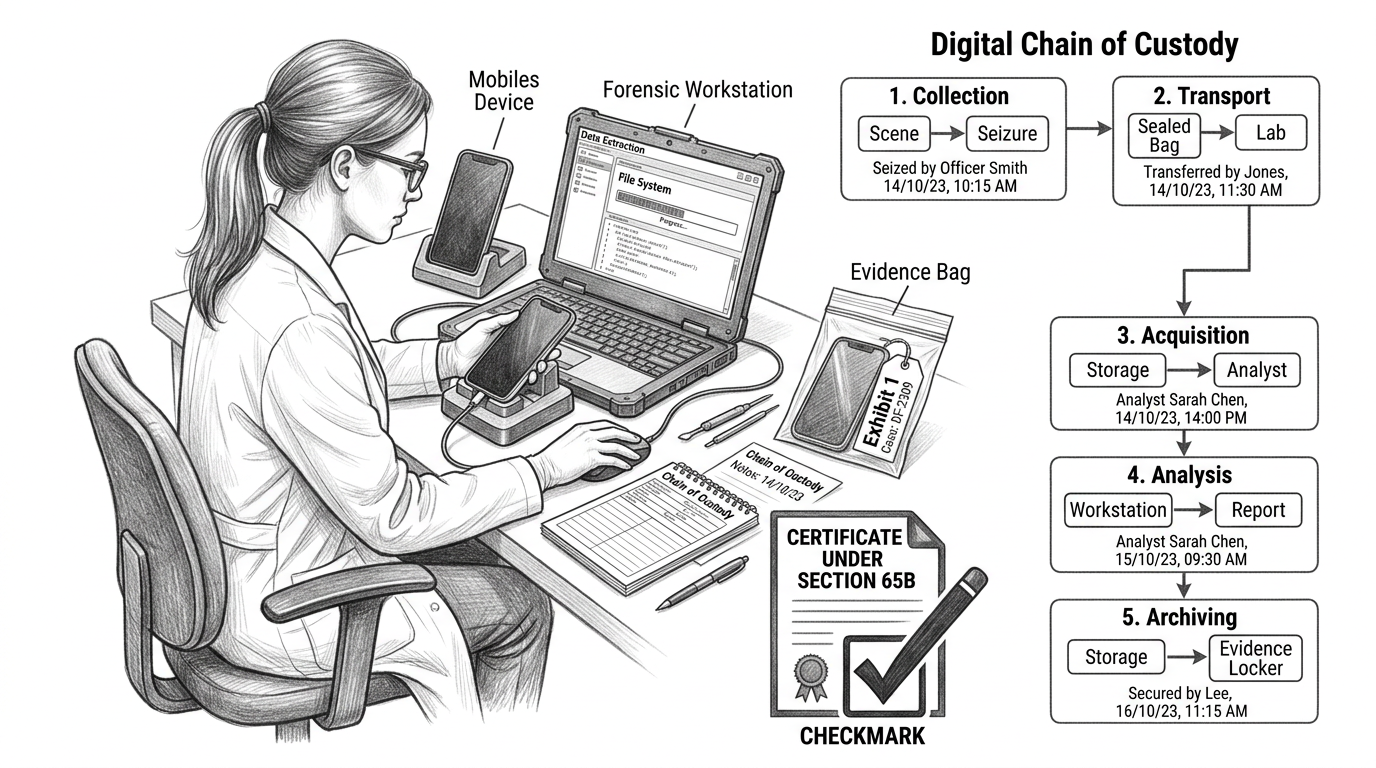
Digital evidence — emails, social media posts, chat messages, transaction records, and CCTV footage — is central to most cyber crime cases. Section 65B of the Indian Evidence Act, 1872 governs the admissibility of electronic evidence in Indian courts. For digital evidence to be admissible, it must be accompanied by a certificate under Section 65B(4) certifying that the computer or device from which the evidence was produced was regularly used, the information was regularly fed into the computer in the ordinary course of activities, and the computer was operating properly throughout the relevant period. Without this certificate, digital evidence may be inadmissible in court.
Our cyber crime lawyers in Ghaziabad ensure that digital evidence is collected, preserved, and certified correctly from the outset of the case. For victims, we preserve screenshots, chat logs, transaction records, and IP address information with proper certification. For accused persons, we challenge the prosecution’s digital evidence by examining whether the Section 65B certificate was properly obtained, whether the evidence was tampered with during collection, and whether the device from which the evidence was extracted was under the exclusive control of the accused.
Social Media Defamation Under Section 499 IPC and IT Act
Social media defamation cases have become increasingly common in Ghaziabad. Section 499 of the Bharatiya Nyaya Sanhita (formerly Section 499 IPC) defines defamation and provides for punishment of up to two years imprisonment or a fine. When defamatory content is published online — on Facebook, Twitter, Instagram, WhatsApp, or any other platform — the offended party can file a criminal complaint for defamation under Section 499 BNS read with Section 3 of the IT Act. Our cyber crime lawyers in Ghaziabad handle defamation cases on both sides: we represent plaintiffs who have been defamed online and need to have the content removed and the accused punished, and we represent defendants who have been falsely accused of posting defamatory content.
Digital Personal Data Protection Act, 2023: New Framework for Data Protection
The Digital Personal Data Protection Act, 2023 introduced new obligations for businesses and new protections for individuals. The DPDP Act applies to the processing of digital personal data within India, and it applies to the processing of digital personal data of individuals in India by entities outside India. The Act requires that personal data be processed only with the consent of the individual, or in certain specified circumstances where consent is not required. It also establishes rights for individuals — the right to access their personal data, the right to correct inaccurate data, the right to have data erased, and the right to grievance redressal.
For businesses in Ghaziabad, the DPDP Act imposes obligations regarding data collection, storage, processing, and sharing. Businesses that process personal data must obtain valid consent, provide clear privacy notices, implement data security measures, and appoint a grievance officer. Non-compliance can result in penalties of up to 250 crore rupees. Our cyber crime lawyers in Ghaziabad advise businesses on DPDP compliance and represent clients in data protection disputes before the Data Protection Board when it is established.
Filing a Cyber Crime Complaint in Ghaziabad
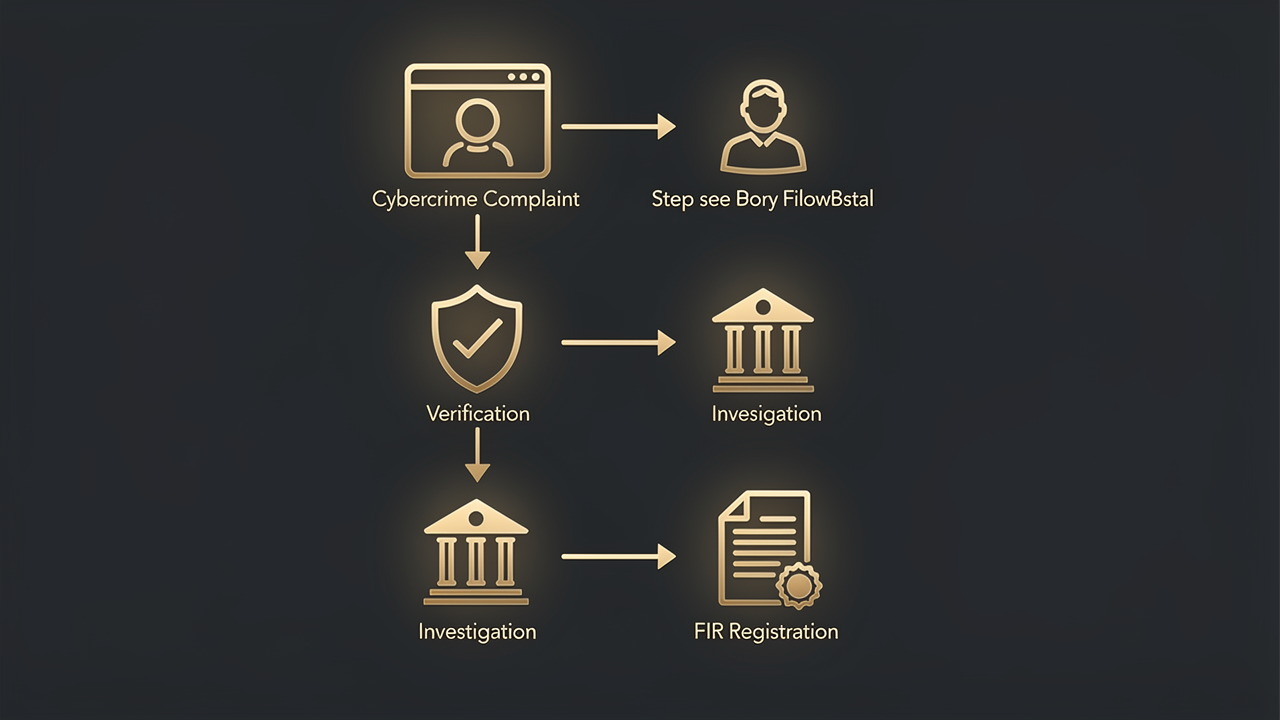
Filing a cyber crime FIR in Ghaziabad requires specific documentation and an understanding of how the Ghaziabad cyber cell operates. Complaints can be filed online through the National Cyber Crime Reporting Portal or physically at the Ghaziabad cyber crime police station. The complaint should include a detailed description of the incident, the nature of the offence, the identity of the accused if known, the financial loss if applicable, and all supporting digital evidence. Our cyber crime lawyers in Ghaziabad guide clients through the complaint filing process, ensuring that the FIR is complete and that all relevant evidence is preserved.
For online fraud cases, we preserve transaction records, bank statements, email correspondence, and chat logs. We also engage with the bank’s fraud department to freeze accounts and trace the flow of funds. In cases where the accused is located outside Ghaziabad or outside India, we coordinate with the cyber crime cells in other jurisdictions and with international law enforcement agencies through Interpol channels.
Defence Against Cyber Crime Allegations in Ghaziabad
Being accused of a cyber crime is a serious matter. The Ghaziabad cyber cell investigates allegations of online fraud, identity theft, hacking, and data breaches, and false accusations are not uncommon. Our cyber crime lawyers in Ghaziabad defend accused persons by challenging the digital evidence, establishing that the accused was not the person who committed the alleged act, and demonstrating that the prosecution’s case does not meet the required standard of proof. Common defence strategies include: challenging the reliability of the digital evidence, demonstrating that the accused’s device was not under their exclusive control, establishing that the alleged transaction was legitimate, and showing that the complaint was filed with mala fide intentions.
Social Media Offences: What Constitutes a Crime Online
Social media has created new categories of criminal offences under the IT Act, 2000 and the BNS, 2023. Posting defamatory content about someone on Facebook, Instagram, or X can attract Section 499 IPC (now Section 356 BNS for defamation) and Section 500 IPC (now Section 357 BNS for punishment for defamation). Creating a fake social media profile to impersonate someone is an offence under Section 66C IT Act (identity theft). Sharing private photographs or messages without consent violates Section 66E IT Act (violation of privacy). Making threatening posts or comments can attract Section 506 IPC (criminal intimidation, now Section 356 BNS). If you are accused of a social media offence, the prosecution must prove that you were the person who posted the content, that the content falls within the definition of the offence, and that it caused or was likely to cause harm. A cyber crime lawyer in Ghaziabad will challenge the chain of custody for the screenshots, argue that the content was opinion or fair comment, or negotiate with the complainant for a compromise.
What should I do if I am accused of a cyber crime in Ghaziabad?
Contact a cyber crime lawyer immediately. Do not make any statements to the investigating officer without legal counsel present. Preserve all digital evidence that supports your defence — device records, login logs, transaction histories, and any communication that establishes your innocence. Our cyber crime lawyers in Ghaziabad handle defence under the IT Act, challenging the prosecution’s evidence and presenting alternative explanations for the alleged conduct.
How do I file an online fraud complaint in Ghaziabad?
You can file an online fraud complaint through the National Cyber Crime Reporting Portal at cybercrime.gov.in or physically at the Ghaziabad cyber crime police station. The complaint should include the nature of the fraud, the financial loss, the identity of the accused if known, and all supporting evidence. Our cyber crime lawyers assist with the complaint filing process and follow up with the investigation to ensure that your case receives proper attention.
Is social media defamation a criminal offence in Ghaziabad?
Yes. Social media defamation is punishable under Section 499 of the Bharatiya Nyaya Sanhita (formerly Section 499 IPC) read with Section 3 of the IT Act. The punishment is imprisonment of up to two years or a fine. If you have been defamed on social media, our cyber crime lawyers can help you file a criminal complaint and seek removal of the content. If you have been accused of posting defamatory content, we defend against the allegations and challenge the prosecution’s evidence.
Does the DPDP Act 2023 apply to businesses in Ghaziabad?
Yes. The Digital Personal Data Protection Act, 2023 applies to businesses in Ghaziabad that process personal data of individuals in India. The Act requires businesses to obtain valid consent for data processing, provide clear privacy notices, implement data security measures, and appoint a grievance officer. Non-compliance can result in penalties of up to 250 crore rupees. Our cyber crime lawyers advise businesses on DPDP compliance.
Need a Cyber Crime Lawyer in Ghaziabad?
Bijlani & Co. handles IT Act defence, online fraud, digital evidence, and DPDP compliance across Ghaziabad and Delhi NCR. Contact us for immediate assistance.
Phone: 085958 09471
Email: write@bijlani.in
Office: 141 Patiala House Courts, New Delhi
Related Practice Areas
Cyber Crime Complaint Procedure in Ghaziabad
Filing a cyber crime complaint in Ghaziabad involves two parallel tracks: the police FIR route and the National Cyber Crime Reporting Portal (cybercrime.gov.in). The portal allows you to file a complaint online for offences like identity theft, online fraud, social media defamation, and child sexual abuse material. Once you file on the portal, the complaint is forwarded to the Ghaziabad cyber cell for investigation. For more serious offences, you can directly file an FIR at the Ghaziabad cyber police station or at your local police station, which will then transfer it to the cyber cell. The FIR must include: a description of the offence, the identity of the accused (if known), the evidence (screenshots, emails, transaction records), and the loss suffered. A cyber crime lawyer in Ghaziabad will help you draft a complete complaint that captures all relevant facts, preserves digital evidence in a court-admissible format, and ensures the investigation is conducted properly under the IT Act.
Social Media Defamation: Criminal and Civil Remedies
Social media defamation is both a civil wrong (defamation under tort law) and a criminal offence under Section 499 IPC (now Section 356 BNS) read with Section 500 IPC (now Section 357 BNS). For a post to qualify as defamatory, it must: refer to you specifically, be published to a third party, lower your reputation in the eyes of the public, and be false. A cyber crime lawyer in Ghaziabad will help you identify the publisher of the defamatory content, preserve screenshots with metadata intact, and file a complaint. For criminal defamation, the complaint is filed before the JMFC Court in Ghaziabad. For civil defamation, a suit for damages is filed before the Civil Court. In both cases, the lawyer will argue that the defamatory content has caused reputational harm, financial loss (loss of business, loss of employment), and emotional distress. Indian courts have awarded significant damages in social media defamation cases, especially where the content was widely shared or where the defendant had a large following.
Related Legal Guides
Need Expert Legal Representation in Ghaziabad?
Advocate Nilesh Bijlani and the team at Bijlani & Co. handle all practice areas across Delhi NCR courts.
Consult an Advocate in GhaziabadRelated Practice Areas
Explore our full range of legal services across Delhi NCR.