Bail Lawyer Delhi | Anticipatory Bail, Regular Bail, FIR Quashing | Bijlani & Co

Bail Lawyer Delhi | Anticipatory Bail, Regular Bail, FIR Quashing | Bijlani & Co

What a bail lawyer in Delhi actually does

A bail lawyer in Delhi does much more than appear in court and argue for release. The work begins the moment a client calls — before the police have formally arrested someone, before the FIR is filed, and sometimes before the client even knows they are under investigation. Delhi’s criminal courts handle an enormous volume of bail applications across district courts, the Delhi High Court, and the Supreme Court, and a bail lawyer in Delhi who knows how to navigate this system efficiently can mean the difference between weeks of custody and hours.

At Bijlani and Co, our bail lawyers in Delhi handle anticipatory bail under Section 438 CrPC, regular bail under Section 437 for non-bailable offences, default bail under Section 167(2) CrPC when the investigation exceeds the 60 or 90-day timeline, and anticipatory bail at the Delhi High Court and Supreme Court for cases registered across Delhi NCR. We have secured bail for clients charged under NDPS, 498A, POCSO, the IT Act, and white-collar crime statutes.

When you need a bail lawyer in Delhi

The first 24 to 48 hours after an FIR is registered are the most critical window for any bail defence. In Delhi, where the investigating agencies — Delhi Police, CBI, ED — operate with sophisticated investigation infrastructure, the speed at which your bail lawyer in Delhi can begin building the defence can determine whether anticipatory bail is available or whether you are already in custody.

Most people find a bail lawyer in Delhi after receiving a police notice under Section 41A CrPC — a notice requiring you to appear at a police station without arrest. Ignoring this notice converts a manageable situation into an arrest, and an arrest reduces bail prospects significantly. If you have received a 41A notice, call a bail lawyer in Delhi before you respond to it.

The same urgency applies if you have been named in an FIR but not yet received a notice. In Delhi, the investigating officer may move directly to arrest without issuing a 41A notice if they believe the offence is serious enough to warrant custodial interrogation. A bail lawyer in Delhi who is alerted early can move for anticipatory bail before the arrest happens, which is far easier than getting bail after arrest.

Anticipatory bail under Section 438: the pre-arrest shield

Section 438 of the CrPC gives the court the power to direct that if the applicant is arrested, they shall be released on bail. Anticipatory bail is filed before arrest — when you know an FIR has been registered or is likely to be registered, and you want the court to issue a direction that protects you from custody. The Delhi High Court has original jurisdiction for anticipatory bail in serious cases, and the district courts hear anticipatory bail applications for less serious offences.

A bail lawyer in Delhi filing anticipatory bail will draft the application around the specific facts of the case — the FIR allegations, the evidence supporting the defence’s version of events, and the grounds on which custody is unjustified. Generic anticipatory bail applications that rely on standard arguments about the accused’s good character are less effective than applications that engage with the specific allegations and demonstrate that custodial interrogation is unnecessary.

For 498A cases in Delhi, our bail lawyers in Delhi file anticipatory bail applications immediately upon receiving the 41A notice or learning of the FIR registration. The Delhi High Court has taken a strong view on the misuse of 498A in recent years, and anticipatory bail is often granted when the application demonstrates that the allegations are disproportionate to the evidence or that the FIR was filed as a negotiation tactic rather than based on genuine complaints.

Regular bail under Section 437: what the Delhi courts actually look at

Section 437 CrPC governs bail in non-bailable offences. The Delhi courts — whether the district courts at Tis Hazari, Rohini, or Dwarka, or the Delhi High Court — apply a three-part test: whether there are reasonable grounds for believing that the accused did not commit the offence, whether the offence is triable by the CJM court, and whether the accused’s release would not endanger the investigation or result in the accused tampering with evidence or influencing witnesses.

For bail after arrest, the key variables are: whether you are a first-time offender, whether you have local roots in Delhi, whether the evidence is primarily documentary rather than testimonial, and whether the investigating agency has completed the investigation. A bail lawyer in Delhi who can establish these variables clearly in the bail application will have a stronger case than one who relies on general arguments about the accused’s character.

498A, NDPS, and cyber crime: the hardest bail tracks in Delhi

498A cases are among the most emotionally charged bail applications in Delhi. The Delhi High Court has developed a pragmatic approach — granting anticipatory bail in cases where the FIR is clearly a negotiation tactic, but scrutinising applications carefully where the allegations involve genuine physical violence. Our bail lawyers in Delhi have secured anticipatory bail in 498A cases by demonstrating that the FIR was filed to pressure the accused into a settlement that was disproportionate to the actual conduct.

NDPS cases are the most difficult bail track in Delhi. The NDPS Act’s reverse-burden provision — where the accused must prove innocence rather than the prosecution proving guilt — makes bail harder to obtain, particularly for commercial quantities. Our bail lawyers in Delhi focus on the recovery procedure: was the search conducted with proper authorisation, was the seizure memo prepared correctly, and were samples sent for analysis within the mandated timeframe. Procedural failures in the recovery stage can lead to bail being granted even when the quantity of recovered material would otherwise make bail unlikely.

Cyber crime cases under Section 66D IT Act require a bail lawyer in Delhi who understands digital forensics. The prosecution’s case typically rests on digital evidence — IP addresses, mobile phone records, bank transaction logs. A bail lawyer in Delhi will challenge the identification chain and, where appropriate, challenge the admissibility of digital evidence that was not obtained in compliance with Section 65B of the Evidence Act.

What happens after bail: conditions and compliance

When the Delhi court grants bail, it typically imposes conditions: surrendering your passport, not leaving Delhi without court permission, not contacting the complainant in 498A cases, and appearing before the investigating officer at specified intervals. Breaching any of these conditions can result in bail being cancelled and the accused being sent back to custody.

A bail lawyer in Delhi will advise you on the specific conditions imposed and ensure that you comply strictly. We also monitor the case’s progress through the investigation and trial phases — bail applications are just the beginning. For cases where the investigation is likely to take time, we will make periodic applications to ensure that the bail conditions do not become a mechanism for continued restriction after the underlying justification has passed.

Bail for outstation and NRI clients

Many of our bail lawyer in Delhi engagements involve outstation clients — people from other states who are visiting Delhi for business, tourism, or family reasons and who have been arrested for offences allegedly committed during their visit. NRI clients face the added complication of passport confiscation and the risk of their visa status being affected by a criminal case.

For NRI clients, our bail lawyers in Delhi coordinate with NRI criminal lawyers in the client’s country of residence to ensure that the bail conditions are compatible with the client’s ongoing visa status, that the passport is released or retained in a manner that does not affect the client’s right to return home, and that any ongoing trial can be managed through local counsel while the client returns to their country of residence.

The bail hearing: what actually happens

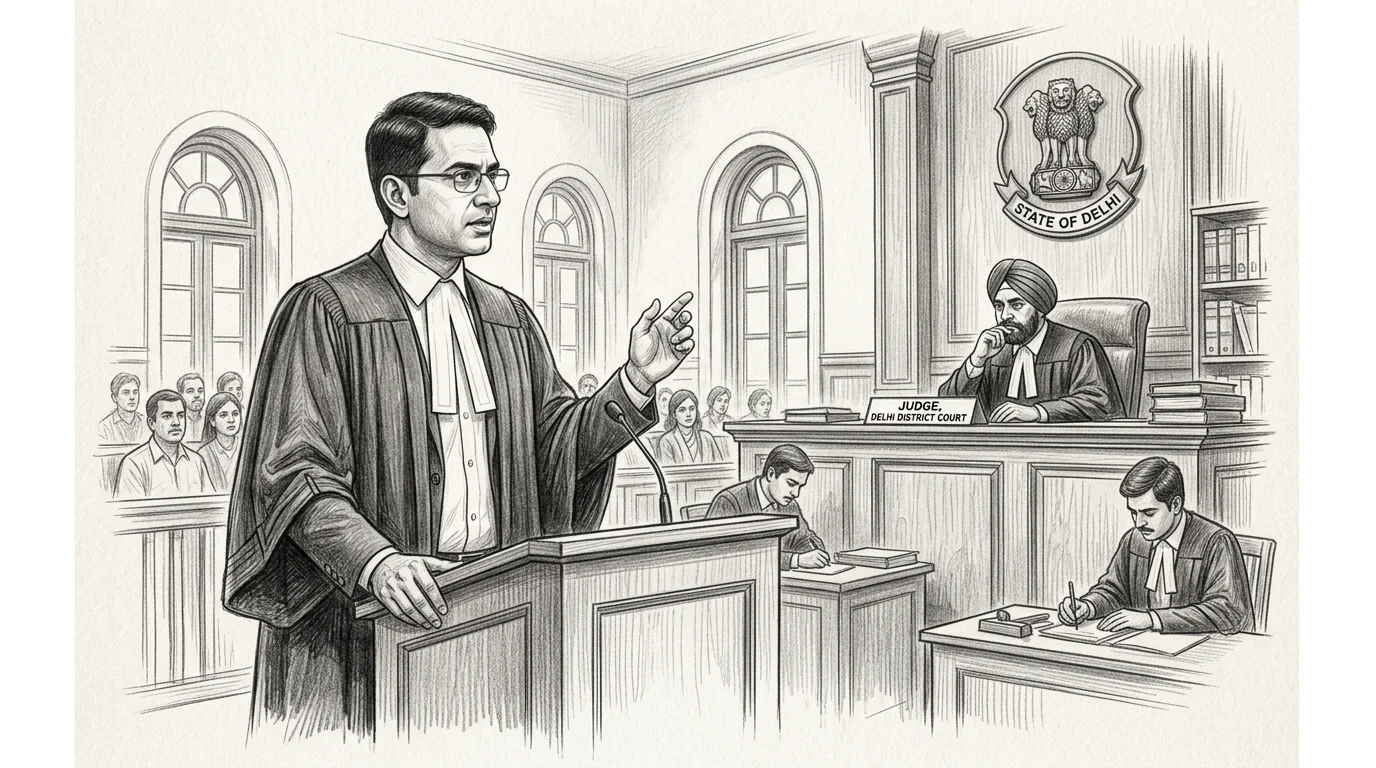
Most people have no idea what happens in a bail hearing until they are sitting in the courtroom. The prosecution opposes bail by arguing that the accused is likely to tamper with evidence, influence witnesses, or abscond. The defence responds by showing the opposite — that the accused has local roots, that the evidence is documentary rather than testimonial, and that the prosecution’s case is not as strong as it appears at the bail stage.

A bail lawyer in Delhi preparing for a bail hearing will have the FIR, the police report, the witness statements, and any documentary evidence ready before the hearing begins. The arguments need to be concise — bail hearings are typically short, and the judge will have read the case papers. What the judge wants is a focused argument on the specific grounds for bail, not a comprehensive defence of the entire case.

For anticipatory bail, the hearing is typically longer and more detailed. The court will want to understand the factual matrix — what the FIR alleges, what the defence’s version is, and whether the allegations, even if proved, would warrant custodial interrogation. A bail lawyer in Delhi who presents this clearly with documentary support will have a stronger application than one who relies on general arguments about the accused’s character.

How our bail lawyers in Delhi prepare applications

Every bail application we file is built on the actual case documents, not boilerplate templates. We read the FIR, analyse the police report, review witness statements, and identify specific weaknesses in the prosecution’s case that support the bail argument. Then we draft the application around those weaknesses — the judge can see from the application itself that the defence has engaged with the evidence.

For anticipatory bail, the application needs to address the specific facts and anticipate the prosecution’s objections. A well-drafted anticipatory bail application that acknowledges the prosecution’s likely arguments and responds to them directly has a much stronger presentation than a generic application relying on standard character arguments.

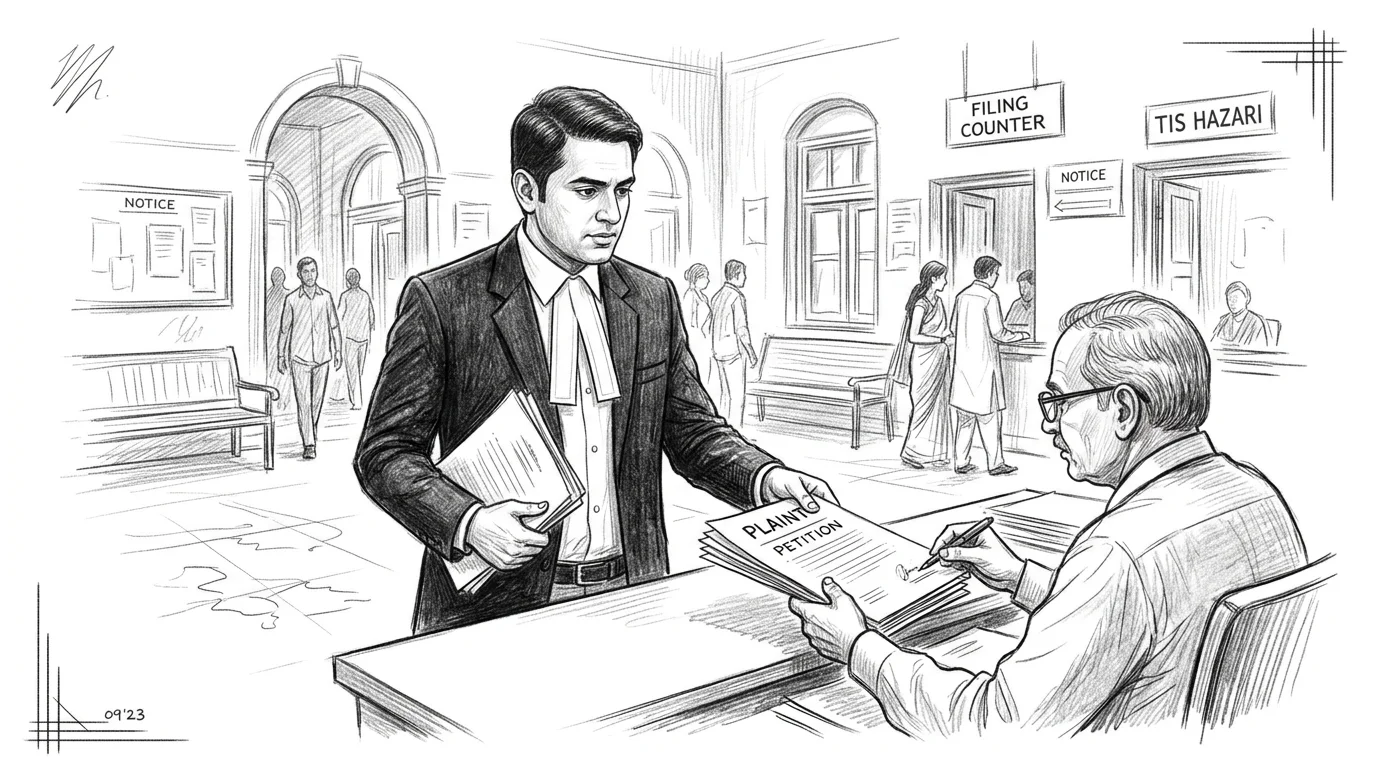
For regular bail after arrest, the application needs to be filed promptly. Delays are viewed unfavourably by the courts. Our bail lawyers in Delhi file within 24 hours of receiving instructions and argue at the earliest available listing.

Working with a bail lawyer in Delhi

The first engagement is immediate — we respond to 41A notices within hours, not days. We review the FIR and police report on an urgent basis and file the bail application before the arrest happens whenever possible. Then we manage the engagement through the hearing and, if bail is granted, through the conditions and compliance phase.

Our bail lawyers in Delhi work with our criminal lawyers in Delhi for cases that extend beyond bail into trial defence. The transition from bail to trial is smooth — we already have the case files, the evidence analysis, and the relationship with the client. When your bail lawyer in Delhi is also the lawyer who will defend you at trial, there is no handover delay, no learning curve, and no gaps in strategy.

Related practice areas

Bail matters in Delhi often have a criminal dimension beyond the initial application, including FIR quashing under Section 482 CrPC, trial defence, and appeals. Our bail lawyer in Delhi coordinates with our criminal lawyer in Delhi and our criminal lawyer in Gurgaon for cases that span both jurisdictions. For NDPS or white-collar matters with a regulatory dimension, our corporate lawyer in Delhi advises on the compliance side. Cyber crime bail matters are handled jointly with our cyber crime lawyer in Delhi.