Criminal Litigation | Bail, FIR, NDPS, IPC | Delhi NCR
Anticipatory Bail Under Section 438 CrPC: A Complete Guide for Delhi

A notice under Section 438 of the Code of Criminal Procedure changes your day entirely. It means the police intend to arrest you in connection with a criminal case. Unlike regular bail, which you apply for after arrest, anticipatory bail is sought before arrest. The procedure is different, the documentation is different, and the courtroom strategy is different.
If you have received a Section 438 notice or believe arrest is imminent in Delhi, acting quickly matters. The sooner your criminal lawyer files the application, the better your position.
What Section 438 CrPC Actually Says
Section 438 empowers the Sessions Court and the High Court to grant anticipatory bail. The purpose is to prevent arbitrary arrest and to give a person who reasonably apprehends arrest the chance to seek protection before it happens. The Supreme Court has consistently held that anticipatory bail is not permanent immunity. It is a conditional safeguard, and the court can cancel it if the conditions are violated.
The difference between anticipatory bail and regular bail comes down to timing. Regular bail under Section 437 CrPC is applied for after arrest. Anticipatory bail under Section 438 CrPC is applied for before arrest. Regular bail can be granted by any court. Anticipatory bail in Delhi can be granted only by the Sessions Court or the High Court.
When to File for Anticipatory Bail
The right time to file is the moment you learn arrest is possible. Waiting until the police show up at your address weakens your case. Courts view delayed applications as an attempt to avoid investigation rather than a genuine request for protection.
Situations where anticipatory bail is needed in Delhi: an FIR has been registered against you and the investigating officer has indicated your arrest is likely; you have received a summons under Section 41 CrPC to appear before the police; a co-accused has been arrested and the investigating officer will likely seek your custody; or you have received a notice under Section 160 CrPC asking you to appear for questioning.
What the Court Considers
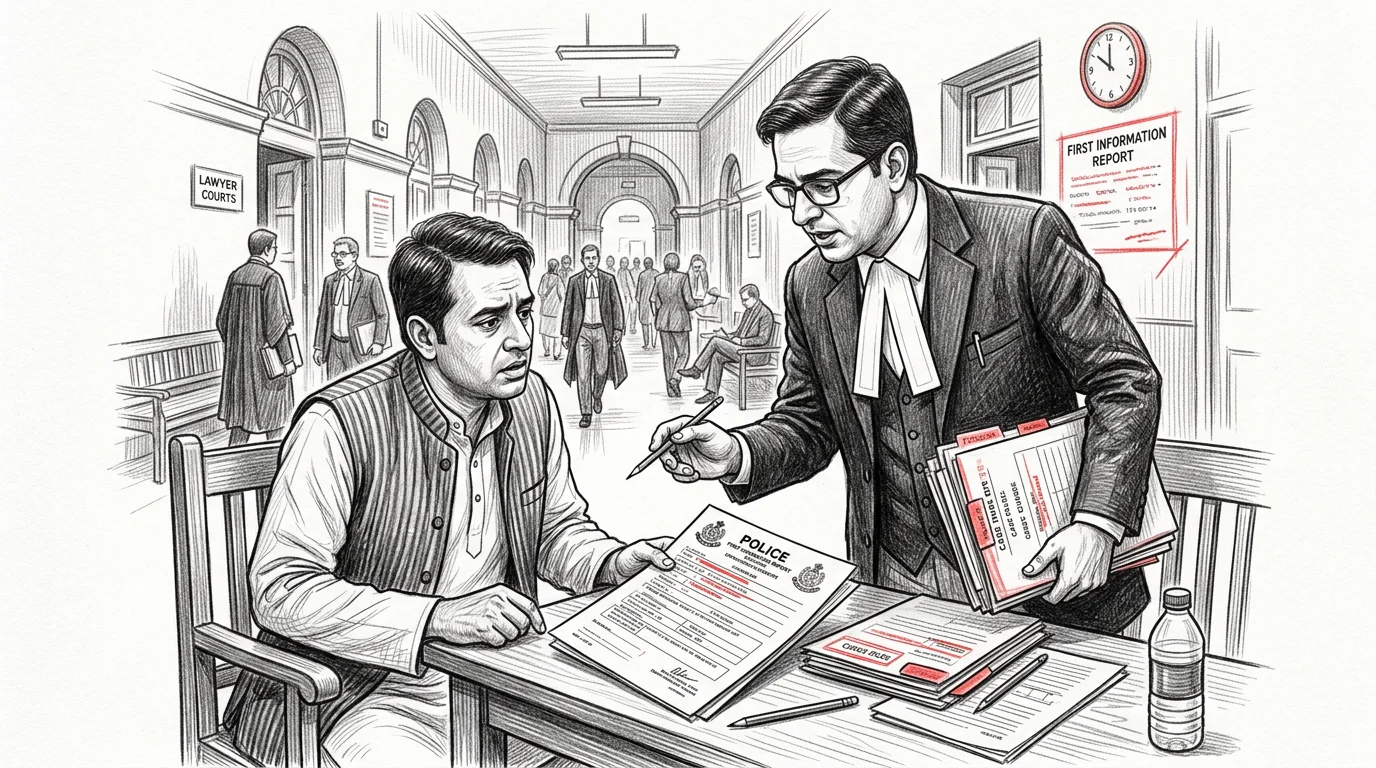
The court does not grant anticipatory bail on request. It examines: the nature and gravity of the alleged offence, your role in the incident, whether there is a prima facie case against you, your criminal history, your cooperation with the investigation, and whether you are likely to flee or influence witnesses.
Courts are cautious when the alleged offence falls under the NDPS Act, PMLA, POCSO, UAPA, or SC/ST Prevention of Atrocities Act. Anticipatory bail is harder to obtain in these cases, but it is not impossible. The key is demonstrating that the prima facie case is weak and that you are not a flight risk.
What the Application Should Include
A well-prepared anticipatory bail application contains: the FIR details and charges registered against you, a chronological account of your involvement, grounds showing why arrest is not necessary, evidence of cooperation with the investigation, your ties to the community (family, business, residence in Delhi), and an undertaking to cooperate with the investigation and appear when required.
Working with a criminal lawyer who has argued bail matters before the Delhi Sessions Courts and the Delhi High Court makes a practical difference. Experienced counsel know what arguments carry weight with local judges, what precedents to cite, and how to structure the application to address the court’s specific concerns.
How Long the Process Takes
Before the Sessions Courts in Delhi, anticipatory bail applications typically take 2 to 4 hearings. Before the Delhi High Court, a well-prepared application can be heard within a week. The timeline depends on case complexity, the judge’s calendar, and whether the prosecution opposes the application.
If the police have issued a lookout notice or are actively seeking you, your lawyer can apply for interim direction from the court directing the police not to arrest you until the application is decided. This interim relief provides immediate protection while the main application is heard.
Conditions When Bail Is Granted
When anticipatory bail is granted, the court typically imposes conditions: you must make yourself available for interrogation when required; you must not leave Delhi NCR without the court’s permission; you must not contact or influence witnesses; you must not tamper with evidence; and you must not commit a similar offence while on bail.
Violating any condition can lead to cancellation under Section 439(2) CrPC. After cancellation, you can apply for regular bail under Section 437 or 439, but the court will view the cancellation as a factor against granting bail.
Cancellation of Anticipatory Bail
Grounds for cancellation include: breach of bail conditions, new evidence emerging, witness tampering, non-cooperation with investigation, or commission of a similar offence while on bail. The prosecution, investigating officer, or complainant can file an application for cancellation.
If anticipatory bail is cancelled, your criminal lawyer can immediately apply for regular bail. The strategy shifts from prevention to mitigation — showing that you have not abused the bail granted earlier and that you are willing to cooperate fully going forward.
Recent Developments
The Supreme Court has held that anticipatory bail, once granted under Section 438, cannot be cancelled mechanically. There must be a material change in circumstances. Courts have also directed that bail applications be disposed of promptly and that the right to liberty cannot be curtailed without due process. These rulings have strengthened the position of accused persons seeking anticipatory bail in Delhi, but every case remains fact-specific.
Common Questions
Can anticipatory bail be granted for all offences?
No. Under Section 43D of UAPA and similar provisions in NDPS, PMLA, POCSO, and SC/ST Atrocities Acts, courts exercise extreme caution. Anticipatory bail can still be sought in these cases, but the prima facie case must be weak and the applicant must not be a flight risk.
What is the difference between 438 CrPC and 437 CrPC?
Section 438 is for anticipatory bail before arrest, filed before the Sessions Court or High Court. Section 437 is for regular bail after arrest, can be filed before any court. The grounds, evidence, and arguments differ significantly between the two.
Can I get interim protection while my anticipatory bail application is pending?
Yes. Your lawyer can apply for an interim direction from the court restraining the police from arresting you until the main application is decided. This provides immediate protection while the court hears the full application.
How long does anticipatory bail last?
Anticipatory bail operates until the trial concludes, unless the court specifies a shorter period. The court can impose time limits in appropriate cases. If the bail is not cancelled during the trial, it continues until the final judgment.
Related Practice Areas
- Criminal Litigation — FIR quashing, trial defence, NDPS, POCSO
- Cyber Law — IT Act defence, digital evidence, online fraud
- Criminal Defence Delhi — bail, FIR, trial across Delhi courts
Need anticipatory bail in Delhi
Bijlani & Co has represented clients before the Delhi Sessions Courts and Delhi High Court in bail matters across criminal law, white-collar crime, and regulatory investigations. Contact us at +91-085958 09471 or write@bijlani.in for immediate assistance.
Need a lawyer in Delhi? Consult our advocate in Delhi for comprehensive legal representation. We also specialise in Criminal Litigation | Bail, FIR, NDPS, I matters.