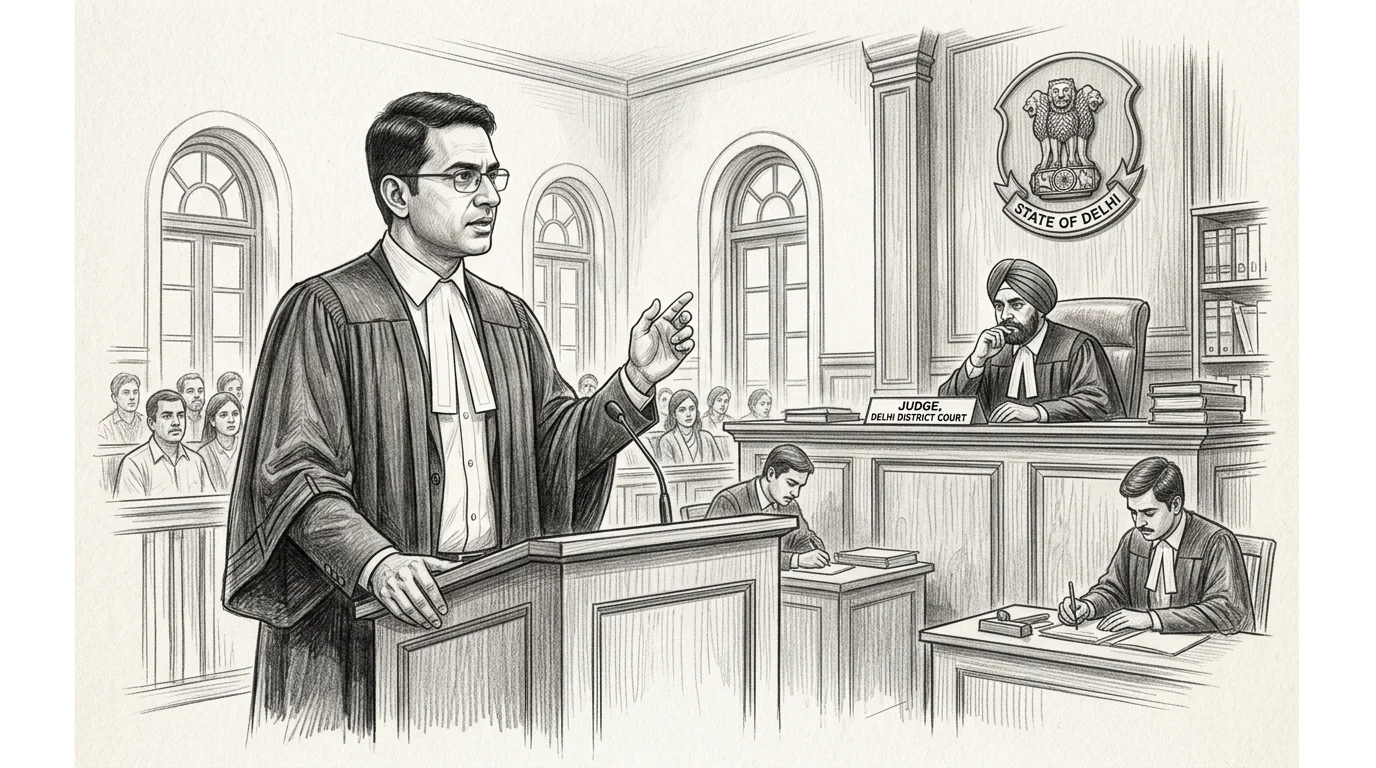
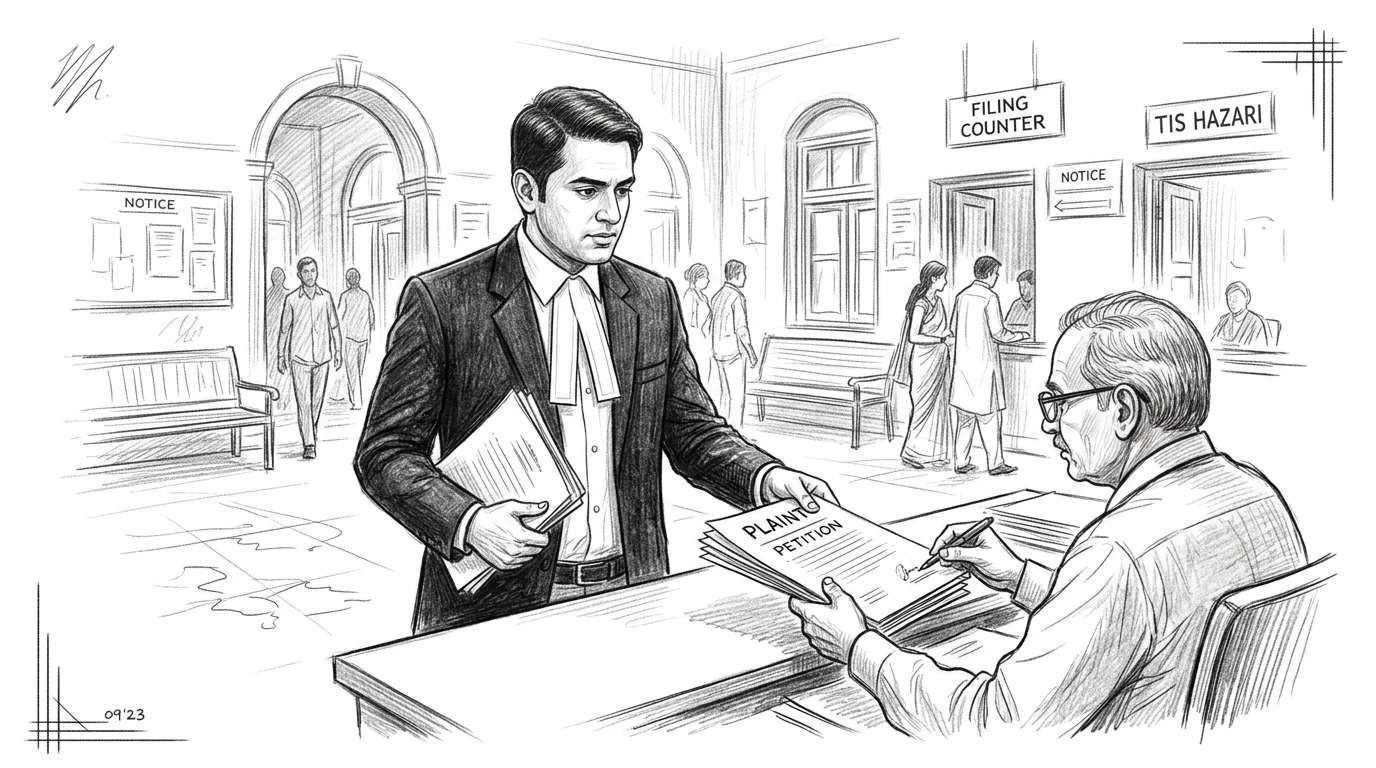
Criminal lawyer in Delhi handles FIR filing, bail applications, FIR quashing under Section 482 BNSS, trial defence, and appeals at the Tis Hazari District Court and Delhi High Court. A criminal lawyer in Delhi also covers NDPS matters, cyber crime FIRs, and criminal appeal proceedings across Delhi NCR.
Criminal Lawyer in Delhi
Professional legal representation at Delhi courts. 48-hour filing. Call 085958 09471.
Criminal lawyers in Delhi defend clients before the Magistrate Court, the Sessions Court, and the Delhi High Court across bailable and non-bailable matters. The first 48 hours after arrest decide most outcomes: a lawyer who appears at the first remand hearing can move for anticipatory or regular bail, challenge the FIR, or place the accused under a Section 167 BNS remand. A Delhi criminal case typically runs 12 to 24 months to trial, and the bail posture varies sharply by offence type and by the Magistrate hearing the matter.
A criminal lawyer in Delhi handles FIR filing, bail applications, FIR quashing under Section 482 BNSS, trial defence, and appeals. If you need a criminal lawyer in Delhi, the first step depends on the case stage: before FIR, file a complaint at the police station; after FIR, file for bail at the Tis Hazari or Rohini District Court. A criminal lawyer in Delhi also handles NDPS matters, cyber crime FIRs, and criminal appeal proceedings at the Delhi High Court.
Criminal law in Delhi is one of the most active litigation fields in the country. The city courts handle matters that run from first-instance Magistrate trials through Sessions Court criminal trials and up to the Delhi High Court, and the volume of cases filed under the Bharatiya Nyaya Sanhita, the Bharatiya Nagarik Suraksha Sanhita, and special statutes such as NDPS, POCSO, and the Domestic Violence Act keeps the docket constantly full. For a client in Delhi the practical question is not just which lawyer to hire, but which forum will hear the matter, how fast the first hearing will be fixed, and what the realistic timeline looks like. This page walks through all three, with the specific court timings and procedural norms that actually apply in Delhi.
How a criminal case moves through the Delhi courts
A criminal matter in Delhi follows a fixed path through three court levels, and understanding where your case sits determines what a defence or prosecution strategy can achieve. The Magistrate Court handles the FIR, the arrest, the first remand hearing, and the smaller trials. The Sessions Court takes over for trials on the more serious offences and for appeals from the Magistrate. The Delhi High Court is the final appellate and revisional forum, and it is also where anticipatory bail applications under Section 438 of the Bharatiya Nagarik Suraksha Sanhita must be filed.
- FIR and investigation: the police register the complaint under the applicable BNS section and begin the inquiry. The first 48 hours are when the accused legal position is set.
- Remand hearings: under Section 167 BNS the accused can be held in custody in blocks, and each block is where the bail argument first becomes live.
- Trial: for bailable offences the Magistrate tries the case; for the more serious non-bailable matters the Sessions Court conducts the trial, and the High Court hears appeals and revisions.
Anticipatory bail in Delhi: when to file and how it works
Anticipatory bail is the single most important pre-arrest tool in a Delhi criminal matter, and the decision to move for it is usually made in the first days of a case, not after arrest. A Section 438 BNS application goes to the Delhi High Court, and the court grants it on the showing of a credible threat of arrest, not on a guarantee of acquittal. The standard is whether the applicant has a reasonable apprehension of being arrested for a non-bailable offence.
- The application should be filed as soon as the first signs of an FIR or a summons appear, because once an arrest has happened the court looks at the matter differently.
- The relief is a direction that if the applicant is arrested, the police must release the applicant on bail on the terms the court fixes.
- A Delhi High Court anticipatory bail order can run for a set period, and the applicant can apply for it to be extended or made absolute at trial.
Regular bail after arrest: the 48 hour window
Once an arrest has happened in Delhi, the first remand hearing within 48 hours is the moment where a regular bail application under Section 437 BNS has the best chance of success. After that first hearing the court view of the case hardens, and the accused custody posture becomes the default until the trial completes. A bail application at the Magistrate stage is decided on the police challan, the accused residence, and the gravity of the charge.
- File the bail application within 48 hours of arrest to catch the first remand hearing.
- Bring the accused residence proof and employment or business proof, because flight risk is the central factor.
- For a first-time accused with a fixed address in Delhi, the chance of regular bail at the Magistrate stage is materially better than for a repeat accused.
FIR quashing in the Delhi High Court
When an FIR in Delhi is based on a disputed civil matter dressed up as a criminal complaint, or when the facts do not disclose the ingredients of any offence, the High Court can quash the FIR under Section 482 BNS. The court looks at whether the FIR is maintainable at all, and it will not quash an FIR where a genuine criminal dispute is live. The application is made with the FIR, the reply to the FIR if one has been filed, and any settlement or compromise that has been reached between the parties.
- Civil disputes in criminal clothing (recovery of money, property disputes) are the category the High Court most often quashes.
- A quashing application is not an appeal against a trial, it is a pre-trial test of whether the case should go on at all.
- The court will not quash an FIR where the prosecution is well advanced and the accused has made no credible defence.
NDPS matters in Delhi: the commercial quantity threshold
NDPS cases in Delhi are treated on a completely different footing from ordinary criminal matters, because the Act distinguishes between personal quantity and commercial quantity, and the presumption shifts against the accused once the commercial threshold is crossed. For the Delhi jurisdiction the commercial quantity figures are set by the Central Government and are updated periodically, so the exact number matters to the bail and sentencing arguments. A lawyer who argues a commercial quantity NDPS case the same way as a simple theft case will lose the bail application.
- Below the commercial threshold, personal use is a statutory defence that the court must consider.
- Above it, the presumption of trafficking attaches, and the bail argument becomes a fight over the accused role and the chain of recovery.
- The recovery procedure under NDPS is more rigorous than under the ordinary CrPC, and the chain of custody is where most defences succeed.
What to bring to your first Delhi criminal consultation
The first consultation in a Delhi criminal matter is where the strategy is set, and the documents you bring determine how much the lawyer can do before the first court appearance. The exact contents of this list matter more than the general quality of the lawyer, because a Delhi criminal case moves fast and the first 48 hours set the posture for the whole trial.
- The FIR copy - even a photocopy. The exact section numbers and the police station name are the two things the lawyer needs to assess the bail posture.
- Any remand order, if the accused has already been remanded. The order states the reasoning and the next remand date.
- Proof of residence and employment - an Aadhaar card, a ration card, a salary slip, or a business registration. These support the no-flight-risk argument at the Magistrate stage.
Delhi court timings and hearing norms that actually apply
The Delhi courts run on fixed daily timings that clients need to plan around, and the hearing norms vary between the Magistrate, Sessions, and High Court. The Magistrate Court in Delhi sits from early morning, the Sessions Court runs through the day, and the Delhi High Court has its own listing pattern. Knowing when the matter will actually be called is what separates a lawyer who is prepared from one who is not, and it is a detail that most clients never ask about.
- The first remand hearing in a Delhi Magistrate Court is usually fixed within a day or two of the FIR.
- The Delhi High Court anticipatory bail matters are listed on specific days, and the listing day determines how fast the relief can be granted.
- Trial dates in the Sessions Court are spaced further apart, and the pace of a Delhi trial is slower than the client usually expects.
Related criminal law resources across Delhi NCR
The criminal law pages on this site are cross-linked so a client in Ghaziabad, Gurgaon, or Noida can find the same procedural content for their own court. The criminal docket in each city follows the same BNS and BNSS structure, but the local timings and the Magistrates who hear the first hearing are different, and the pages below carry the city-specific notes.
- Criminal Lawyer Gurgaon - defence, bail, and trial
- Criminal Lawyer Noida - criminal defence and trial
- Bail Lawyer Delhi - anticipatory and regular bail
- NDPS Lawyer Ghaziabad - bail under Section 37 NDPS
Frequently asked questions about a criminal lawyer in Delhi
How fast should I hire a criminal lawyer in Delhi after an arrest?
The first 48 hours matter. A lawyer who appears at the first remand hearing can move for bail, challenge the FIR, or place the accused under a 167 BNS remand, and the posture set in that window carries through the rest of the case. A client who waits usually has a harder fight on bail. If the arrest has already happened, call the lawyer before the next scheduled hearing, not after.
Can the Delhi High Court quash an FIR?
It can, under Section 482 BNS, where the FIR is based on a civil dispute dressed as a criminal complaint, or where the facts do not disclose the ingredients of any offence. It will not quash a live criminal dispute where the prosecution is well advanced. A quashing application is a pre-trial test of whether the case should go on at all, not an appeal of the trial.
What is the difference between anticipatory bail and regular bail?
Anticipatory bail under Section 438 BNS is filed before an arrest happens, and it directs the police to release the accused on bail if an arrest is attempted. Regular bail under Section 437 BNS is filed after an arrest, at the first remand hearing or later. The two have different standards of proof, and anticipatory bail is generally the harder one to get for a serious offence.
How long does a Delhi criminal trial take?
A typical criminal trial in Delhi runs 12 to 24 months to a verdict, and the pace depends on the forum, the number of accused, and how fast the evidence is framed. Bailable matters move faster, and NDPS and POCSO matters are handled on a different timetable because of the special procedure. A contested Sessions Court trial is the slowest track.
Speak to a Criminal Lawyer in Delhi
For a criminal matter in Delhi, the first consultation is where the bail strategy and the trial approach are set. Call 085958 09471 or write to the firm. The advocate appears before the Magistrate Court, the Sessions Court, and the Delhi High Court on criminal matters.
See Also in Other Cities
- Criminal Lawyer Faridabad — Faridabad
- Criminal Lawyer Ghaziabad — Ghaziabad
- Criminal Lawyer Gurgaon — Gurgaon
- Criminal Lawyer Noida — Noida
Further Reading
- Can I Fight This Case Without a Lawyer?
- Tis Hazari Court Timings & Filing Schedule
- What Happens If You Miss Your Court Date
- NDPS Bail: The 3-Question Test
Serving Criminal Matters in Delhi Areas
We regularly appear before the courts serving these Delhi neighbourhoods:
Related Guides
- Criminal Lawyer in Noida Expressway, Ghaziabad | FIR & Bail
- Criminal Lawyer in Noida, Sector 55 | 085958 09471
- Criminal Lawyer in BGS District, Faridabad | FIR & Bail
- Criminal Lawyer in Greater Noida, Sector 62 | FIR & Bail
- Criminal Lawyer in Sushant Lok, Gurgaon | FIR, Bail & Trial
How It Works
- Free 30-minute consultation (call or WhatsApp)
- Case assessment + written timeline
- Filing at the correct court within 48 hours
- Regular updates at each hearing
- Order + compliance management
Related Legal Guides
Need Expert Legal Representation in Delhi?
Advocate Nilesh Bijlani and the team at Bijlani & Co. handle all practice areas across Delhi NCR courts.
Consult an Advocate in DelhiAreas We Serve in Delhi
Bijlani & Co. serves clients across Delhi, including the following localities and sectors:
- Connaught Place
- Punjab Bagh
- Karol Bagh
- Daryaganj
- New Delhi
- Lajpat Nagar
- Rajouri Garden
- Rohini
- Dwarka
- Saket
- Vasant Kunj
- Greater Kailash
- Hauz Khas
- Chanakyapuri
- Majlis Park
- Nehru Place
Related Practice Areas
Explore our full range of legal services across Delhi NCR.