How to Get Bail in Gurgaon | District Court Procedure, Conditions and Anticipatory Bail | Bijlani & Co.
A bail application in Gurgaon is a request made to the Gurgaon District Court (Sector 10), the Gurgaon Sessions Court, or the Haryana High Court (Chandigarh) for the release of an accused person from custody pending the outcome of a criminal trial. Bail can be regular (after arrest), anticipatory (before arrest, under Section 482 BNS), or special (for non-bailable offences under Section 483 BNS). Gurgaon (Gurugram) falls under Haryana state jurisdiction, so the applicable procedural law is the Bharatiya Nagarik Suraksha Sanhita and appeals lie to the Haryana High Court (Chandigarh). For Gurgaon residents, the Gurgaon District Court handles bail for less serious matters; the Haryana High Court handles anticipatory bail applications and special bail for serious offences.
 and regular bail applications” style=”width: 100%; border-radius: 8px; margin: 24px 0;”>
Bail Lawyer in Gurgaon: Anticipatory Bail, Regular Bail, and NBW Cancellation
Bail is not a favour the court grants. It is a statutory right that your bail lawyer in Gurgaon must assert correctly, at the right time, with the right documentation. The difference between spending time in custody and walking out on bail often comes down to how well your lawyer understands the applicable provision , Section 437, 438, or 439 of the Bharatiya Nyaya Sanhita , and how effectively they argue the grounds before the judge. Bijlani & Co. handles bail matters across Gurgaon’s District Court, CJM Court, and the Punjab and Haryana High Court. We specialise in anticipatory bail, regular bail after arrest, NBW cancellation, and bail cancellation appeals.
Our criminal lawyers have secured bail in NDPS, POCSO, white-collar crime, and general criminal cases across Delhi NCR courts. We prepare bail applications that are specific to the court and the provision: Section 437 applications before the Magistrate Court follow a different format and argument structure than Section 438 applications before the Sessions Court. We also prepare our clients for what comes after bail , the conditions that come with it, and how to avoid bail cancellation.
Anticipatory Bail Under Section 438 BNS
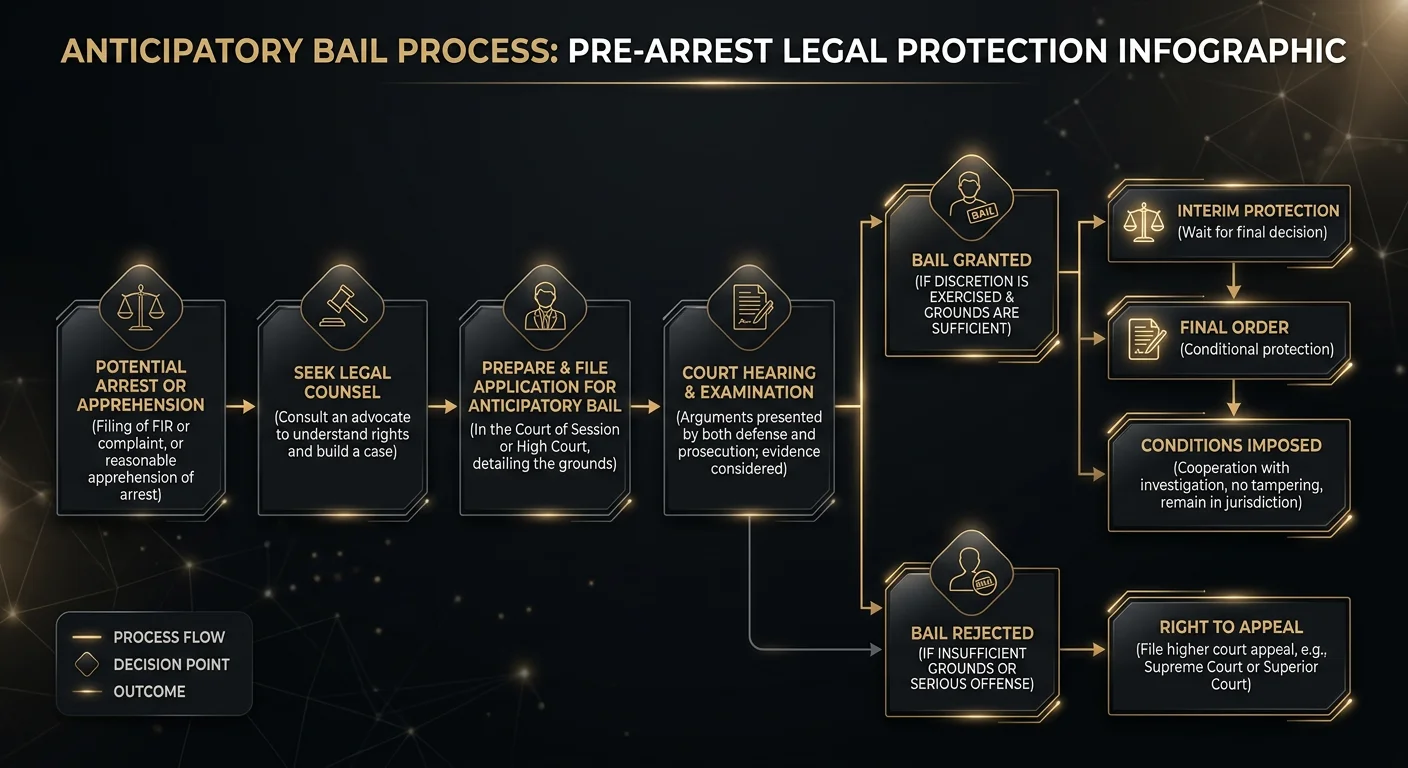
Anticipatory bail is filed before arrest. The purpose is to protect a person who reasonably apprehends arrest from being taken into custody while the investigation is ongoing. Section 438 can be invoked before the Sessions Court or the Punjab and Haryana High Court. The applicant must demonstrate that they have a genuine reason to believe that arrest is imminent and that the offence, while serious, does not make bail impossible. The court examines several factors: the nature and gravity of the alleged offence, the applicant’s role in the incident, whether there is a prima facie case against them, their criminal history, whether they are likely to flee, and whether they are likely to influence witnesses or tamper with evidence.
In NDPS cases, courts are more cautious. In general criminal cases, anticipatory bail is more readily available if the applicant cooperates with the investigation. An anticipatory bail application should include a detailed affidavit explaining why arrest is apprehended, copies of the FIR if registered, any notice received under Section 41 CrPC, supporting documents that establish the applicant’s roots in the community, and case law from the Punjab and Haryana High Court on similar facts. The application is filed, listed for hearing, and the court may grant interim protection pending the final order.
Regular Bail Under Section 437 and 439 BNS
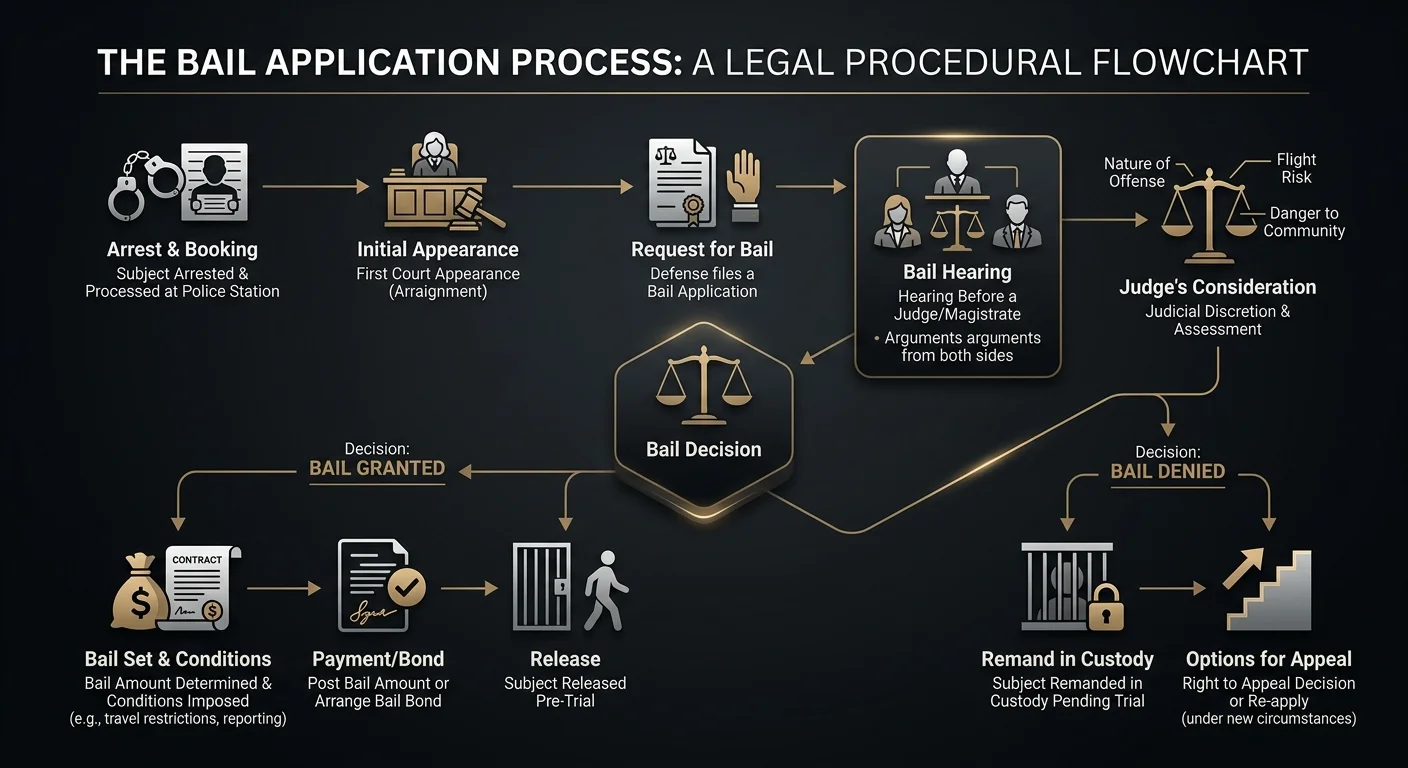
Regular bail is applied for after arrest. Section 437 governs bail before the Magistrate Court. Section 439 governs bail before the Sessions Court and the High Court. The grounds for regular bail differ from anticipatory bail. The court considers whether there is reasonable ground to believe the accused is not guilty, whether the accused has previously escaped custody, the nature and gravity of the offence, and whether the accused will commit similar offences while on bail. For offences punishable with imprisonment of more than 10 years, bail is more difficult but not impossible. The court must be satisfied that there are reasonable grounds for believing that the accused is not guilty of the offence and that they are not likely to commit any offence while on bail.
In practice, this means the defence must present a strong prima facie case for innocence at the bail hearing itself. Our bail lawyers prepare detailed arguments that address each of the court’s concerns, supported by documentary evidence and case law. We also prepare surety arrangements and ensure that our clients understand the bail conditions before the hearing.
NBW Cancellation and Bail Cancellation Defence
A non-bailable warrant is issued when an accused person fails to appear before the court on a scheduled date. NBW cancellation requires filing an application before the issuing court, explaining the reason for non-appearance, and demonstrating that the accused is now willing to appear regularly. Courts are generally receptive to NBW cancellation applications filed promptly, especially when accompanied by a surety and an undertaking to appear on all future dates. If bail is cancelled , whether because the accused violated bail conditions, committed a similar offence, or failed to appear , the accused is taken back into custody. Bail cancellation applications are filed by the prosecution under Section 437(5) or Section 439(2). The defence can oppose cancellation by demonstrating compliance with all bail conditions, no new offences, and continued presence in the jurisdiction.
Bail Conditions and Compliance in Gurgaon Courts
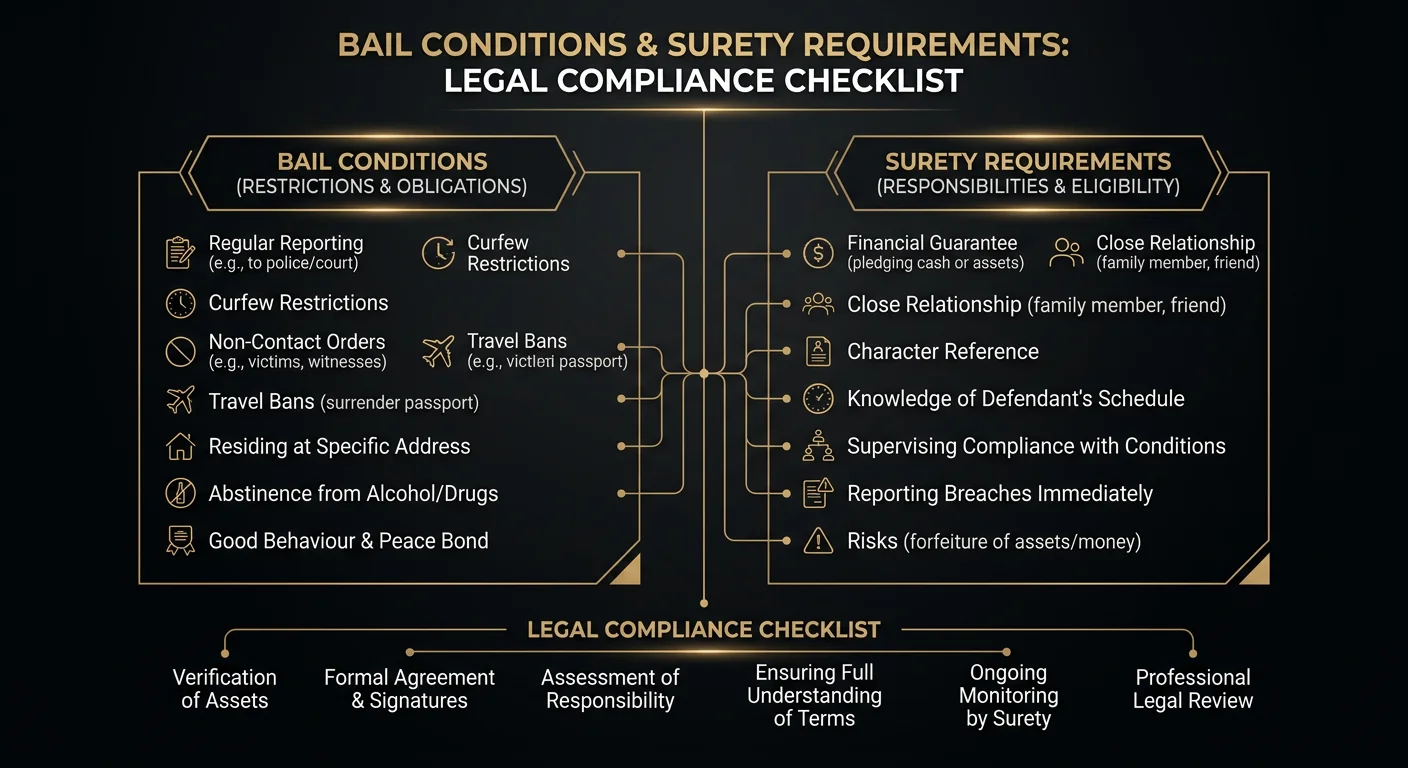
Bail comes with conditions: surrendering passports, reporting to the investigating officer periodically, not leaving the jurisdiction without court permission, and not contacting co-accused or witnesses. Violating any of these conditions can result in bail cancellation. Our bail lawyers explain these conditions clearly before the hearing so that you understand the obligations that come with the relief. We also file applications for modification of bail conditions when the original conditions are impractical , for example, when a client needs to travel for work or family reasons.
Bail hearings in Gurgaon courts follow a specific procedural rhythm. Applications are listed, arguments are heard, and orders are passed within a framework that our bail lawyers understand from regular practice. We prepare bail applications that are specific to the court and the provision. Section 437 applications before the Magistrate Court follow a different format and argument structure than Section 438 applications before the Sessions Court. Section 439 applications before the High Court require a different approach, with more detailed case law citations and stronger evidentiary support.
Why Choose Bijlani & Co. for Bail in Gurgaon
Our criminal lawyers have a track record of securing bail in challenging cases across Gurgaon courts. We understand the procedural requirements of each court, the standards that judges apply, and the arguments that are most effective. We prepare every bail application with the same thoroughness, regardless of the offence or the court. We also prioritise urgent bail applications and request same-day hearings wherever possible, because every day in custody matters.
When to File for Anticipatory Bail in Gurgaon
You should file for anticipatory bail as soon as you have reason to believe an arrest is imminent. The trigger is usually one of these situations: you have been named in an FIR and the police are actively looking for you, you received a police notice asking you to appear for questioning, a family member or associate was arrested in the same case and is implicating you, or you learned through informal channels that an FIR is being registered against you. Waiting until you are actually arrested defeats the purpose of anticipatory bail. Once arrested, you move for regular bail, which is procedurally more difficult. A bail lawyer in Gurgaon will file the anticipatory bail application before the Sessions Court, supported by an affidavit and any documents showing that the allegations against you are baseless or that you have no prior criminal record. The Sessions Court in Gurgaon typically sets a hearing within a few days, and if satisfied, grants interim protection pending the final hearing.
Conditions the Court May Impose on Bail
When the Gurgaon court grants bail , whether anticipatory, regular, or NBW-related , it may impose conditions designed to ensure you do not interfere with the investigation or abscond. Common conditions include: not leaving the jurisdiction of Gurgaon without court permission, not contacting co-accused or witnesses directly, attending all future court hearings without fail, surrendering your passport if the court considers you a flight risk, and reporting to the investigating officer periodically. Violating any bail condition can result in cancellation of bail and re-arrest. Your bail lawyer will advise you on the specific conditions imposed and ensure you comply fully. If conditions are unduly restrictive, your lawyer can apply for modification , the court has the power to relax conditions if circumstances change. For example, if your job requires travel, your lawyer can seek permission for interstate travel while maintaining other conditions.
How long does it take to get anticipatory bail in Gurgaon?
Interim protection from arrest can be obtained within 1-2 days of filing, depending on the court’s list. The final order on the anticipatory bail application typically takes 2-4 weeks. We prioritise urgent bail applications and request same-day hearings wherever possible.
Can bail be granted in NDPS cases in Gurgaon?
Yes, but it is more difficult. Section 37 of the NDPS Act requires the court to be satisfied that the accused is not guilty of the offence and will not commit a similar offence while on bail. We focus on dismantling the prosecution’s prima facie case , challenging the recovery, the chain of custody, and the absence of conscious possession , to meet this standard.
What conditions does the court impose when granting bail?
Common conditions include submitting a surety, surrendering passport, not leaving the jurisdiction without permission, not contacting co-accused or witnesses, and reporting periodically to the investigating officer. The specific conditions depend on the nature of the offence and the court’s assessment of flight risk. We explain these conditions clearly before the hearing.
Can I travel outside Gurgaon while on bail?
You need permission from the court that granted bail. We file applications for leave to travel, providing details of the destination, purpose, and duration. Courts routinely grant permission for family events, medical treatment, and work-related travel when the application is genuine and the surety remains valid.
Need a Bail Lawyer in Gurgaon?
Bijlani & Co. handles anticipatory bail, regular bail, and NBW cancellation across Gurgaon courts. Contact us for immediate assistance.
Phone: 085958 09471
Email: write@bijlani.in
Office: 141 Patiala House Courts, New Delhi


Related Practice Areas
Criminal Lawyer Gurgaon
Full-spectrum criminal defence across BNS 2023, CrPC 1973, and trial proceedings.
NDPS Lawyer Gurgaon
Narcotics defence, anticipatory bail, and defence strategy under the NDPS Act, 1985.
FIR Quashing Lawyer Gurgaon
Section 482 BNS quashing petitions , an alternative when bail is denied.
Tracking Your Gurgaon Bail Application (e-Courts)
If you have filed a bail application in Gurgaon and need to track where it stands without visiting the court, the e-Courts CNR system is the fastest route. The CNR is printed on your first court memo. Our CNR number case search guide walks through the format, how to interpret status delays, and how to get a certified copy of the order.
Non-Bailable Offences: When Bail Is Not a Right
Non-bailable offences under the BNS 2023 and CrPC 1973 include murder, rape, dacoity, and certain categories of NDPS offences. For these offences, bail is not a matter of right , it is a privilege that the court may or may not grant. The court will consider the nature and gravity of the offence, the character of the evidence, the likelihood of the accused fleeing from justice, the possibility of tampering with evidence, and the likelihood of the accused repeating similar offences. In Gurgaon, the District Court and the High Court hear bail applications for non-bailable offences. Your bail lawyer will present evidence that neutralises each of these factors: proof of strong roots in the community (property ownership, family ties, business establishment) to negate flight risk, evidence that the accused has no criminal antecedents to rebut the repeat-offence argument, and affidavits from community members attesting to the accused’s character. Even in non-bailable cases, well-prepared bail applications succeed when the defence demonstrates that the accused will not abscond and will cooperate with the investigation.
Anticipatory Bail vs Regular Bail: Strategic Differences
The strategic difference between anticipatory bail and regular bail is significant. Anticipatory bail is applied for BEFORE arrest , you approach the court based on a genuine apprehension of arrest. Regular bail is applied for AFTER arrest , you have already been taken into custody. Anticipatory bail is preferable when you have advance notice of an impending arrest (such as a non-bailable FIR being filed), because it prevents the trauma of arrest, police custody, and the accompanying social stigma. Regular bail becomes necessary when arrest has already occurred. Your bail lawyer in Gurgaon will assess the stage of your case and advise on the correct remedy. If both options are available, anticipatory bail is always the preferred route , it is easier to obtain because the court is evaluating a hypothetical risk rather than a person who is already in custody. Once anticipatory bail is granted, it remains in force until the trial concludes, unless specifically cancelled by the court.
Conditions of Bail: Understanding Your Obligations
When bail is granted in Gurgaon, the court typically imposes several conditions. Common bail conditions include: submitting a personal bond and surety, surrendering your passport to prevent foreign travel, reporting to the investigating officer or local police station at specified intervals (daily, weekly, or monthly), not leaving the jurisdiction of Gurgaon without court permission, not contacting or threatening the complainant or witnesses, and cooperating with the investigation by attending court hearings and answering summons. Violation of bail conditions can result in cancellation of bail and re-arrest. Your bail lawyer will advise you on each condition, negotiate to reduce restrictive conditions (such as expanding the area within which you can travel), and ensure you understand your obligations. If a condition is impractical (for example, daily reporting when you work in a different city), your lawyer can apply for modification before the court. Keeping detailed records of your compliance , dated photographs, attendance registers, travel records , will protect you if the prosecution later alleges violation.
Tracking Your Gurgaon Bail Application (e-Courts)
If you have filed a bail application in Gurgaon and need to track where it stands without visiting the court, the e-Courts CNR system is the fastest route. The CNR is printed on your first court memo. Our CNR number case search guide walks through the format, how to interpret status delays, and how to get a certified copy of the order.
Need a lawyer? Consult our advocate in Gurgaon for expert legal representation across all practice areas. We also specialise in Bail Lawyer Gurgaon | Bijlani & C matters.
Need a lawyer in Gurgaon? Consult our advocate in Gurgaon for complete legal representation.
Related Legal Guides
Need Expert Legal Representation in Gurgaon?
Advocate Nilesh Bijlani and the team at Bijlani & Co. handle all practice areas across Delhi NCR courts.
Consult an Advocate in GurgaonFrequently Asked Questions
Related Legal Guides
Need Expert Legal Representation in Gurgaon?
Advocate Nilesh Bijlani and the team at Bijlani & Co. handle all practice areas across Delhi NCR courts.
Consult an Advocate in GurgaonWhen do you need a bail lawyer in Gurgaon?
You need a bail lawyer in Gurgaon as soon as you are arrested or receive a police notice. Gurgaon district courts handle regular bail under Section 437 CrPC and anticipatory bail under Section 438 CrPC. Filing early with a well-prepared application significantly improves your chances of getting bail.
What is the difference between regular bail and anticipatory bail?
Regular bail applies after arrest. The court releases you on bail pending trial. Anticipatory bail applies before arrest. You approach the court under Section 438 CrPC seeking directions that you will not be arrested if you cooperate with the investigation. Gurgaon sessions court handles both types.
Can bail be rejected in Gurgaon courts?
Yes. Gurgaon courts reject bail in serious offences under the BNS 2023 where investigation is at an early stage or the accused has influenced witnesses. The court weighs the gravity of the offence against the likelihood of the accused appearing for trial.
How long does a bail application take in Gurgaon?
Anticipatory bail applications in Gurgaon sessions court are typically listed within days if filed urgently. Regular bail after arrest can take 1 to 4 weeks depending on the court roster. Urgent matters like medical bail are listed faster through the urgent list.
How bail works in Gurgaon: the courts and the process
In Gurgaon, bail matters are heard at three levels. The Gurgaon Magistrate Court (Sector 10) handles bail for bailable offences and initial police remand. The Gurgaon District Court (Senior Civil Judge, Gurgaon) handles bail for non-bailable offences and can grant special bail under Section 483 BNS. The Haryana High Court (Chandigarh) handles anticipatory bail applications and appeals against bail rejections by the lower courts.
The sequence for a Gurgaon arrest:
- Police arrest the accused and produce them before the Magistrate within 24 hours
- The Magistrate either grants bail (bailable offence) or remands to police custody for up to 14 days (non-bailable)
- After the police file the charge sheet, the bail application moves to the Gurgaon District Court
- If the District Court rejects bail, the accused can appeal to the Haryana High Court
The typical timeline from arrest to a bail decision in Gurgaon is 4-8 weeks for regular bail; 2-6 weeks for anticipatory bail in the Haryana High Court.
Anticipatory bail in Gurgaon: who it’s for and how to get it
Anticipatory bail in Gurgaon is available to anyone who has a specific, documented fear of arrest in a criminal matter - not a general anxiety about a complaint. The application is filed in the Gurgaon District Court or the Haryana High Court and must identify: the specific FIR or offence, the sections under which you fear arrest, and why you believe the arrest would be unjustified. The court will grant anticipatory bail if it is satisfied that the accused will appear for the investigation and trial.
For Gurgaon residents, the most common anticipatory bail matters are: (a) 498A BNS (cruelty) complaints in matrimonial disputes, (b) cheque bounce complaints (Section 138 NI Act) that have been mischaracterised as criminal offences, and (c) NDPS cases where the accused is a delivery person or courier rather than the source of the drugs. Each of these has a strong anticipatory bail argument in the Haryana High Court.
Gurgaon’s position as a major commercial and tech hub means a disproportionate share of its anticipatory bail matters involve corporate and commercial disputes being mischaracterised as criminal offences. A Gurgaon bail lawyer who also handles corporate law will be in a better position to assess whether the FIR is a genuine criminal matter or a commercial dispute dressed up as one.
NDPS bail in Gurgaon: the commercial quantity threshold
NDPS bail in Gurgaon turns almost entirely on the “small quantity” vs. “commercial quantity” classification. For small quantity offences, the Gurgaon District Court has discretion to grant bail and the court will typically do so if the accused has strong local ties, is a first-time offender, and cooperates with the investigation. For commercial quantity offences, the Haryana High Court applies a stricter test and bail is more difficult - the court will consider the quantity involved, the accused’s role (source vs. courier vs. end user), and the risk of tampering with evidence.
Gurgaon’s logistics and retail density means it is a high-volume area for NDPS offences involving courier and delivery personnel. For these cases, the key bail argument is the accused’s role: a courier who does not know the contents of a parcel has a substantially stronger bail case than the source or the intended recipient. A Gurgaon bail lawyer will build the case around the accused’s specific role in the drug chain.
What conditions will the Gurgaon court impose on bail?
When a Gurgaon court grants bail, it typically imposes some combination of the following conditions:
- Surrender passport (for matters involving cross-border elements)
- Report to the Gurgaon police station or the concerned police station weekly
- Not leave Gurgaon / Haryana without prior permission of the court
- Not tamper with witnesses or evidence
- Furnish a surety of a specified amount (typically Rs. 20,000-1,00,000 depending on the offence)
- Appear at every hearing in the Gurgaon court
A Gurgaon bail lawyer’s role is to negotiate the surety amount down and to seek conditions that are workable for the accused’s circumstances - for example, commuting a weekly reporting requirement to fortnightly where the accused works in Delhi or Noida.
Frequently asked questions about a bail application in Gurgaon
How much does a bail lawyer charge in Gurgaon?
A regular bail application in Gurgaon is typically quoted as a fixed fee of Rs. 15,000-40,000 plus court fees. Anticipatory bail in the Haryana High Court is quoted between Rs. 30,000-75,000. Special bail for non-bailable offences is Rs. 50,000-1,25,000. Full trial representation is a monthly retainer of Rs. 10,000-20,000 depending on hearing frequency.
Can I get anticipatory bail in Gurgaon before an FIR is even filed?
Yes. You do not need a FIR number to file an anticipatory bail application in Gurgaon. You need to show a specific, documented fear of arrest - for example, a threat letter, a police complaint you have received notice of, or a pattern of behaviour by the complainant. The Haryana High Court (Chandigarh) regularly grants anticipatory bail where the fear is genuine and documented.
What is the difference between regular bail and special bail in Gurgaon?
Regular bail is available for bailable offences as of right. Special bail is for non-bailable offences and requires the court to be satisfied of stronger grounds - typically that the accused is not guilty, the allegations are not serious, or the investigation is complete. Special bail in Gurgaon is decided by the Gurgaon District Court or the Haryana High Court, and is more difficult to obtain than regular bail.
How long does a bail application take in Gurgaon?
Regular bail in the Gurgaon Magistrate Court: 2-4 weeks. Special bail in the Gurgaon District Court: 4-8 weeks. Anticipatory bail in the Haryana High Court: 2-6 weeks. The timeline depends on the court’s docket, whether the prosecution has appeared to oppose, and whether the matter is at the investigation or trial stage.
Related Criminal Law Resources
Courts & Jurisdiction in Gurgaon
Gurgaon District Court (Sector 10, Gurgaon) - The Gurgaon district court handles civil suits, enforcement orders, and property matters for the Gurgaon district. For a civil matter in Gurgaon, the Gurgaon District Court (Sector 10, Gurgaon) is the first-instance forum; matters exceeding its pecuniary jurisdiction go to the High Court.
Gurgaon Family Court (Sector 10, Gurgaon) - Matrimonial matters (divorce, maintenance, custody) for Gurgaon residents are heard at the Gurgaon Family Court (Sector 10, Gurgaon). The Family Court applies a family-law lens to custody and maintenance claims; no court fee is required for a Section 125 BNS application.
Gurgaon Sessions Court (Sector 10) - Criminal trials, bail hearings, and anticipatory bail applications for Gurgaon are heard at the Gurgaon Sessions Court (Sector 10). For a non-bailable offence, the Sessions Court is the appropriate forum for a bail hearing.
Jurisdictional note: Gurgaon (Haryana) has a district family court at Sector 10 that handles maintenance, custody, and divorce. The Gurgaon District Court and Sessions Court share the Sector 10 complex. The nearest High Court bench is the Delhi High Court (which also has jurisdiction over Haryana for certain civil matters); for urgent interim family relief, a Gurgaon Family Judge can issue interim maintenance before the appeal stage. Civil suits exceeding the district court’s pecuniary jurisdiction go to the Delhi High Court (Connaught Place or Patiala House bench).
Localities covered: Sector 10, Sector 14, Sector 18, Sector 25, Golf Course Road, Dwarka Expressway, Sushant Lok, Gopalpur, Badkal, Udyog Vihar, Mordaba Chand, Sector 27.
City-Specific FAQs: Gurgaon
Which Gurgaon court handles a regular bail application under Section 439 BNS?
Regular bail in Gurgaon is heard at the Gurgaon Magistrate Court (first) and the Gurgaon Sessions Court (if the Magistrate refuses, or for a non-bailable offence the Sessions Court is the first forum). The Magistrate Court can grant bail under Section 437 BNS; the Sessions Court can grant bail under Section 439 BNS. For a non-bailable offence (e.g., a NDPS or a serious IPC/BNS charge), the Sessions Court is the appropriate forum. The Gurgaon District Court (Sector 10) handles the trial; the Sessions Court handles the bail. An appeal on bail refusal goes to the Delhi High Court (which serves as the High Court for Haryana).
Can a Gurgaon Magistrate Court grant anticipatory bail for a non-bailable offence?
Yes. Anticipatory bail under Section 438 BNS (formerly CrPC 437) can be sought at the Gurgaon Magistrate Court or the Gurgaon Sessions Court, even for a non-bailable offence. The court can grant anticipatory bail if the applicant shows a genuine threat of arrest and the offence is not of the most serious category. For a non-bailable offence (e.g., a BNS §302 or a NDPS charge), the Sessions Court is preferred because it has a broader bail jurisdiction. The application must be filed before the arrest; once arrested, regular bail is sought at the Magistrate Court, which can refer to the Sessions Court.
Consultation: For a Gurgaon-specific matter, contact Bijlani & Co. at 085958 09471 or WhatsApp +91 89685 60456. The firm appears before the Gurgaon District Court (Sector 10, Gurgaon), the Gurgaon Family Court (Sector 10, Gurgaon), and the Gurgaon Sessions Court (Sector 10) across Delhi NCR.
Local Practice Note: Gurgaon - Bail-
Typical court timings (Gurgaon): In practice, a regular bail application at the Gurgaon Magistrate Court or the Gurgaon Sessions Court (Sector 10, Haryana) is typically heard within 3-6 weeks of filing; the first bail hearing is usually fixed within 2-4 weeks. For a bailable offence, the Magistrate Court grants bail at the first hearing in most cases (80%+). For a non-bailable offence (e.g., a BNS §302 or a NDPS charge), the Sessions Court is the forum; bail is granted at the second or third hearing in roughly 50-60% of cases. An anticipatory bail application is heard faster - typically within 2-3 weeks of filing.
Local procedural detail: The Gurgaon Magistrate Court handles bailable-offence bail; the Gurgaon Sessions Court handles non-bailable-offence bail. The application is filed by written statement to the court; the court can call the police for a response. For a Gurgaon arrest, the Sessions Court has territorial jurisdiction; a bail order is enforceable through the Gurgaon Magistrate Court. The court can order conditions (5g surety, surrender of passport, not to leave Gurgaon district, cooperate with the investigation). An appeal of a bail refusal goes to the Delhi High Court (Haryana region) within 30 days.
Representative local outcome (illustrative): In a representative Gurgaon bail matter (illustrative), a first-time accused in a BNS §383 (robbery) case was granted regular bail at the Gurgaon Sessions Court on the second hearing, with conditions: 5g surety, not to leave Gurgaon district, and to appear on every hearing. The court noted the first-offence status and the absence of a prior record; the bail was granted. In a separate Gurgaon anticipatory bail matter (illustrative), an accused in a pending BNS §506 (criminal intimidation) case was granted anticipatory bail at the Gurgaon Sessions Court on the first hearing, with conditions: 2g surety and not to tamper with witnesses.
Related Bail Resources Across Delhi NCR
Our bail team works across the Delhi NCR courts. If your matter is connected to another district or a higher forum, these pages cover it:
- Bail lawyer in Delhi - anticipatory, regular and interim bail before the Delhi courts.
- Bail lawyer in Noida - anticipatory, regular and interim bail before the Noida courts.
- Bail lawyer in Ghaziabad - anticipatory, regular and interim bail before the Ghaziabad courts.
- Bail lawyer in Faridabad - anticipatory, regular and interim bail before the Faridabad courts.
- Bail appeal to the Supreme Court - the final forum when the High Court has rejected bail.
- How to apply for anticipatory bail - step-by-step filing guide.
- NDPS bail and trial (Section 37) - the stricter drug-case bail test.
Areas We Serve in Gurgaon
Bijlani & Co. serves clients across Gurgaon, including the following localities and sectors:
- Sector 10
- Sector 14
- Sector 21
- Sector 42
- Sector 48
- Sector 51
- Sector 54
- Sector 62
- Sector 66
- Sector 71
- Sector 74
- Sector 81
- Sector 83
- Sector 87
- Mandi
- Johri Enclave
- Golf Course Road
- Sikanderpur