
What a criminal lawyer in Gurgaon actually handles
Gurgaon’s criminal docket reflects the city’s character. Corporate offices produce white-collar cases under the Prevention of Corruption Act, Benami Transactions Act, and Companies Act. Rapid real estate development has generated property disputes that turn criminal under Sections 420 and 406 IPC. Tech parks along the Golf Course Road and Cyber City corridor produce IT Act complaints. And the city’s proximity to Delhi means that cases registered in Gurgaon often overlap with Delhi Police investigations running simultaneously.
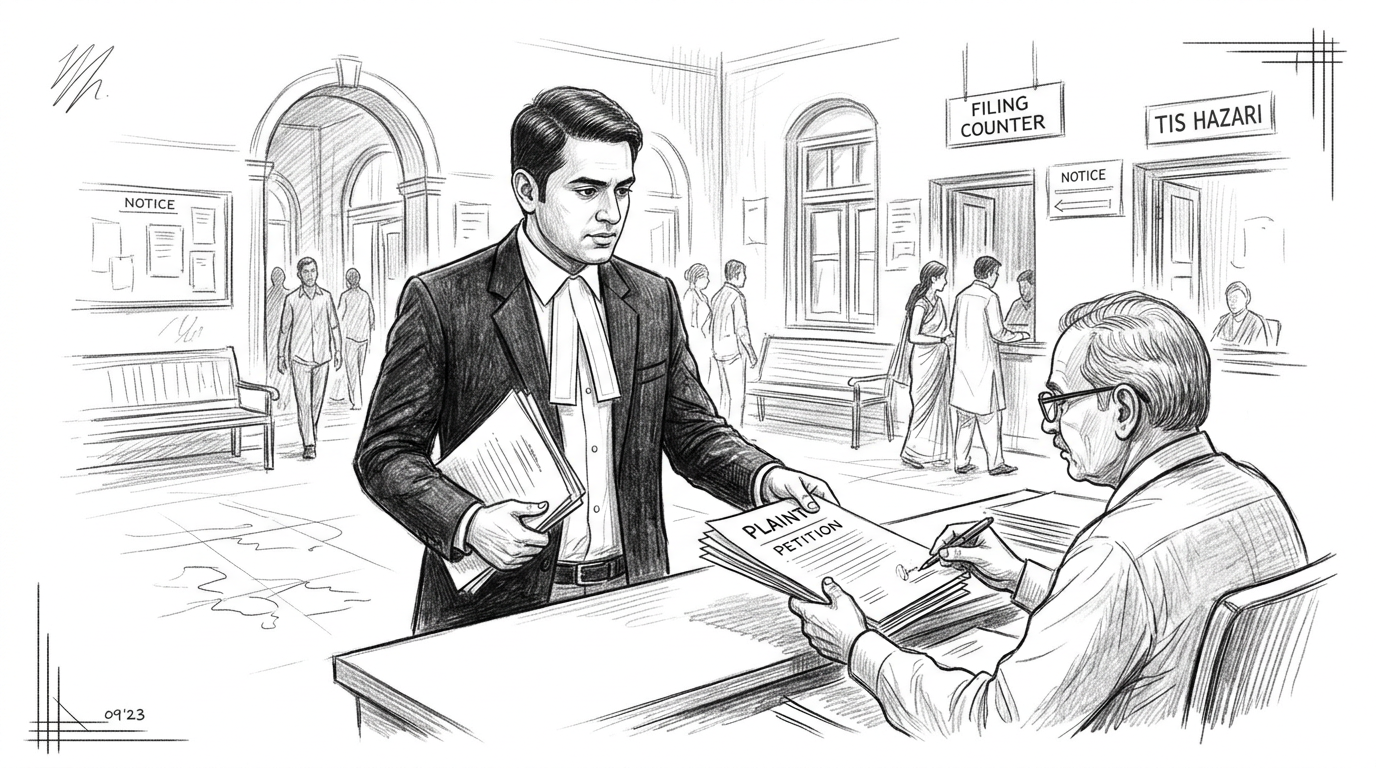
A criminal lawyer in Gurgaon needs to understand both the local court system — Gurgaon district courts at Sector 15, the special CBI court, and the Punjab and Haryana High Court at Chandigarh — and the specific statutory frameworks that apply to the city’s case mix. At Bijlani and Co, our criminal lawyers in Gurgaon handle bail applications, FIR quashing under Section 482 CrPC, NDPS cases, 498A defence, white-collar crime, and IT Act offences across Delhi NCR.
When to call a criminal lawyer in Gurgaon
The first 24 to 48 hours after an FIR is registered are the most critical window for any criminal defence. In Gurgaon, where police stations are spread across Sohna Road, MG Road, DLF Phase 1, and Palam Vihar, the speed at which your lawyer can reach the right station and begin building the defence can determine whether bail is granted at the first hearing or delayed for weeks.
Most people find a criminal lawyer in Gurgaon after receiving a police notice under Section 41A CrPC — a notice requiring you to appear at a police station without arrest. Ignoring this notice is one of the most common mistakes we see. It converts a situation that could have been managed through voluntary cooperation into an arrest, and an arrest reduces bail prospects significantly. If you have received a 41A notice, call a criminal lawyer in Gurgaon before you go anywhere near the police station.
Bail in Gurgaon courts: what actually works
Bail applications in Gurgaon follow the same CrPC framework as Delhi — Section 437 for bail in non-bailable offences, Section 438 for anticipatory bail — but local court practice has its own patterns. Gurgaon district courts at Sector 15 handle a high volume of bail applications daily. Judges there look at three things primarily: whether the accused has a local address, whether the evidence is documentary or testimonial, and whether the investigation is likely to be completed within a reasonable timeframe.
For anticipatory bail, the Gurgaon courts have become more receptive to grant-and-compound arrangements in 498A and domestic violence cases, particularly when the FIR appears to have been filed as a negotiation tactic rather than based on genuine evidence. A criminal lawyer in Gurgaon who can present the factual matrix clearly — showing that the allegations are disproportionate to the evidence — will have a stronger anticipatory bail application than one who relies on general arguments.
FIR quashing: stopping a case before it begins
Section 482 of the CrPC gives the High Court the power to quash an FIR and stop criminal proceedings before they escalate. In Gurgaon, this power is exercised by the Punjab and Haryana High Court at Chandigarh, which means the quashing petition adds a Chandigarh dimension to your legal strategy. The journey from Gurgaon district court to Chandigarh requires a criminal lawyer in Gurgaon who has presented quashing petitions before and knows what the Chandigarh bench looks for.
The High Court will typically quash an FIR when the complaint does not disclose any offence, when the dispute is purely civil dressed up as criminal to apply pressure, or when the FIR is patently malicious or frivolous. Our criminal lawyers in Gurgaon have successfully quashed FIRs in property disputes, matrimonial complaints converted to criminal proceedings, and cheque bounce cases where the underlying dispute was civil.
White-collar crime in Gurgaon: the corporate offence track
Gurgaon’s identity as a corporate hub means a notable portion of its criminal docket involves white-collar offences. The Prevention of Corruption Act applies to public servants and, through the 2018 amendment, to private sector employees who facilitate corruption. The Benami Transactions Act is frequently invoked in property purchase cases. Companies Act provisions on fraud and misrepresentation are used in shareholder disputes and financial statement irregularities.
A criminal lawyer in Gurgaon handling white-collar cases needs to understand the documentary record — financial statements, bank transaction trails, email correspondence, board meeting minutes — as well as the procedural framework. These cases often begin with CBI or ED investigations that run for months before charges are filed. The defence strategy needs to be built during the investigation phase, not after the charge sheet is submitted. Our team has defended professionals accused of financial fraud where the documentary evidence was incomplete or obtained in violation of statutory procedures.
Cyber crime and NDPS in Gurgaon
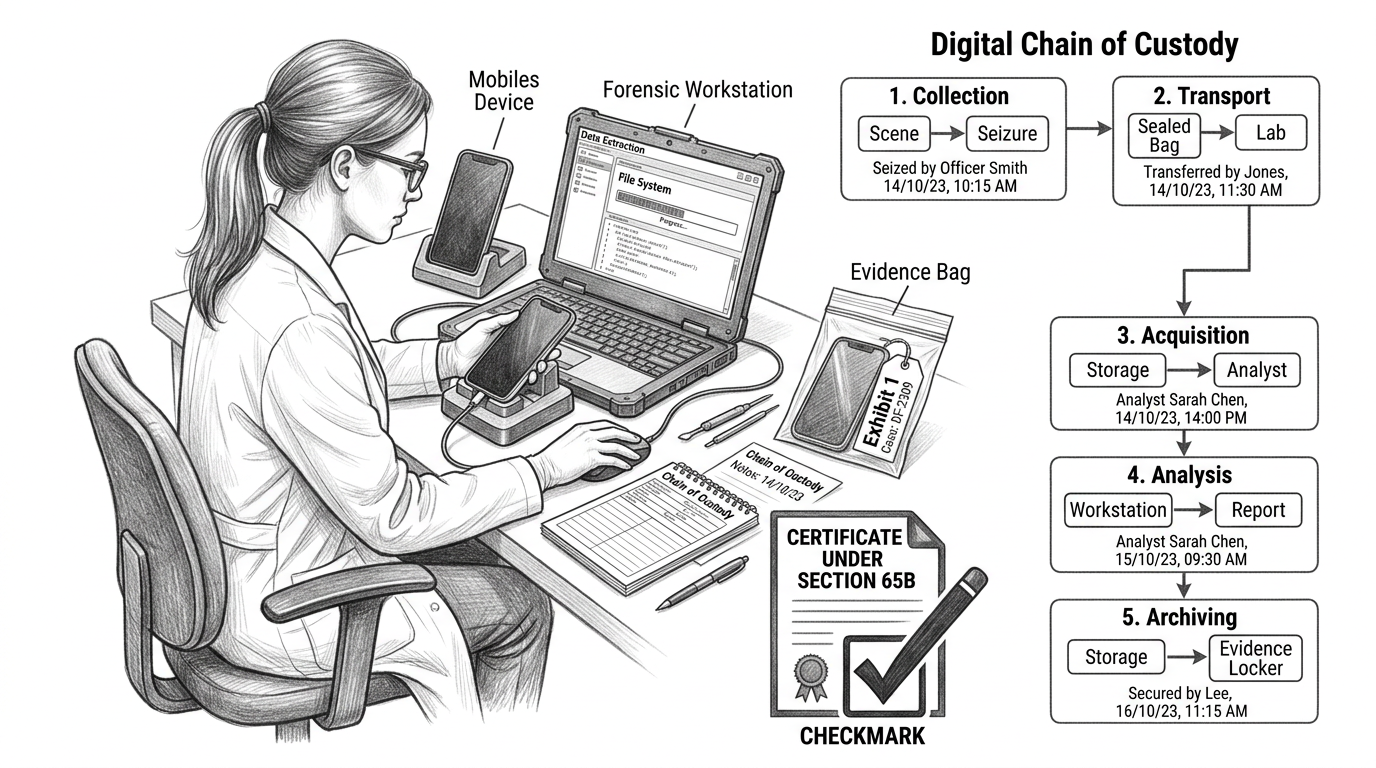
Gurgaon’s cyber crime police station handles a high volume of IT Act cases — online fraud under Section 66D, identity theft under Section 66C, hacking under Section 66, and obscene content under Section 67. Our criminal lawyers in Gurgaon work alongside digital forensics specialists who understand Section 65B certification requirements and can challenge digital evidence that has not been properly authenticated.
NDPS cases in Gurgaon are significant because of the city’s position on the Delhi-Haryana highway network. The NDPS Act’s reverse-burden provision makes these cases challenging for the defence. Our criminal lawyers in Gurgaon focus on the recovery procedure: whether the search was conducted with proper authorisation, whether the seizure memo was prepared correctly, and whether samples were sent for analysis within the mandated timeframe. Procedural failures in the recovery stage often lead to the entire case collapsing.
498A defence in Gurgaon family courts
498A cases are a notable portion of Gurgaon’s criminal docket, reflecting the city’s large married professional population. These cases are often filed during or after divorce proceedings, and the criminal track is sometimes used as leverage in matrimonial negotiations. A criminal lawyer in Gurgaon handling 498A cases needs to understand both the criminal defence strategy and the matrimonial context, because the two tracks often need to run simultaneously without one undermining the other.
The Supreme Court’s guidelines in Arnesh Kumar v. State of Bihar have made Gurgaon courts more cautious about automatic arrest in 498A cases. Our criminal lawyers in Gurgaon use these guidelines aggressively — filing anticipatory bail applications immediately and presenting the factual matrix clearly to show that the allegations do not warrant custodial interrogation.
Defence strategy under the new criminal laws
The Bharatiya Nyaya Sanhita 2023 replaced the Indian Penal Code with effect from July 2024, and the new code has changed the framework within which criminal defence operates in Gurgaon. The BNS retains most of the substantive offences — Sections 420 for cheating, 406 for criminal breach of trust, 506 for criminal intimidation — but the procedural framework has shifted to the Bharatiya Nagarik Suraksha Sanhita, which imposes stricter timelines for investigation and trial.
A criminal lawyer in Gurgaon needs to be current on these changes. The BNSS mandates that investigation be completed within 60 days for offences punishable with imprisonment up to seven years, and within 90 days for more serious offences. If the investigating agency exceeds these timelines, the accused is entitled to default bail. Our criminal lawyers in Gurgaon actively monitor investigation timelines and move for default bail when the prosecution exceeds the mandated period.
The BNS has also modified the framework for bail. Section 479 of the BNSS deals with anticipatory bail, and the language has shifted from the CrPC formulation. Courts are still developing their approach to these provisions, which means a criminal lawyer in Gurgaon who has argued bail applications under the new framework has an advantage over one who is relying on CrPC-era precedents without adapting to the BNS language.
The bail hearing: what actually happens
Most people have no idea what happens in a bail hearing until they are sitting in the courtroom. The prosecution opposes bail by arguing that the accused is likely to tamper with evidence, influence witnesses, or abscond. The defence responds by showing the opposite — that the accused has local roots, that the evidence is documentary rather than testimonial, and that the prosecution’s case is not as strong as it appears at the bail stage.
A criminal lawyer in Gurgaon preparing for a bail hearing will have the FIR, the police report, the witness statements, and any documentary evidence ready before the hearing begins. The arguments need to be concise — bail hearings are typically short, and the judge will have read the case papers. What the judge wants is a focused argument on the specific grounds for bail, not a comprehensive defence of the entire case.
For anticipatory bail, the hearing is typically longer and more detailed. The court will want to understand the factual matrix — what the FIR alleges, what the defence’s version is, and whether the allegations, even if proved, would warrant custodial interrogation. A criminal lawyer in Gurgaon who presents this clearly with documentary support will have a stronger application than one who relies on general arguments about the accused’s character.
How our criminal lawyers in Gurgaon prepare
Every bail application we file is built on the actual case documents, not boilerplate templates. We read the FIR, analyse the police report, review witness statements, and identify specific weaknesses in the prosecution’s case that support the bail argument. Then we draft the application around those weaknesses — the judge can see from the application itself that the defence has engaged with the evidence rather than simply making general pleas.
For anticipatory bail, the application needs to address the specific facts and anticipate the prosecution’s objections. A well-drafted anticipatory bail application that acknowledges the prosecution’s likely arguments and responds to them directly has a much stronger presentation than a generic application relying on standard character arguments.
For regular bail after arrest, the application needs to be filed promptly. Delays are viewed unfavourably by the courts even when brief. Our criminal lawyers in Gurgaon file within 24 to 48 hours of receiving instructions and argue at the earliest available listing.
Working with a criminal lawyer in Gurgaon: what to expect
When you engage our criminal lawyers in Gurgaon, the first step is a case assessment meeting. We review the FIR, the police report, any evidence you have, and the procedural history. We give you an honest read: whether bail is realistic, what the likely outcome would be, and what strategy we would pursue. Then we propose a clear engagement structure with a written scope, timeline, and fee arrangement.
From there, the engagement depends on the case type. Bail applications move quickly — we file within 24 to 48 hours and argue at the earliest available listing. FIR quashing petitions take longer to prepare but can prevent the entire proceeding from escalating. Trial defence requires sustained engagement over months or years, with regular court appearances and strategy adjustments as the prosecution builds its case.
Related practice areas
Gurgaon criminal matters often have a civil dimension, including property disputes that become criminal and cheque bounce cases that trigger Sections 420 and 406 IPC. Our criminal lawyer in Gurgaon works alongside our civil lawyer in Gurgaon and corporate lawyer in Gurgaon when cases span multiple practice areas. For bail matters linked to Delhi investigations, our criminal lawyer in Delhi handles the Delhi side, and our bail lawyer in Delhi assists with cross-jurisdiction bail applications.
Related Practice Areas
Explore our full range of legal services across Delhi NCR.

Criminal Lawyer Gurgaon
Defence, bail & trial representation
Civil Lawyer Delhi
Property, contracts & disputes

Corporate Lawyer Delhi
M&A, compliance & FDI advisory
Cyber Crime Lawyer Delhi
IT Act, data privacy & digital fraud

Divorce Lawyer Delhi
Family law, custody & maintenance

Civil Lawyer Gurgaon
Property disputes & civil litigation

Civil Lawyer Noida
Contract disputes & enforcement

Corporate Lawyer Gurgaon
NCLT, insolvency & company law

Corporate Lawyer Noida
Startup advisory & funding

Cyber Crime Lawyer Gurgaon
DPDP Act & data protection

Divorce Lawyer Gurgaon
Mutual consent & family matters