Maintenance Lawyer in Ghaziabad: Section 125 BNS, Family Maintenance, and Enforcement
Maintenance law in Ghaziabad operates across multiple statutes — Section 125 of the Bharatiya Nyaya Sanhita (formerly Section 125 CrPC), the Hindu Adoption and Maintenance Act, 1956, the Protection of Women from Domestic Violence Act, 2005, and the Maintenance and Welfare of Parents and Senior Citizens Act, 2007. Each statute covers different categories of dependants and different procedural requirements. A maintenance lawyer in Ghaziabad who understands all of these frameworks can advise on the most effective remedy for your specific situation.
Bijlani & Co. handles maintenance matters before the Ghaziabad Family Court, the District Court, and the Magistrate Court. We represent wives seeking maintenance under Section 125 BNS, children seeking maintenance from their parents, and parents seeking maintenance from their adult children under the Senior Citizens Act. We also handle maintenance enforcement — recovering arrears and ensuring compliance with ongoing maintenance orders. Our maintenance lawyers in Ghaziabad have a track record of securing fair maintenance orders and enforcing them effectively.
Maintenance Under Section 125 BNS: Who Can Claim and How Much
Section 125 of the Bharatiya Nyaya Sanhita empowers a Magistrate to order a person with sufficient means to provide maintenance for his wife, children, or parents if they are unable to maintain themselves. The section is designed to provide quick, summary relief without requiring a full civil trial. This makes it the most commonly invoked maintenance remedy in Ghaziabad. The applicant must establish three elements: that the respondent is a husband, father, or son with sufficient means; that the applicant is the wife, child, or parent of the respondent; and that the applicant is unable to maintain themselves.
If these elements are established, the Magistrate passes a maintenance order. The standard for unable to maintain is relative — the court compares the applicant’s standard of living with the respondent’s capacity to pay. Maintenance for wives typically ranges from 25% to 33% of the husband’s net monthly salary in Ghaziabad courts. For children, the amount covers education, healthcare, and reasonable living expenses. For parents, the amount is calculated based on the son’s income and the parents’ needs. Factors that influence the maintenance amount include the number of dependants, the standard of living during the marriage, the respondent’s income and liabilities, the applicant’s own earning capacity, and any special needs such as medical conditions or educational requirements for children.
Interim vs Permanent Maintenance
Interim maintenance can be claimed while the main proceeding is pending. The court can pass an interim order based on the pleadings and supporting documents, without waiting for a full trial. Interim maintenance orders can be backdated to the date of the application, which means that even if the application is filed months after separation, the maintenance amount covers the entire period. Permanent maintenance is determined at the final order after both sides have presented their evidence. The permanent maintenance order supersedes any interim order and remains in force until modified by the court.
If the respondent’s income increases significantly, the applicant can file an application for enhancement. If the applicant remarries or becomes financially independent, the respondent can apply for reduction. Our maintenance lawyers in Ghaziabad handle both enhancement and reduction applications, presenting updated financial evidence and arguing for the appropriate adjustment to the maintenance order.
Maintenance for Different Categories
Maintenance for wives under Section 125 BNS is available to a wife who is unable to maintain herself. The wife does not need to be living separately from the husband at the time of the application — she can claim maintenance even while living in the shared household, provided she is unable to maintain herself. However, if the wife is living separately due to cruelty, desertion, or other grounds under the Hindu Marriage Act, her claim is stronger. Maintenance for children covers both legitimate and illegitimate children. The maintenance order continues until the child reaches the age of 18. If the child is pursuing higher education or is physically or mentally disabled, the maintenance order can be extended beyond 18.
Maintenance for parents under the Senior Citizens Act, 2007 is available to parents above the age of 60 who are unable to maintain themselves from their own earnings or property. The Act applies to biological, adoptive, and step-parents, and the obligation extends to all children — sons, daughters, and grandsons. Our senior citizen maintenance lawyers in Ghaziabad handle cases where elderly parents have been abandoned or neglected by their children.
Enforcement of Maintenance Orders
A maintenance order is only as useful as the mechanism for enforcing it. When a respondent fails to pay maintenance, the applicant can file an application under Section 125(3) CrPC for enforcement. The court can issue a warrant for the respondent’s arrest, attach the respondent’s property, and direct the employer to deduct maintenance from the respondent’s salary. In Ghaziabad, the Family Court has a dedicated mechanism for maintenance enforcement. Our maintenance lawyers file enforcement applications promptly when maintenance defaults occur, and we follow up with the court registry to ensure that warrants are issued and executed.
We also advise our clients on the option of filing a criminal complaint under Section 420 BNS for wilful disobedience of a maintenance order. Continued default in maintenance payment can result in imprisonment of up to one month for each default, though this is rarely imposed as a first step. Our maintenance lawyers pursue enforcement relentlessly, using all available legal remedies to ensure that our clients receive the maintenance they are entitled to.
Maintenance and Divorce: Coordinated Strategy
Maintenance under Section 125 BNS is distinct from maintenance awarded in divorce proceedings. A wife can claim maintenance under Section 125 BNS independently of divorce proceedings, and the maintenance order continues even after divorce unless specifically extinguished by the court. In divorce cases, the court may pass a permanent maintenance order as part of the divorce decree under the Hindu Marriage Act or the Special Marriage Act. Our family lawyers in Ghaziabad coordinate between divorce proceedings and maintenance claims to ensure that our clients receive complete financial protection.
Can a working wife claim maintenance in Ghaziabad?
Yes. A wife who is earning can still claim maintenance under Section 125 BNS. The court will consider her income and may reduce the maintenance amount proportionately, but if her income is insufficient to maintain the standard of living she enjoyed during the marriage, she is entitled to supplemental maintenance. Our maintenance lawyers present detailed financial evidence to establish the appropriate amount.
What happens if the husband does not pay maintenance?
The wife can file an enforcement application under Section 125(3) CrPC. The court can issue a warrant for the husband’s arrest, attach his property, and direct salary deduction. Our maintenance lawyers in Ghaziabad pursue enforcement relentlessly, using all available legal remedies to ensure payment.
Can maintenance be claimed from a son-in-law or daughter-in-law?
No. Maintenance under Section 125 BNS is claimable only from a husband, father, or son. Daughters-in-law cannot claim maintenance from their in-laws under Section 125. However, a daughter-in-law can claim maintenance from her husband and, in certain circumstances, from her father-in-law under the Hindu Adoption and Maintenance Act if he has sufficient means.
Can maintenance be claimed after divorce?
Yes. Maintenance under Section 125 BNS continues after divorce unless specifically extinguished by the court. In divorce proceedings under the Hindu Marriage Act, the court can also pass a permanent maintenance order that survives the divorce. Our family lawyers ensure that maintenance rights are preserved across divorce and post-divorce proceedings.
Need a Maintenance Lawyer in Ghaziabad?
Bijlani & Co. handles maintenance claims, enforcement, and modification across Ghaziabad courts. Contact us for immediate assistance.
Phone: 085958 09471
Email: write@bijlani.in
Office: 141 Patiala House Courts, New Delhi
Related Practice Areas
Family Lawyer Ghaziabad
Complete family law: custody, maintenance, DV Act, and matrimonial disputes.
Divorce Lawyer Ghaziabad
Section 24 and 25 HMA — maintenance claims are central to divorce proceedings.
Child Custody Lawyer Ghaziabad
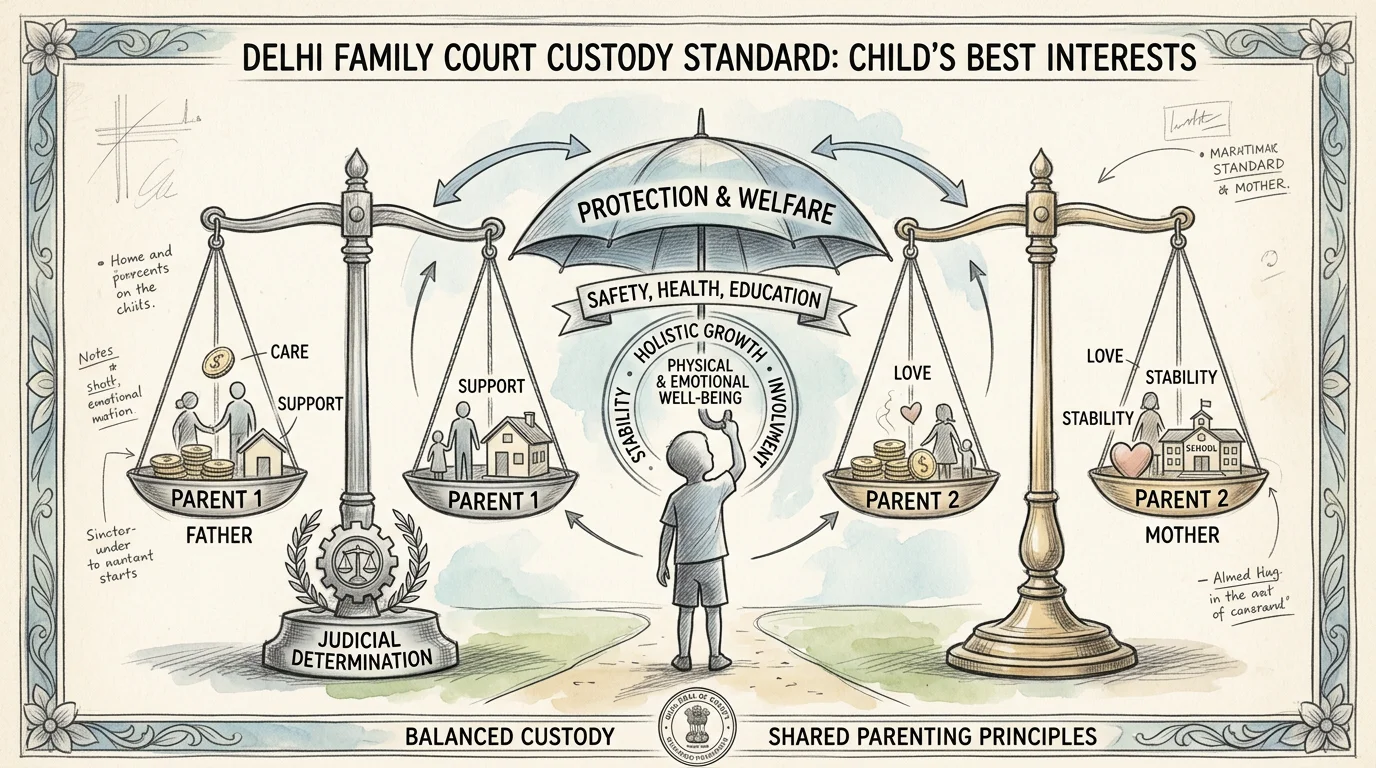
Maintenance and custody are often decided together under the welfare standard.
Hindu Adoption and Maintenance Act, 1956: Broader Coverage
The Hindu Adoption and Maintenance Act, 1956 applies to Hindus, Buddhists, Jains, and Sikhs. It creates a statutory obligation for a Hindu to maintain his wife, children, and aged or infirm parents. The obligation is absolute during the lifetime of the relationship and continues for dependent children and parents after the relationship ends. A maintenance lawyer in Ghaziabad will invoke this Act when the Section 125 BNS remedy is insufficient — for example, when the respondent is not a Hindu (so Section 125 may apply but the quantum differs), or when the claimant is an aged parent rather than a wife or child. The quantum of maintenance under the 1956 Act depends on the circumstances of each case, and the court considers the same factors as under Section 125 BNS: the claimant’s needs, the respondent’s capacity, and the standard of living.
Maintenance and Welfare of Parents and Senior Citizens Act, 2007
India is one of the few countries with a dedicated law for senior citizens’ maintenance. Under this Act, parents and grandparents who are unable to maintain themselves can claim maintenance from their children (including adopted and step-children). The application can be filed before the Maintenance Tribunal in Ghaziabad, and the Tribunal must pass an order within 90 days. The maximum maintenance that can be awarded is ₹10,000 per month. The Act also provides for the transfer of the aged person’s property to the State if no family member is willing to maintain them. A maintenance lawyer in Ghaziabad will advise elderly clients on this remedy, which is often faster and less adversarial than a Section 125 BNS proceeding.
Maintenance Orders: Enforcement When the Respondent Does Not Pay
Enforcement of maintenance orders is a persistent challenge in Ghaziabad. When the respondent fails to pay maintenance as ordered, the aggrieved person has several remedies under the law: attachment of earnings, attachment of property, issue of a warrant of arrest, and deduction of maintenance from the respondent’s salary. The court can also direct the employer to deduct maintenance from the respondent’s salary and pay it directly to the aggrieved person. Under Section 125(3) CrPC (now Section 125(3) BNS), the Magistrate can sentence the respondent to imprisonment for up to one month for each default, although actual imprisonment is rare — courts prefer to use coercive measures such as attachment. A maintenance lawyer in Ghaziabad will file an enforcement application when maintenance is not paid, and will also advise the aggrieved person to maintain a record of all defaults as evidence for the enforcement application. Consistent enforcement of maintenance orders is essential to ensure that the aggrieved person and children are not left without financial support.
Maintenance for Working Wives and Professional Women
A common misconception is that a working wife cannot claim maintenance. This is incorrect. The Supreme Court has held that a wife’s right to maintenance is independent of her earning capacity. Even if the wife is earning, she can claim maintenance if her income is insufficient to maintain the standard of living she enjoyed during the marriage. The court considers the comparative standard of living, the needs of the children, and the husband’s capacity to pay. A maintenance lawyer in Ghaziabad will present detailed financial affidavits from both parties, showing the wife’s income, the husband’s income, and the gap that maintenance should fill. In cases where both parties are earning, the court typically awards maintenance that covers the shortfall — not the full cost of the wife’s maintenance. The lawyer will also argue for child maintenance separately, which is awarded at a higher quantum and is not contingent on the wife’s earning capacity.
Interim Maintenance: Urgent Relief During Pendency of Main Proceedings
Interim maintenance is an urgent remedy available under Section 125(3) BNS (previously Section 125 CrPC) and Section 24 HMA for the wife and Section 25 HMA for the wife and children during the pendency of the main case. The purpose of interim maintenance is to ensure that the aggrieved person is not left without financial support while the main case takes its course — which can take several years. The Ghaziabad Magistrate Courts entertain interim maintenance applications quickly, and maintenance orders are typically passed within a few hearings. Your maintenance lawyer will file a detailed application with supporting documents: your income and expenses, the respondent’s income and assets, and evidence of the standard of living during the marriage. The court awards maintenance based on the respondent’s capacity to pay and the claimant’s genuine needs — not on the claimant’s earning capacity alone. A wife who is earning a salary can still claim interim maintenance if her income is insufficient to meet her reasonable needs.
Maintenance for Children Under the Guardian and Wards Act, 1890
Child maintenance is awarded separately from the wife’s maintenance and is calculated based on the child’s needs — education, healthcare, food, clothing, and other reasonable expenses. Under the Guardian and Wards Act, 1890, the court can pass maintenance orders for minor children independently of the wife’s maintenance proceedings. The court considers the child’s age, health, education, and the standard of living they are accustomed to. Maintenance for children is typically higher than maintenance for the wife alone, because the court aims to ensure that the child’s upbringing is not compromised by the separation. A maintenance lawyer in Ghaziabad will maintain separate accounts for the child’s expenses and present these to the court. The lawyer will also ensure that maintenance for the child is reviewed and adjusted periodically as the child grows older and enters higher education. In cases where the child has special needs (medical conditions, learning disabilities, therapy), the lawyer will present detailed medical and educational cost projections to the court.
Need a lawyer? Consult our advocate in Ghaziabad for expert legal representation across all practice areas. We also specialise in Maintenance Lawyer Ghaziabad | Bijlani & matters.
Related Legal Guides
Need Expert Legal Representation in Ghaziabad?
Advocate Nilesh Bijlani and the team at Bijlani & Co. handle all practice areas across Delhi NCR courts.
Consult an Advocate in GhaziabadRelated Practice Areas
Explore our full range of legal services across Delhi NCR.