Bail Lawyer in Noida | Anticipatory Bail, Regular Bail, FIR Quashing | Bijlani & Co.

How to Find a Good Bail Lawyer in Noida
Looking for a bail lawyer in Noida from Delhi? Here is what to look for:
- Practises at Noida District Court (Sector 55), Noida bail matters are heard at the Noida District Court in Sector 55 and the Noida Sessions Court. The Noida courts have different bail norms than Delhi, ask a lawyer who specifically works in Noida, not just “Delhi NCR”.
- Knows the Noida Cyber Cell procedure, Noida has a dedicated cyber crime cell. For cyber crime bail (Sections 66-67 IT Act), the bail application is filed at the Noida District Court with a specific cyber cell annexure. A general bail lawyer may not know this.
- Check their Allahabad High Court record, For non-bailable offences, Noida bail appeals go to the Allahabad High Court (Noida falls under Uttar Pradesh jurisdiction). A good Noida bail lawyer files at both the district level AND the High Court.
- Ask about anticipatory bail at the Allahabad High Court, Anticipatory bail in Noida can be filed at the Noida Sessions Court or the Allahabad High Court. This is a common error by lawyers who only work at the district level.
Bijlani & Co. serves Noida from Patiala House, New Delhi. Our lawyers regularly appear at the Noida District Court, Noida Sessions Court, and the Allahabad High Court. Call 085958 09471 for a same-day bail consultation.
Bail Lawyer in Noida: Anticipatory Bail, Regular Bail, and NBW Cancellation
Bail is not a favour the court grants. It is a statutory right that your bail lawyer in Noida must assert correctly, at the right time, with the right documentation. The difference between spending time in custody and walking out on bail often comes down to how well your lawyer understands the applicable provision , Section 437, 438, or 439 of the Bharatiya Nyaya Sanhita , and how effectively they argue the grounds before the judge. Bijlani & Co. handles bail matters across Noida’s District Court, CJM Court, and the Allahabad High Court. We specialise in anticipatory bail, regular bail after arrest, NBW cancellation, and bail cancellation appeals.
Our criminal lawyers have secured bail in NDPS, POCSO, white-collar crime, and general criminal cases across Delhi NCR courts. We prepare bail applications that are specific to the court and the provision: Section 437 applications before the Magistrate Court follow a different format and argument structure than Section 438 applications before the Sessions Court. We also prepare our clients for what comes after bail , the conditions that come with it, and how to avoid bail cancellation.
Anticipatory Bail Under Section 438 BNS
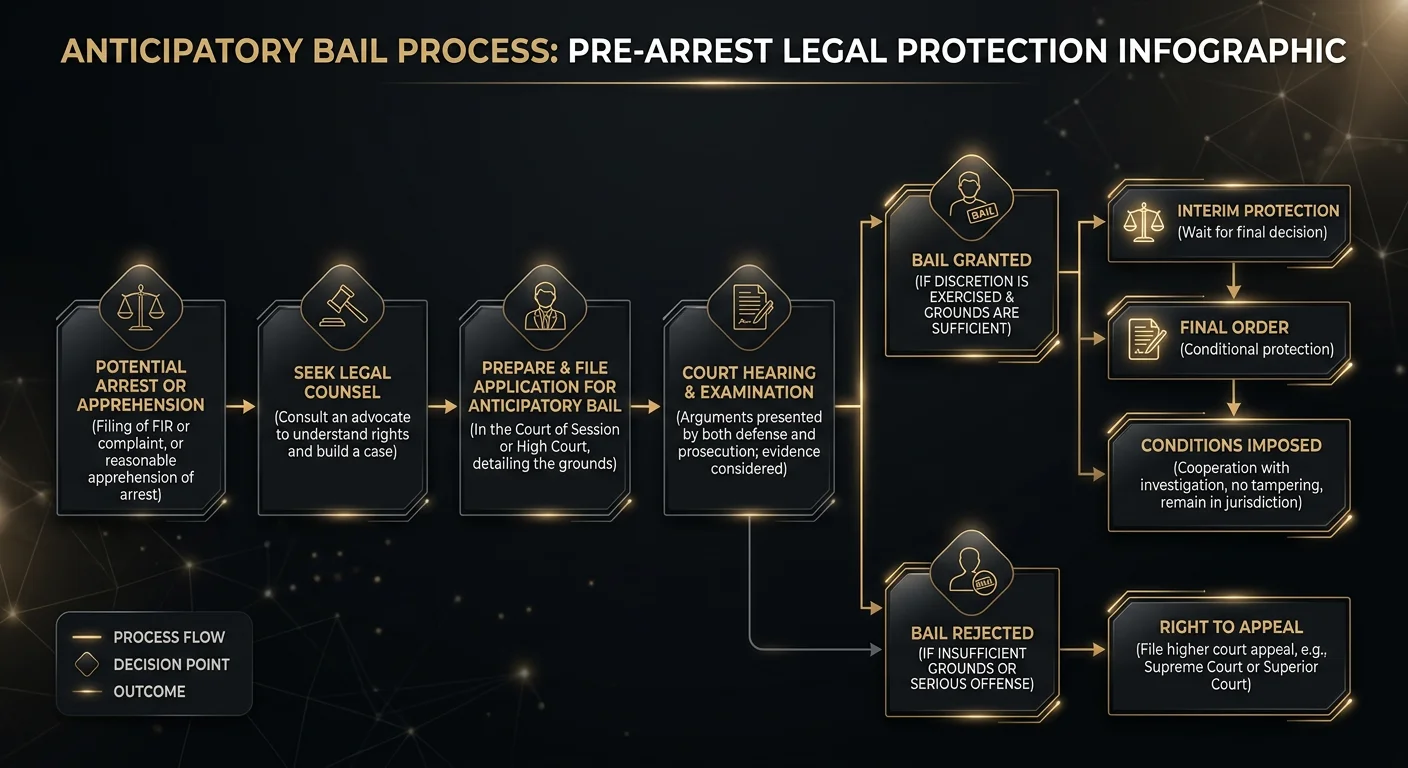
Anticipatory bail is filed before arrest. The purpose is to protect a person who reasonably apprehends arrest from being taken into custody while the investigation is ongoing. Section 438 can be invoked before the Sessions Court or the Allahabad High Court. The applicant must demonstrate that they have a genuine reason to believe that arrest is imminent and that the offence, while serious, does not make bail impossible. The court examines several factors: the nature and gravity of the alleged offence, the applicant’s role in the incident, whether there is a prima facie case against them, their criminal history, whether they are likely to flee, and whether they are likely to influence witnesses or tamper with evidence.
In NDPS cases, courts are more cautious. In general criminal cases, anticipatory bail is more readily available if the applicant cooperates with the investigation. An anticipatory bail application should include a detailed affidavit explaining why arrest is apprehended, copies of the FIR if registered, any notice received under Section 41 CrPC, supporting documents that establish the applicant’s roots in the community, and case law from the Allahabad High Court on similar facts. The application is filed, listed for hearing, and the court may grant interim protection pending the final order.
Regular Bail Under Section 437 and 439 BNS
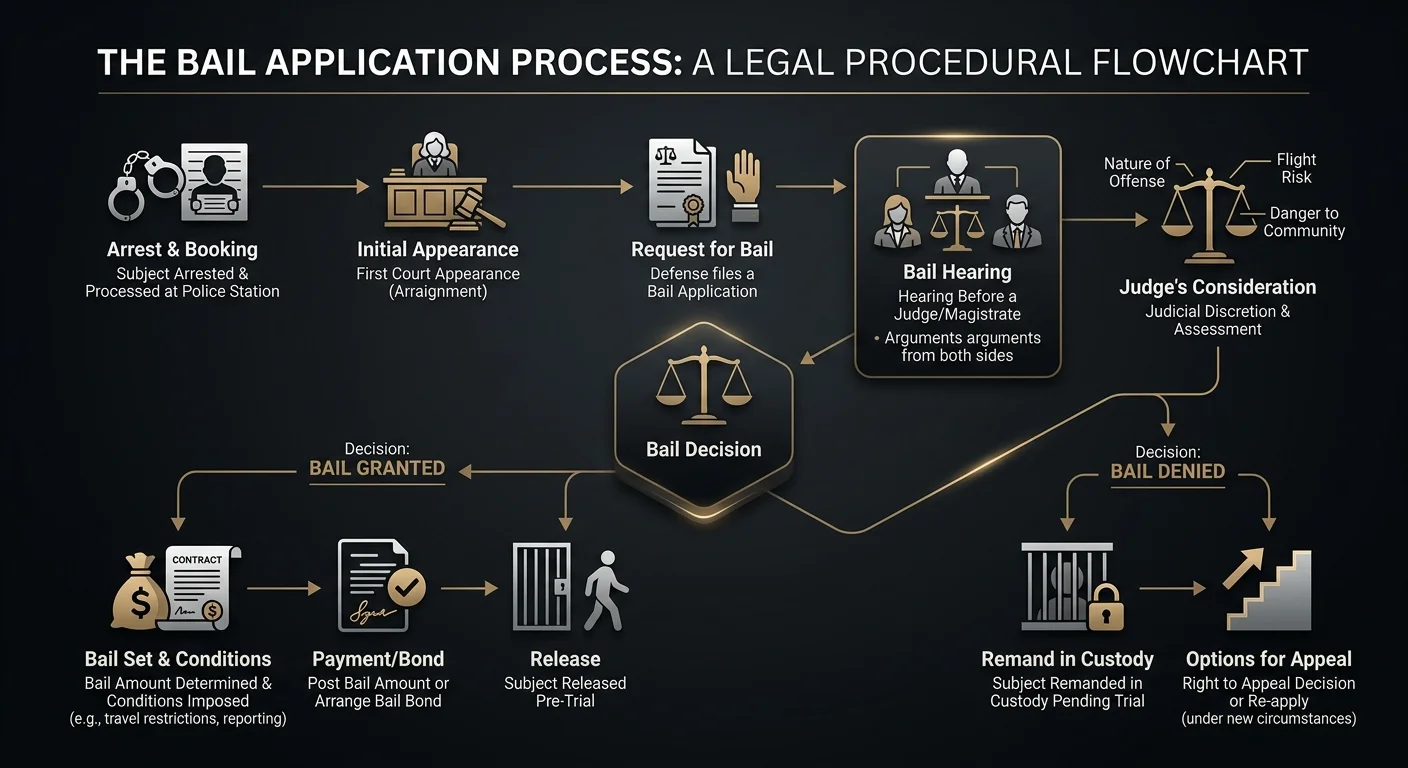
Regular bail is applied for after arrest. Section 437 governs bail before the Magistrate Court. Section 439 governs bail before the Sessions Court and the High Court. The grounds for regular bail differ from anticipatory bail. The court considers whether there is reasonable ground to believe the accused is not guilty, whether the accused has previously escaped custody, the nature and gravity of the offence, and whether the accused will commit similar offences while on bail. For offences punishable with imprisonment of more than 10 years, bail is more difficult but not impossible. The court must be satisfied that there are reasonable grounds for believing that the accused is not guilty of the offence and that they are not likely to commit any offence while on bail.
In practice, this means the defence must present a strong prima facie case for innocence at the bail hearing itself. Our bail lawyers prepare detailed arguments that address each of the court’s concerns, supported by documentary evidence and case law. We also prepare surety arrangements and ensure that our clients understand the bail conditions before the hearing.
NBW Cancellation and Bail Cancellation Defence
A non-bailable warrant is issued when an accused person fails to appear before the court on a scheduled date. NBW cancellation requires filing an application before the issuing court, explaining the reason for non-appearance, and demonstrating that the accused is now willing to appear regularly. Courts are generally receptive to NBW cancellation applications filed promptly, especially when accompanied by a surety and an undertaking to appear on all future dates. If bail is cancelled , whether because the accused violated bail conditions, committed a similar offence, or failed to appear , the accused is taken back into custody. Bail cancellation applications are filed by the prosecution under Section 437(5) or Section 439(2). The defence can oppose cancellation by demonstrating compliance with all bail conditions, no new offences, and continued presence in the jurisdiction.
Bail Conditions and Compliance in Noida Courts
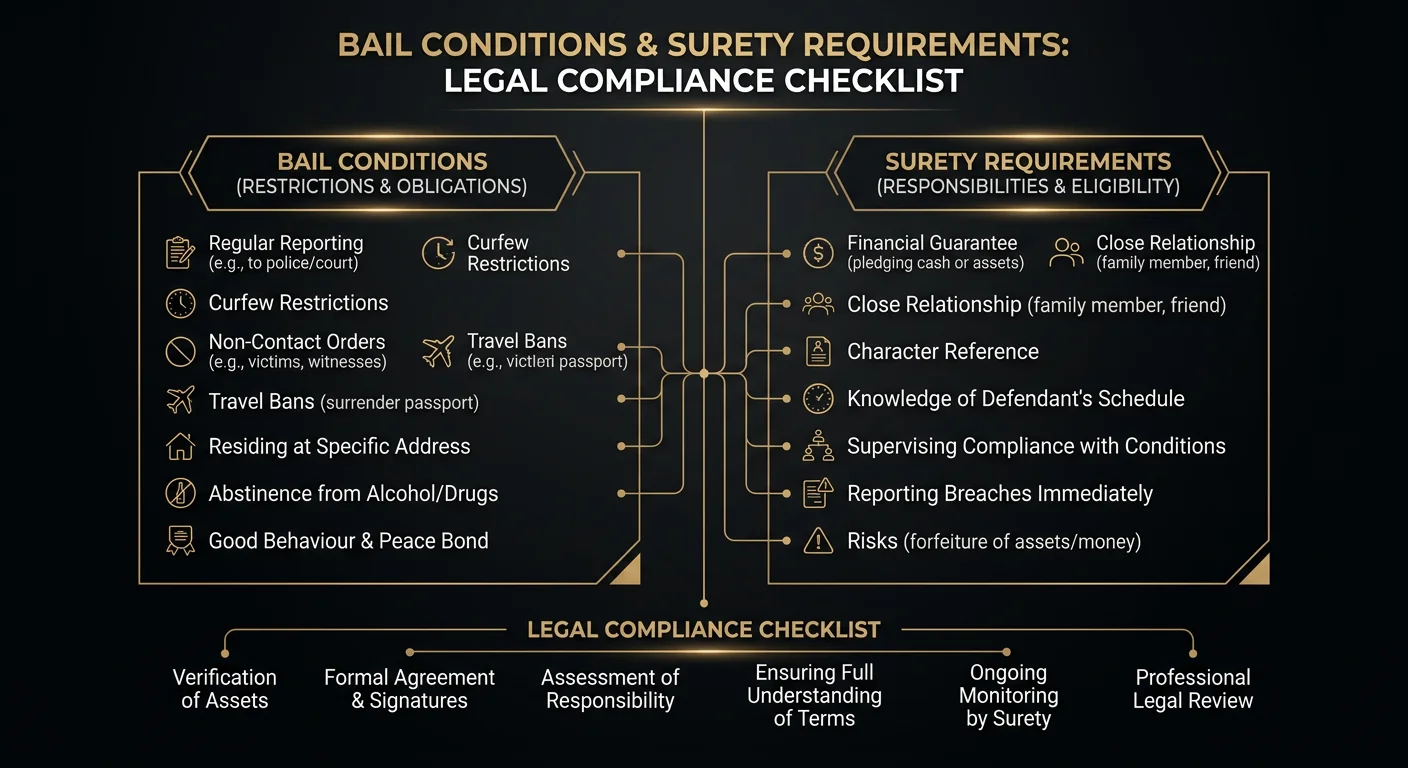
Bail comes with conditions: surrendering passports, reporting to the investigating officer periodically, not leaving the jurisdiction without court permission, and not contacting co-accused or witnesses. Violating any of these conditions can result in bail cancellation. Our bail lawyers explain these conditions clearly before the hearing so that you understand the obligations that come with the relief. We also file applications for modification of bail conditions when the original conditions are impractical , for example, when a client needs to travel for work or family reasons.
Bail hearings in Noida courts follow a specific procedural rhythm. Applications are listed, arguments are heard, and orders are passed within a framework that our bail lawyers understand from regular practice. We prepare bail applications that are specific to the court and the provision. Section 437 applications before the Magistrate Court follow a different format and argument structure than Section 438 applications before the Sessions Court. Section 439 applications before the High Court require a different approach, with more detailed case law citations and stronger evidentiary support.
Why Choose Bijlani & Co. for Bail in Noida
Our criminal lawyers have a track record of securing bail in challenging cases across Noida courts. We understand the procedural requirements of each court, the standards that judges apply, and the arguments that are most effective. We prepare every bail application with the same thoroughness, regardless of the offence or the court. We also prioritise urgent bail applications and request same-day hearings wherever possible, because every day in custody matters.
When to File for Anticipatory Bail in Noida
You should file for anticipatory bail as soon as you have reason to believe an arrest is imminent. The trigger is usually one of these situations: you have been named in an FIR and the police are actively looking for you, you received a police notice asking you to appear for questioning, a family member or associate was arrested in the same case and is implicating you, or you learned through informal channels that an FIR is being registered against you. Waiting until you are actually arrested defeats the purpose of anticipatory bail. Once arrested, you move for regular bail, which is procedurally more difficult. A bail lawyer in Noida will file the anticipatory bail application before the Sessions Court, supported by an affidavit and any documents showing that the allegations against you are baseless or that you have no prior criminal record. The Sessions Court in Noida typically sets a hearing within a few days, and if satisfied, grants interim protection pending the final hearing.
Conditions the Court May Impose on Bail
When the Noida court grants bail , whether anticipatory, regular, or NBW-related , it may impose conditions designed to ensure you do not interfere with the investigation or abscond. Common conditions include: not leaving the jurisdiction of Noida without court permission, not contacting co-accused or witnesses directly, attending all future court hearings without fail, surrendering your passport if the court considers you a flight risk, and reporting to the investigating officer periodically. Violating any bail condition can result in cancellation of bail and re-arrest. Your bail lawyer will advise you on the specific conditions imposed and ensure you comply fully. If conditions are unduly restrictive, your lawyer can apply for modification , the court has the power to relax conditions if circumstances change. For example, if your job requires travel, your lawyer can seek permission for interstate travel while maintaining other conditions.
How long does it take to get anticipatory bail in Noida?
Interim protection from arrest can be obtained within 1-2 days of filing, depending on the court’s list. The final order on the anticipatory bail application typically takes 2-4 weeks. We prioritise urgent bail applications and request same-day hearings wherever possible.
Can bail be granted in NDPS cases in Noida?
Yes, but it is more difficult. Section 37 of the NDPS Act requires the court to be satisfied that the accused is not guilty of the offence and will not commit a similar offence while on bail. We focus on dismantling the prosecution’s prima facie case , challenging the recovery, the chain of custody, and the absence of conscious possession , to meet this standard.
What conditions does the court impose when granting bail?
Common conditions include submitting a surety, surrendering passport, not leaving the jurisdiction without permission, not contacting co-accused or witnesses, and reporting periodically to the investigating officer. The specific conditions depend on the nature of the offence and the court’s assessment of flight risk. We explain these conditions clearly before the hearing.
Can I travel outside Noida while on bail?
You need permission from the court that granted bail. We file applications for leave to travel, providing details of the destination, purpose, and duration. Courts routinely grant permission for family events, medical treatment, and work-related travel when the application is genuine and the surety remains valid.
Need a Bail Lawyer in Noida?
Bijlani & Co. handles anticipatory bail, regular bail, and NBW cancellation across Noida courts. Contact us for immediate assistance.
Phone: 085958 09471
Email: write@bijlani.in
Office: 141 Patiala House Courts, New Delhi


Related Practice Areas
Criminal Lawyer Noida
Full-spectrum criminal defence across BNS 2023, CrPC 1973, and trial proceedings.
NDPS Lawyer Noida
Narcotics defence, anticipatory bail, and defence strategy under the NDPS Act, 1985.
FIR Quashing Lawyer Noida
Section 482 BNS quashing petitions , an alternative when bail is denied.
Non-Bailable Offences: When Bail Is Not a Right
Non-bailable offences under the BNS 2023 and CrPC 1973 include murder, rape, dacoity, and certain categories of NDPS offences. For these offences, bail is not a matter of right , it is a privilege that the court may or may not grant. The court will consider the nature and gravity of the offence, the character of the evidence, the likelihood of the accused fleeing from justice, the possibility of tampering with evidence, and the likelihood of the accused repeating similar offences. In Noida, the District Court and the High Court hear bail applications for non-bailable offences. Your bail lawyer will present evidence that neutralises each of these factors: proof of strong roots in the community (property ownership, family ties, business establishment) to negate flight risk, evidence that the accused has no criminal antecedents to rebut the repeat-offence argument, and affidavits from community members attesting to the accused’s character. Even in non-bailable cases, well-prepared bail applications succeed when the defence demonstrates that the accused will not abscond and will cooperate with the investigation.
Anticipatory Bail vs Regular Bail: Strategic Differences
The strategic difference between anticipatory bail and regular bail is significant. Anticipatory bail is applied for BEFORE arrest , you approach the court based on a genuine apprehension of arrest. Regular bail is applied for AFTER arrest , you have already been taken into custody. Anticipatory bail is preferable when you have advance notice of an impending arrest (such as a non-bailable FIR being filed), because it prevents the trauma of arrest, police custody, and the accompanying social stigma. Regular bail becomes necessary when arrest has already occurred. Your bail lawyer in Noida will assess the stage of your case and advise on the correct remedy. If both options are available, anticipatory bail is always the preferred route , it is easier to obtain because the court is evaluating a hypothetical risk rather than a person who is already in custody. Once anticipatory bail is granted, it remains in force until the trial concludes, unless specifically cancelled by the court.
Conditions of Bail: Understanding Your Obligations
When bail is granted in Noida, the court typically imposes several conditions. Common bail conditions include: submitting a personal bond and surety, surrendering your passport to prevent foreign travel, reporting to the investigating officer or local police station at specified intervals (daily, weekly, or monthly), not leaving the jurisdiction of Noida without court permission, not contacting or threatening the complainant or witnesses, and cooperating with the investigation by attending court hearings and answering summons. Violation of bail conditions can result in cancellation of bail and re-arrest. Your bail lawyer will advise you on each condition, negotiate to reduce restrictive conditions (such as expanding the area within which you can travel), and ensure you understand your obligations. If a condition is impractical (for example, daily reporting when you work in a different city), your lawyer can apply for modification before the court. Keeping detailed records of your compliance , dated photographs, attendance registers, travel records , will protect you if the prosecution later alleges violation.
Need a lawyer? Consult our advocate in Noida for expert legal representation across all practice areas. We also specialise in
Need Expert Legal Representation in Noida? Advocate Nilesh Bijlani and the team at Bijlani & Co. handle all practice areas across Delhi NCR courts. You need a bail lawyer in Noida immediately after arrest or when you anticipate arrest. Noida district courts handle bail under Section 437 CrPC for regular bail and Section 438 CrPC for anticipatory bail. Filing early with a well-prepared application significantly improves your chances. Anticipatory bail under Section 438 CrPC can be filed when you believe you may be arrested for a non-bailable offence. The Noida district court and the Allahabad High Court Lucknow Bench have jurisdiction. Your lawyer files an affidavit detailing why arrest would be unjust, and the court may issue a notice to the police. Yes. Regular bail under Section 437 CrPC is filed after arrest. The application is listed before the Noida district court or the appropriate sessions court. Your lawyer presents grounds for bail including lack of evidence, weak investigation, and personal circumstances. A well-argued application is essential because the prosecution opposes bail.Related Legal Guides
When do you need a bail lawyer in Noida?
What is anticipatory bail and when can you apply in Noida?
Can a bail application be filed after arrest in Noida?
How bail works in Noida: the courts and the process
In Noida, bail matters are heard at three levels. The Noida Magistrate Court handles bail for bailable offences and initial police remand. The Noida Sessions Court (Senior Civil Judge, Noida) handles bail for non-bailable offences and can grant special bail under Section 483 BNS. The Allahabad High Court (Noida bench) handles anticipatory bail applications and appeals against bail rejections by the lower courts.
The sequence for a Noida arrest:
- Police arrest the accused and produce them before the Magistrate within 24 hours
- The Magistrate either grants bail (bailable offence) or remands to police custody for up to 14 days (non-bailable)
- After the police file the charge sheet, the bail application moves to the Noida Sessions Court
- If the Sessions Court rejects bail, the accused can appeal to the Allahabad High Court
The typical timeline from arrest to a bail decision in Noida is 4-8 weeks for regular bail; 2-6 weeks for anticipatory bail in the Allahabad High Court.
Anticipatory bail in Noida: who it’s for and how to get it
Anticipatory bail in Noida is available to anyone who has a specific, documented fear of arrest in a criminal matter not a general anxiety about a complaint. The application is filed in the Noida District Court or the Allahabad High Court and must identify: the specific FIR or offence, the sections under which you fear arrest, and why you believe the arrest would be unjustified. The court will grant anticipatory bail if it is satisfied that the accused will appear for the investigation and trial.
For Noida residents, the most common anticipatory bail matters are: (a) 498A BNS (cruelty) complaints in matrimonial disputes, (b) cheque bounce complaints (Section 138 NI Act) that have been mischaracterised as criminal offences, and (c) NDPS cases where the accused is a delivery person or courier rather than the source of the drugs. Each of these has a strong anticipatory bail argument in the Allahabad High Court.
NDPS bail in Noida: the commercial quantity threshold
NDPS bail in Noida turns almost entirely on the “small quantity” vs. “commercial quantity” classification. For small quantity offences, the Noida Sessions Court has discretion to grant bail and the court will typically do so if the accused has strong local ties, is a first-time offender, and cooperates with the investigation. For commercial quantity offences, the Allahabad High Court applies a stricter test and bail is more difficult the court will consider the quantity involved, the accused’s role (source vs. courier vs. end user), and the risk of tampering with evidence.
The practical advice for Noida residents facing an NDPS bail application: your lawyer’s job at the first hearing is to contest the commercial quantity classification if it is wrong. A successful reclassification to “small quantity” transforms a near-impossible bail matter into a routine one.
What conditions will the Noida court impose on bail?
When a Noida court grants bail, it typically imposes some combination of the following conditions:
- Surrender passport (for matters involving cross-border elements)
- Report to the Noida police station or the concerned police station weekly
- Not leave Noida / UP without prior permission of the court
- Not tamper with witnesses or evidence
- Furnish a surety of a specified amount (typically Rs. 20,000-1,00,000 depending on the offence)
- Appear at every hearing in the Noida court
A Noida bail lawyer’s role is to negotiate the surety amount down and to seek conditions that are workable for the accused’s circumstances for example, commuting a weekly reporting requirement to fortnightly where the accused works in Delhi.
Frequently asked questions about a bail application in Noida
How much does a bail lawyer charge in Noida?
A regular bail application in Noida is typically quoted as a fixed fee of Rs. 15,000-40,000 plus court fees. Anticipatory bail in the Allahabad High Court is quoted between Rs. 30,000-75,000. Special bail for non-bailable offences is Rs. 50,000-1,25,000. Full trial representation is a monthly retainer of Rs. 10,000-20,000 depending on hearing frequency.
Can I get anticipatory bail in Noida before an FIR is even filed?
Yes. You do not need a FIR number to file an anticipatory bail application in Noida. You need to show a specific, documented fear of arrest for example, a threat letter, a police complaint you have received notice of, or a pattern of behaviour by the complainant. The Allahabad High Court (Noida bench) regularly grants anticipatory bail where the fear is genuine and documented.
What is the difference between regular bail and special bail in Noida?
Regular bail is available for bailable offences as of right. Special bail is for non-bailable offences and requires the court to be satisfied of stronger grounds typically that the accused is not guilty, the allegations are not serious, or the investigation is complete. Special bail in Noida is decided by the Noida Sessions Court or the Allahabad High Court, and is more difficult to obtain than regular bail.
How long does a bail application take in Noida?
Regular bail in the Noida Magistrate Court: 2-4 weeks. Special bail in the Noida Sessions Court: 4-8 weeks. Anticipatory bail in the Allahabad High Court: 2-6 weeks. The timeline depends on the court’s docket, whether the prosecution has appeared to oppose, and whether the matter is at the investigation or trial stage.
Explore More From Bijlani & Co
Courts & Jurisdiction in Noida
Noida District Court (Sector 58, Noida) The Noida district court handles civil suits, enforcement orders, and property matters for the Noida district. For a civil matter in Noida, the Noida District Court (Sector 58, Noida) is the first-instance forum; matters exceeding its pecuniary jurisdiction go to the High Court.
Family Court, Noida (Sector B, Noida) Matrimonial matters (divorce, maintenance, custody) for Noida residents are heard at the Family Court, Noida (Sector B, Noida). The Family Court applies a family-law lens to custody and maintenance claims; no court fee is required for a Section 125 BNS application.
Noida Sessions Court (Sector 58) Criminal trials, bail hearings, and anticipatory bail applications for Noida are heard at the Noida Sessions Court (Sector 58). For a non-bailable offence, the Sessions Court is the appropriate forum for a bail hearing.
Jurisdictional note: Noida falls under the Gautam Buddha Nagar district (UP). Maintenance and family matters are heard at the Family Court, Noida (Sector B), while civil suits and enforcement orders go to the Noida District Court at Sector 58. Criminal appeals go to the Noida Sessions Court. The nearest High Court bench is the Allahabad High Court (Prayagraj); for urgent interim relief in family matters, a Family Judge can grant interim maintenance under Section 125 BNS before the appeal stage.
Localities covered: Sector 18, Sector 56, Sector 62, Sector 63, Sector 78, Alpha-1, Beta-1, Delta-1, Gomti Nagar, Noida Extension, Greater Noida (adjacent).
City-Specific FAQs: Noida
Which Noida court handles a regular bail application under Section 439 BNS?
Regular bail in Noida is heard at the Noida Magistrate Court (first) and the Noida Sessions Court (if the Magistrate refuses, or for a non-bailable offence the Sessions Court is the first forum). The Magistrate Court can grant bail under Section 437 BNS; the Sessions Court can grant bail under Section 439 BNS. For a non-bailable offence (e.g., a NDPS or a serious IPC/BNS charge), the Sessions Court is the appropriate forum. The Noida District Court (Sector 58) handles the trial; the Sessions Court handles the bail. An appeal on bail refusal goes to the Allahabad High Court.
Can a Noida Magistrate Court grant anticipatory bail for a non-bailable offence?
Yes. Anticipatory bail under Section 438 BNS (formerly CrPC 437) can be sought at the Noida Magistrate Court or the Noida Sessions Court, even for a non-bailable offence. The court can grant anticipatory bail if the applicant shows a genuine threat of arrest and the offence is not of the most serious category. For a non-bailable offence (e.g., a BNS §302 or a NDPS charge), the Sessions Court is preferred because it has a broader bail jurisdiction. The application must be filed before the arrest; once arrested, regular bail is sought at the Magistrate Court, which can refer to the Sessions Court.
Consultation: For a Noida-specific matter, contact Bijlani & Co. at 085958 09471 or WhatsApp +91 89685 60456. The firm appears before the Noida District Court (Sector 58, Noida), the Family Court, Noida (Sector B, Noida), and the Noida Sessions Court (Sector 58) across Delhi NCR.
Local Practice Note: Noida Bail-
Typical court timings (Noida): In practice, a regular bail application at the Noida Magistrate Court or the Noida Sessions Court (Sector 58) is typically heard within 3-6 weeks of filing; the first bail hearing is usually fixed within 2-4 weeks. For a bailable offence, the Magistrate Court grants bail at the first hearing in most cases (80%+). For a non-bailable offence (e.g., a BNS §302 or a NDPS charge), the Sessions Court is the forum; bail is granted at the second or third hearing in roughly 50-60% of cases. An anticipatory bail application is heard faster typically within 2-3 weeks of filing.
Local procedural detail: The Noida Magistrate Court handles bailable-offence bail; the Noida Sessions Court handles non-bailable-offence bail. The application is filed by written statement to the court; the court can call the police for a response. For a Noida arrest, the Sessions Court has territorial jurisdiction; a bail order is enforceable through the Noida Magistrate Court. The court can order conditions (2g surety, surrender of passport, not to leave Gautam Buddha Nagar district, cooperate with the investigation). An appeal of a bail refusal goes to the Allahabad High Court within 30 days.
Representative local outcome (illustrative): In a representative Noida bail matter (illustrative), a first-time accused in a BNS §383 (robbery) case was granted regular bail at the Noida Sessions Court on the second hearing, with conditions: 5g surety, not to leave Gautam Buddha Nagar district, and to appear on every hearing. The court noted the first-offence status and the absence of a prior record; the bail was granted. In a separate Noida anticipatory bail matter (illustrative), an accused in a pending BNS §506 (criminal intimidation) case was granted anticipatory bail at the Noida Sessions Court on the first hearing, with conditions: 2g surety and not to tamper with witnesses.
Related Bail Resources Across Delhi NCR
Our bail team works across the Delhi NCR courts. If your matter is connected to another district or a higher forum, these pages cover it:
- Bail lawyer in Delhi anticipatory, regular and interim bail before the Delhi courts.
- Bail lawyer in Ghaziabad anticipatory, regular and interim bail before the Ghaziabad courts.
- Bail lawyer in Gurgaon anticipatory, regular and interim bail before the Gurgaon courts.
- Bail lawyer in Faridabad anticipatory, regular and interim bail before the Faridabad courts.
- Bail appeal to the Supreme Court the final forum when the High Court has rejected bail.
- How to apply for anticipatory bail step-by-step filing guide.
- NDPS bail and trial (Section 37) the stricter drug-case bail test.
How to find a good bail lawyer in Noida?
Look for a lawyer who practises at the Noida District Court (Sector 55) and Noida Sessions Court. For cyber crime bail (IT Act Sections 66-67), the application goes to the Noida District Court with a cyber cell annexure. For anticipatory bail, the Allahabad High Court is the appellate forum since Noida falls under Uttar Pradesh jurisdiction. Bijlani & Co. serves Noida from Patiala House, New Delhi. Call 085958 09471.
Further Reading
- Bail Conditions by Offence: What the Court Will Require
- Noida District Court Timings & Filing Schedule
- What Happens If You Miss Your Court Date
Serving Bail Matters in Noida Areas
We regularly appear before the courts serving these Noida neighbourhoods:
What is a bail notice in Noida?
A bail notice in Noida is a written demand from the police asking you to appear at the cyber cell or police station within 48 hours. It is NOT an arrest warrant. If you ignore it, a warrant is issued under Section 427 BNSS. For cyber crime bail notices, the Noida Cyber Cell is the relevant authority. The bail hearing is at the Noida District Court (Sector 55).
See Also in Other Cities
- Bail Lawyer in Indirapuram, Ghaziabad | 085958 09471
- Bail Lawyer in Sector 57, Gurgaon | 085958 09471
- Bail Lawyer in Cyber City, Gurgaon | 085958 09471
- Bail Lawyer in Saket, Delhi | Anticipatory & Regular Ba
- Bail Lawyer in Dwarka, Delhi | Anticipatory & Regular B
Areas We Serve in Noida
Bijlani & Co. serves clients across Noida, including the following localities and sectors:
- Sector 62
- Sector 71
- Sector 78
- Sector 81
- Sector 93
- Sector 100
- Sector 104
- Sector 137
- Sector 150
- Greater Noida West
- Greater Noida East
- Alpha 1
- Beta 2
- Gamma 3
- Noida Extension
- Bloom Fields