
What a criminal lawyer in Delhi actually does
Most people find a criminal lawyer in Delhi after an FIR is filed or a police notice arrives — and they are usually rattled. The first thing we do at Bijlani & Co is assess where the matter actually stands. Is the FIR even maintainable. Has the investigation crossed into procedural violations. Is there a viable defence, or is the better move to negotiate a settlement. A good criminal lawyer in Delhi does not just react — they read the FIR, study the evidence, and build a strategy before the next court date.
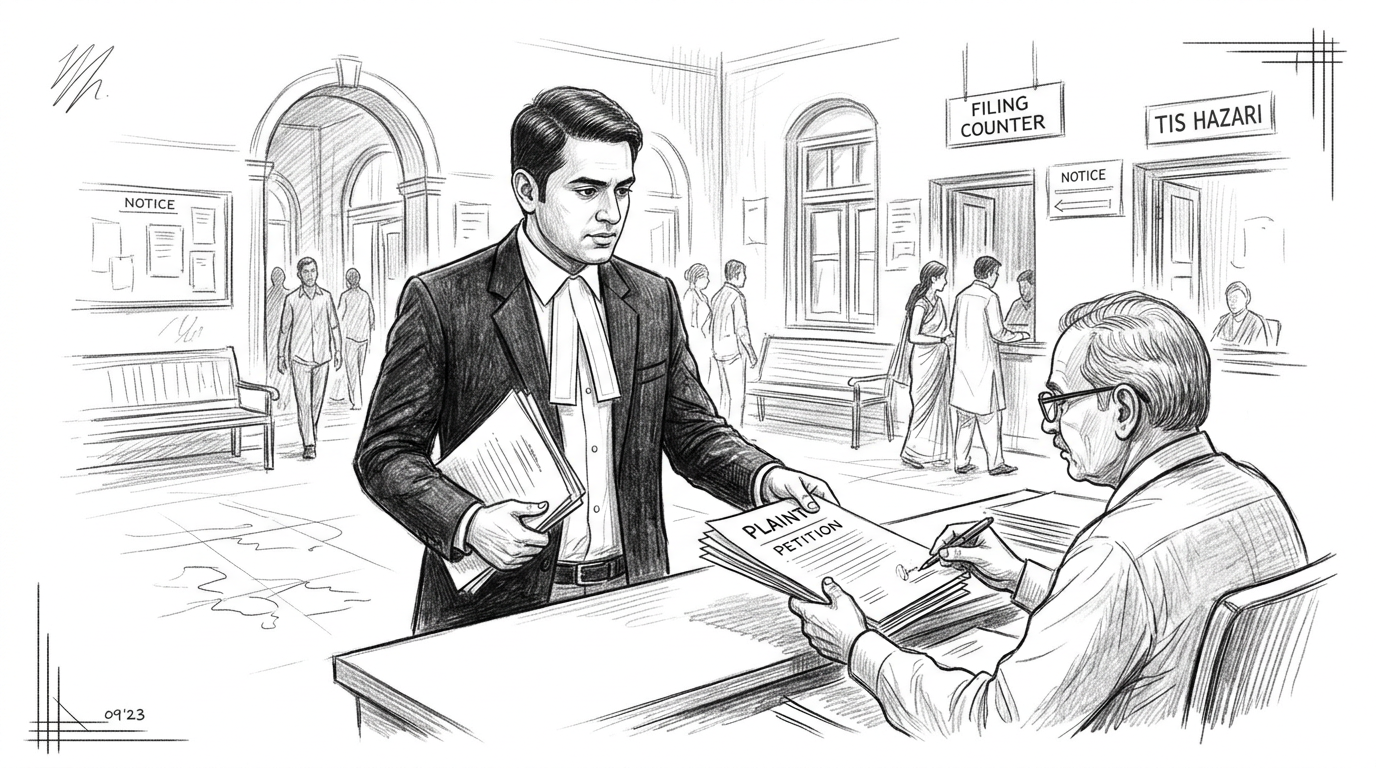
The practice is wide. We handle anticipatory bail, regular bail, bail after arrest, FIR quashing under Section 482 CrPC, trial defence across NDPS, POCSO, white-collar offences, and IT Act matters. Our criminal lawyers in Delhi have appeared across Tis Hazari, Rohini, Saket, Karkardooma, Dwarka, and the Delhi High Court. But more than the statute books, what matters is knowing how Delhi’s criminal courts actually work — which judges grant bail liberally, which IO sections are overzealous, and which procedural shortcuts can be exploited to your advantage.
When to call a criminal lawyer in Delhi
The single biggest mistake we see is waiting. Clients come to us after they have already made a statement at the police station — something they thought was harmless but which the IO later uses as evidence of confession. A criminal lawyer in Delhi should be on the scene before the first statement, not after. The window between FIR filing and chargesheet submission is when the most strategic decisions are made, and once the chargesheet is filed, the options narrow significantly.
The other common mistake is trying to handle the police station informally. People think that if they explain their side, the IO will drop the matter. In most Delhi police stations, that approach backfires. The IO is trained to record statements, not to adjudicate. A criminal lawyer in Delhi knows the difference between cooperating and incriminating yourself — and will advise you precisely on what to say, what to withhold, and when to invoke your right to silence.
If you have received a Section 91 CrPC notice or a Section 160 CrPC summons, call a criminal lawyer in Delhi before you go anywhere near the police station. If an FIR has been registered against you and you have not been arrested yet, a criminal lawyer in Delhi can file for anticipatory bail and potentially prevent arrest altogether. If you have already been arrested, a criminal lawyer in Delhi will move for bail immediately — the first bail hearing is often the one that matters most.
Bail: what actually works in Delhi courts
Bail is where most criminal matters are won or lost — not at trial. A criminal lawyer in Delhi who gets bail at the first hearing has already won a significant portion of the battle. The remaining portion is negotiating a favourable settlement or dismantling the prosecution’s case at trial.
Delhi courts have developed their own unwritten rules for bail. The Tis Hazari and Rohini district courts handle the highest volume of bail applications in the city, and their judges have developed distinct approaches. A criminal lawyer in Delhi who knows the court’s practice — which judges require a complete chargesheet before granting bail, which ones grant bail on the first date, and which ones require a thorough reasoned order — can time the application strategically.
For anticipatory bail under Section 438 CrPC, the Delhi High Court is the forum. The High Court has taken a progressively more liberal view of anticipatory bail in recent years, particularly for first-time offenders and cases where the FIR was filed as a pressure tactic. A criminal lawyer in Delhi filing a Section 438 petition will need to demonstrate that the accused is not a flight risk, has roots in Delhi, and is unlikely to tamper with evidence. The strength of the defence on the merits also matters — a criminal lawyer in Delhi who can show that the FIR itself is legally weak will get a stronger anticipatory bail order.
FIR quashing: stopping a case before it begins
Not every FIR leads to a legitimate prosecution. Some are filed to settle personal scores, some are based on grossly incorrect facts, and some simply do not disclose any offence under the penal code. A criminal lawyer in Delhi can file a quashing petition under Section 482 CrPC before the Delhi High Court to have the FIR and all consequent proceedings set aside at the threshold stage.
The High Court’s power under Section 482 is wide but discretionary. A criminal lawyer in Delhi filing for quashing must demonstrate that the FIR does not disclose any offence — not that the allegations are false, but that even if every word in the FIR is true, no crime has been committed under law. This is a subtle but critical distinction. A criminal lawyer in Delhi who frames the quashing petition around the legal deficiency in the FIR — rather than disputing the facts — has a much better chance of success.
Common cases where FIR quashing works: defamation FIRs based on opinion rather than fact, cheating FIRs where the underlying transaction was a commercial dispute not a criminal offence, and matrimonial FIRs filed as leverage in divorce negotiations. A criminal lawyer in Delhi who has filed multiple quashing petitions will know which Delhi High Court judges are receptive to which types of arguments.
Working with a criminal lawyer in Delhi
Most clients come to us in a state of urgency — an FIR was filed last night, a notice arrived this morning, a family member was arrested. We prioritise urgent matters and typically offer a same-day consultation. The first meeting is about getting the facts straight, reviewing whatever documents are available, and giving you a clear picture of your legal position — not vague reassurances, but an honest assessment of what the case looks like and what the likely outcomes are.
For ongoing matters, we propose a scope-based engagement: bail applications, quashing petitions, trial defence, or full representation through sentencing. The engagement letter covers the scope and the expected timeline for each stage of the matter. Transparency matters — a criminal lawyer in Delhi who explains the process honestly, including the risks, earns trust that lasts through the entire proceeding.
What our clients ask us
How soon should I engage a criminal lawyer in Delhi after an FIR is filed
Immediately. The window between FIR filing and chargesheet submission is when the most strategic decisions are made — whether to apply for anticipatory bail, whether to cooperate with the investigation, whether to file for quashing. A criminal lawyer in Delhi engaged early can shape the investigation direction. One engaged late can only respond to what has already happened.
Can a criminal lawyer in Delhi promise a bail outcome
No responsible lawyer promises a specific outcome. What a criminal lawyer in Delhi can do is give you an honest assessment of your chances based on the nature of the offence, the strength of the evidence, your prior record, and the judge before whom the application is listed. We will tell you if the case is strong, if it is borderline, or if it is an uphill battle — and we will still fight it regardless.
What if I cannot afford a criminal lawyer in Delhi
If you cannot afford private representation, the court will appoint a legal aid lawyer under the Legal Services Authorities Act. However, legal aid lawyers in Delhi courts are overworked and often cannot give your matter the attention it needs. If you can manage it, even a limited-scope engagement — just for the bail hearing — can make a material difference. We sometimes structure engagements to cover only the critical early stages.
Will my criminal lawyer in Delhi handle the trial if the case goes that far
Yes. Our criminal lawyers in Delhi handle matters from the initial notice through to trial and appeal. We do not drop you after the bail hearing. Continuity matters — a criminal lawyer in Delhi who was involved from the beginning knows the case better than any lawyer who picks it up mid-trial.
NDPS cases: why bail is particularly difficult
The Narcotic Drugs and Psychotropic Substances Act, 1985 is one of the most stringent criminal statutes in India. Bail under Section 37 NDPS is exceptionally hard to obtain — the Act creates a presumption against bail and requires the accused to show that they are not guilty of the offence and will not commit similar offences while on bail. A criminal lawyer in Delhi handling NDPS cases needs to build the bail application on solid ground from the outset, because the court’s initial assessment often determines the entire case trajectory.
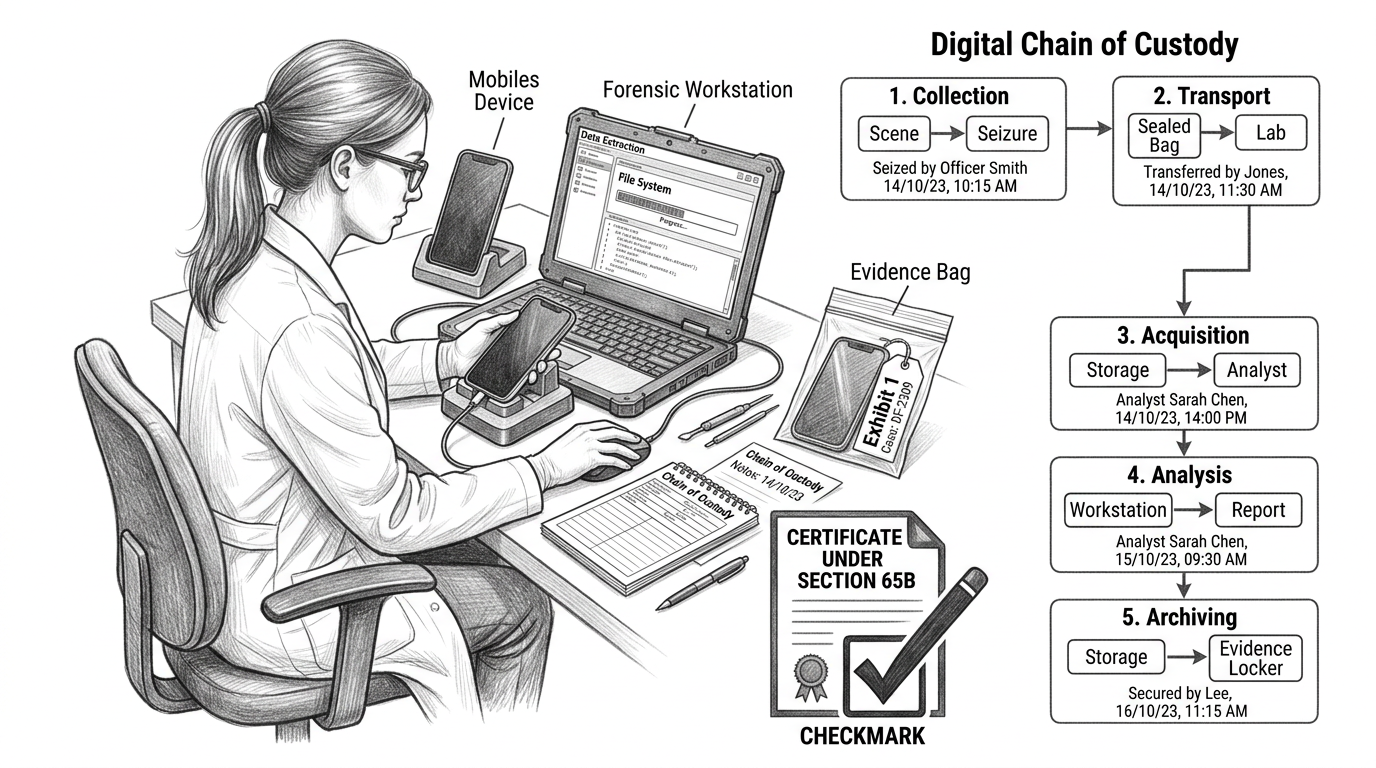
NDPS cases in Delhi are typically registered by the Delhi Police’s specialised narcotics units, and the investigation often involves seizure of drugs from vehicles, residences, or courier packages. The defence strategy depends on the facts: was the seizure conducted lawfully. Was the chain of custody maintained. Was the accused in possession of the alleged contraband, or was it found in a common area. A criminal lawyer in Delhi who can challenge the legality of the seizure or establish that the accused had no knowledge of the contraband’s presence can often secure bail even in NDPS cases.
POCSO cases: handling with sensitivity and precision
Cases under the Protection of Children from Sexual Offences Act require a different approach entirely. The POCSO Act is designed to protect children, and the procedural framework prioritises the child’s testimony and welfare. A criminal lawyer in Delhi handling POCSO defence must be sensitive to the child’s interests while rigorously testing the prosecution’s evidence — these are not incompatible goals, but they require careful navigation.
Bail in POCSO cases is governed by Section 437(1) proviso, which creates a strong presumption against bail for offences under Sections 4, 6, 8, 10, and 12. A criminal lawyer in Delhi seeking bail in a POCSO case must demonstrate exceptional circumstances — the accused’s age, the nature of the relationship with the complainant, the delay in reporting, or inconsistencies in the prosecution’s case. Delhi courts have become increasingly cautious about granting bail in POCSO cases, and a criminal lawyer in Delhi who understands the specific judicial attitudes in Delhi’s district courts can frame the bail application accordingly.
White-collar crime: defending the professional accused
White-collar offences — under the Prevention of Corruption Act, the Prevention of Money Laundering Act, SEBI regulations, and the Benami Transactions Act — are different from ordinary criminal cases in one critical respect: the evidence is almost always documentary. Bank statements, email trails, shareholding patterns, and transaction records replace eyewitness testimony. A criminal lawyer in Delhi handling white-collar defence needs to be as comfortable reading financial documents as reading case law.
The PMLA is particularly complex. The Enforcement Directorate’s investigation operates under a different paradigm from regular criminal investigation — the ED does not need a chargesheet, it files a complaint before the special court, and the burden of proof shifts to the accused once the ED has made out a prima facie case. A criminal lawyer in Delhi who understands PMLA procedure — including the attachment and confiscation regime — can structure the defence to address both the criminal charges and the asset preservation dimension simultaneously.
What to bring to your first meeting
The more documentation you can bring to your first meeting with a criminal lawyer in Delhi, the faster they can assess your position. Bring the FIR copy if you have it, any notices you have received from the police, your own written account of what happened, and any documents, photographs, or communications that support your version of events. If you have been arrested, bring the arrest memo and the remand order. If bail has been granted, bring the bail bond copy.
Do not worry about organising the documents — just bring everything. A criminal lawyer in Delhi will sort through them at the consultation and identify which ones matter. The important thing is that you do not filter the documents yourself — you might discard something that seems irrelevant but which a criminal lawyer in Delhi can use to build your defence.
How we work with you
Criminal matters are engaged on a scope basis: bail applications, quashing petitions, trial defence, or full representation through sentencing. We agree the scope and timeline at the first consultation, in writing, before any work begins. A criminal lawyer in Delhi at Bijlani & Co will explain the engagement process clearly so you know what to expect at every stage.
Chargesheet review: the turning point in a criminal case
Once the investigating officer files the chargesheet under Section 173 CrPC, the character of a criminal matter shifts. Before the chargesheet, the defence is largely reactive, responding to police summons, arguing for bail, and monitoring the investigation. After the chargesheet, the case moves to the trial court and the defence can take a more structured approach.
A careful chargesheet review looks for gaps the prosecution may not want scrutinised: whether all witnesses named in the FIR were actually examined, whether the forensic report was obtained within a reasonable time, whether the seizure memo matches the panchnama, and whether the timeline in the chargesheet is internally consistent. A criminal lawyer in Delhi who reviews the chargesheet line by line, rather than skimming the summary, frequently finds procedural gaps that become the foundation of the defence at trial.
Framing of charges is the next milestone. At this stage, the trial court decides whether there is sufficient ground to proceed against the accused on each specific charge. A criminal lawyer in Delhi can argue for discharge on individual charges where the material on record does not support them, even if the overall case proceeds. Getting even one serious charge dropped at the framing stage changes the entire risk profile of the trial.
Cross-examination strategy: where trials are actually won
Delhi trial courts move through witness examination methodically, and the quality of cross-examination often determines the outcome more than the opening arguments or the final submissions. A criminal lawyer in Delhi preparing for trial studies each prosecution witness statement in advance, comparing it against the FIR, the chargesheet, and any prior statements recorded under Section 161 CrPC. Inconsistencies between these documents are the raw material of an effective cross-examination.
The most useful cross-examinations do not attempt to prove the witness is lying outright. Instead, they establish reasonable doubt by highlighting gaps in memory, contradictions in timeline, and improbabilities in the sequence of events described. A criminal lawyer in Delhi who has appeared before a particular judge repeatedly develops a sense of which lines of questioning that judge finds persuasive and which fall flat, and adjusts strategy accordingly.
Expert witnesses, particularly in forensic and cyber-evidence matters, require a different approach. A criminal lawyer in Delhi cross-examining a forensic expert focuses on the methodology used, the chain of custody for samples, and whether the conclusions in the report are actually supported by the underlying data, rather than disputing the expert’s general competence.
Related practice areas
Some criminal matters have civil consequences. If your criminal case involves a property dispute, our civil lawyer in Delhi handles that track. If it involves a white-collar offence with company law implications, our corporate lawyer in Delhi advises on the commercial side. For IT Act cases specifically, our dedicated cyber crime lawyer in Delhi provides specialised defence. If your case requires immediate bail assistance, see our dedicated bail lawyer in Delhi page for anticipatory and regular bail procedures.
Appeals and revisions: when the trial does not go your way
A trial court judgment is rarely the end of the road. If you have been convicted, a criminal lawyer in Delhi will assess the grounds for appeal — whether there was a misreading of evidence, a procedural irregularity, or an error in the application of law. Appeals from sessions court judgments go to the Delhi High Court, and from there to the Supreme Court if necessary. A criminal lawyer in Delhi handling appeals will carefully review the trial court record — the evidence that was admitted, the arguments that were made, and the reasoning in the judgment — to identify the strongest grounds for challenge.
Revision petitions under Section 397 CrPC are another tool. A criminal lawyer in Delhi can file a revision to correct jurisdictional errors or illegal orders passed by subordinate courts — even while the main appeal is pending. The revision jurisdiction is narrow but powerful when used at the right time, and a criminal lawyer in Delhi who knows which errors are revisable and which are not can save significant time and cost.
If you have been acquitted and the prosecution has filed an appeal, you need a criminal lawyer in Delhi to defend the acquittal. The standard of review in appeals against acquittal is higher than appeals against conviction — the appellate court does not interfere lightly with a trial court’s assessment of evidence. A criminal lawyer in Delhi defending an acquittal will focus on demonstrating that the trial court’s findings were legally sound and factually correct.
The first consultation: what happens when you walk in
Most clients arrive at our office at Patiala House Courts anxious and uncertain. The first consultation is usually an hour or more. We will ask you to describe what happened in your own words — without prompting or leading questions. Then we will review whatever documents you have brought: the FIR, any notices, photographs, messages, bank statements, or witness details. A criminal lawyer in Delhi at Bijlani & Co will then explain the legal position in plain language — what the prosecution needs to prove, what defences are available, what the realistic outcomes are, and what the timeline will look like.
We do not sugarcoat assessments. If the case is weak, we will say so. If the evidence against you is strong, we will tell you that too and explain how we can still mitigate the damage. Honest legal advice at the first meeting builds the trust that carries both sides through the months or years that follow.
Related Practice Areas
Explore our full range of legal services across Delhi NCR.

Criminal Lawyer Gurgaon
Defence, bail & trial representation
Civil Lawyer Delhi
Property, contracts & disputes

Corporate Lawyer Delhi
M&A, compliance & FDI advisory
Cyber Crime Lawyer Delhi
IT Act, data privacy & digital fraud
Divorce Lawyer Delhi
Family law, custody & maintenance
Civil Lawyer Gurgaon
Property disputes & civil litigation

Civil Lawyer Noida
Contract disputes & enforcement

Corporate Lawyer Gurgaon
NCLT, insolvency & company law

Corporate Lawyer Noida
Startup advisory & funding

Cyber Crime Lawyer Gurgaon
DPDP Act & data protection

Divorce Lawyer Gurgaon
Mutual consent & family matters