Buying or selling property in Ghaziabad? The registration process is governed by the Registration Act, 1908 and the Uttar Pradesh Stamp Act. Failing to register a property transaction can make the document inadmissible in court and leave you vulnerable to disputes. This guide walks you through every step of property registration in Ghaziabad, from document preparation to post-registration follow-up.
Why Property Registration Is Mandatory in Ghaziabad
Under Section 17 of the Registration Act, 1908, any instrument relating to the transfer, creation, or extinguishment of an interest in immovable property must be registered. This includes sale deeds, gift deeds, lease agreements exceeding one year, and mortgage deeds. In Ghaziabad, the sub-registrar offices at Raj Nagar, Kavi Nagar, and Vasundhara handle registrations for properties within their jurisdiction.
An unregistered sale deed does not confer legal title. If a dispute arises, say the seller tries to sell the same property to someone else, the registered document will always prevail. Our property lawyers in Ghaziabad regularly handle disputes arising from unregistered or improperly registered documents.
Documents Required for Property Registration in Ghaziabad
Prepare these documents before visiting the sub-registrar office:
- Identity proof: Aadhaar card, PAN card, and passport-size photographs of all parties
- Address proof: Utility bill, voter ID, or Aadhaar for both buyer and seller
- Title documents: Original sale deed or gift deed of the seller proving ownership
- Previous registration documents: Chain of title for at least the last 30 years
- Property tax receipts: Latest paid property tax receipts from Ghaziabad Municipal Corporation
- NOC from the society/builder: No Objection Certificate from the housing society or builder
- Encumbrance Certificate: Issued by the sub-registrar office confirming no outstanding liabilities on the property
- Stamp duty payment proof: E-stamp certificate from the Uttar Pradesh Treasury
- Two witnesses: Must be present with valid ID proof at the time of registration
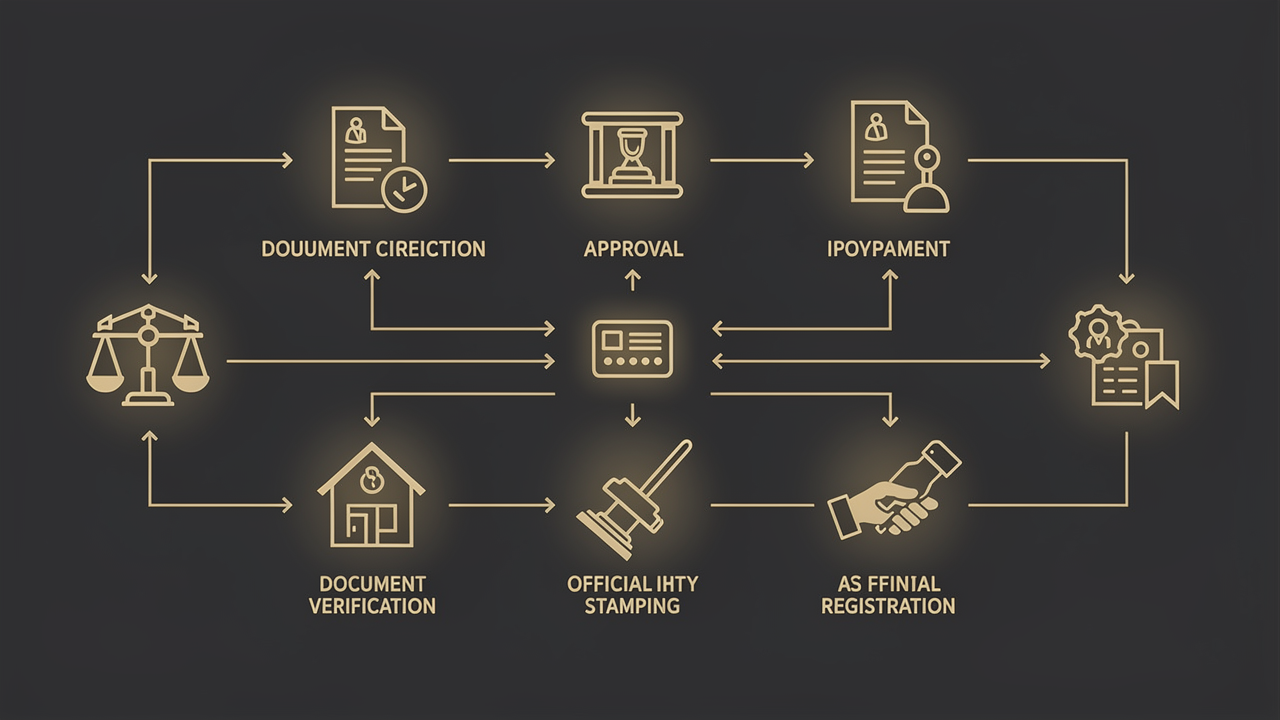
Step-by-Step Property Registration Process in Ghaziabad
Step 1: Verify the Title
Before executing the sale deed, verify that the seller has a clear and marketable title. This involves checking the records at the Ghaziabad sub-registrar office and the local municipal records. Our property registration lawyers in Ghaziabad conduct due diligence by examining the Encumbrance Certificate, verifying the chain of title, and confirming that the property is free from any disputes, mortgages, or litigation.
Step 2: Pay the Stamp Duty
Uttar Pradesh charges 7% stamp duty on the sale consideration or the circle rate of the property, whichever is higher. You can pay stamp duty online through the Uttar Pradesh Treasury website or at authorised banks. After payment, you receive an e-stamp certificate which must be presented at the sub-registrar office.
Step 3: Execute the Sale Deed
The sale deed is drafted on non-judicial stamp paper of the appropriate value. Both the buyer and seller must sign the deed in the presence of two witnesses. The deed should clearly describe the property, the sale consideration, and any terms agreed upon by the parties.
Step 4: Visit the Sub-Registrar Office
Both parties, along with two witnesses, must appear before the sub-registrar with the original sale deed, stamp duty certificate, identity proofs, and address proofs. The sub-registrar verifies the documents and the identities of the parties, then registers the deed.
Step 5: Collect the Registered Document
After registration, the sub-registrar provides an endorsement on the sale deed and returns the registered copy. You can also obtain a certified copy from the sub-registrar office if needed for future transactions. Register the property in your name with the Ghaziabad Municipal Corporation for property tax purposes.
Property Registration Fees in Ghaziabad
Here is a breakdown of the costs involved:
- Stamp duty: 7% of the sale consideration or circle rate (whichever is higher)
- Registration fee: 1% of the sale consideration (capped at ₹30,000)
- Legal fees: Varies by lawyer, typically 0.5%–1% of the sale consideration for due diligence and deed drafting
- E-stamp processing fee: Nominal fee for online stamp duty payment
Common Mistakes to Avoid During Property Registration
Property registration in Ghaziabad is straightforward if you have all the documents in order, but a few common mistakes can cause delays or legal complications:
- Incorrect property description: Ensure the property address, survey number, and area in the sale deed match the title documents exactly
- Incomplete chain of title: Missing documents in the ownership chain can lead to rejection of the registration
- Not verifying encumbrances: Failing to check for existing mortgages, liens, or litigation on the property
- Under-reporting the sale consideration: Registering at a lower value than the actual sale price to save on stamp duty is illegal and can attract penalties
- Skipping the due diligence: Always conduct a thorough title search before executing the sale deed
Property Registration Timeline in Ghaziabad
The entire process, from document preparation to receiving the registered deed, typically takes 2–4 weeks. The actual registration appointment at the sub-registrar office takes 1–2 hours if all documents are in order. Due diligence before registration should begin at least 2–3 weeks in advance.
Property Registration After the Sale
After registration, update the property records at the Ghaziabad Municipal Corporation and the electricity/water departments. If the property is part of a housing society, inform the society management to update the membership records. Our property registration lawyers in Ghaziabad handle post-registration compliance as part of their service.
Stamp Duty and Registration Fee Details in Uttar Pradesh
Understanding the exact fee structure is essential for budgeting your property transaction in Ghaziabad. Under the Uttar Pradesh Stamp Act, the current stamp duty for sale deeds is 7% of the transaction value or the circle rate, whichever is higher. An additional registration fee of 1% (capped at ₹30,000) is charged by the registration department.
Circle rates in Ghaziabad vary significantly by locality. As of 2024, circle rates in prime areas like Raj Nagar Extension range from ₹45,000–₹65,000 per square yard, while areas like Indirapuram and Vaishali command rates of ₹55,000–₹75,000 per square yard. Always verify the current circle rate at the Ghaziabad sub-registrar office before calculating stamp duty, as under-reporting to save on stamp duty is a cognizable offence under the Stamp Act.
The e-stamp system in Uttar Pradesh allows online payment of stamp duty through the official treasury website. After payment, you receive a digitally signed e-stamp certificate with a unique identification number. This certificate must be produced at the sub-registrar office during registration. The e-stamp system has largely eliminated the use of physical stamp paper and reduced corruption at the treasury offices.
Sub-Registrar Offices in Ghaziabad — Jurisdiction and Timings
Ghaziabad has multiple sub-registrar offices, each handling specific areas. Knowing which office has jurisdiction over your property saves time and avoids rejected applications:
- Raj Nagar Sub-Registrar Office: Handles properties in Raj Nagar, Raj Nagar Extension, and nearby sectors
- Kavi Nagar Sub-Registrar Office: Covers Kavi Nagar, Kavi Nagar Extension, and adjacent localities
- Vasundhara Sub-Registrar Office: Handles Vasundhara, Indirapuram, and cross-border areas
- Ghaziabad Sadar Sub-Registrar: Handles older Ghaziabad areas and commercial properties
All sub-registrar offices in Ghaziabad operate from 10:00 AM to 4:00 PM on weekdays (Monday to Friday). It is advisable to arrive at least 30 minutes before your scheduled appointment. Some offices now accept online appointments through the Uttar Pradesh Registration Department portal.
Encumbrance Certificate — Why It Matters
An Encumbrance Certificate (EC) is a crucial document that certifies that the property is free from any monetary or legal liabilities. The EC covers a specified period (typically 13 or 30 years) and lists all registered transactions affecting the property during that period.
In Ghaziabad, you can apply for an EC online through the Uttar Pradesh Registration Department portal or in person at the sub-registrar office. The EC typically takes 7–15 working days to be issued. Always verify the EC period covers at least the last 30 years of ownership to ensure a clear title.
Property Registration for NRIs and Foreign Nationals
Non-Resident Indians (NRIs) and foreign nationals can also register property in Ghaziabad, but the process involves additional documentation. NRIs must provide a copy of their passport, visa, and overseas address proof. Power of Attorney (PoA) holders can execute the sale deed on behalf of the NRI, but the PoA must be notarised in the country of residence and attested by the Indian consulate.
Foreign nationals (non-Indian citizens) can only purchase residential or commercial property in India under the Foreign Exchange Management Act (FEMA) regulations. They cannot buy agricultural land, plantation bungalow, or farmhouse without prior approval from the Reserve Bank of India (RBI) and the relevant state government.
Our property lawyers in Ghaziabad have extensive experience handling property registrations for NRIs and can manage the entire process through a local Power of Attorney holder if you cannot be present in person.
What to Do After Registration — Post-Registration Compliance
Registration is not the end of the process. After receiving the registered sale deed, you must complete several post-registration formalities:
- Mutation of records: Apply for mutation of the property title in the records of Ghaziabad Municipal Corporation and the local tehsildar office
- Property tax transfer: Transfer the property tax assessment to your name at the Ghaziabad Municipal Corporation office
- Utility connections: Transfer electricity, water, and gas connections to the new owner’s name
- Society transfer: If the property is in a housing society, complete the membership transfer formalities and update the share certificate
- Insurance update: Update the property insurance policy with the new owner’s details
Mutation is particularly important as it updates the land revenue records and establishes your ownership in government records. Without mutation, you may face difficulties in obtaining loans, selling the property in the future, or claiming government benefits.
Frequently Asked Questions
How long does it take to register a property in Ghaziabad?
The complete property registration process in Ghaziabad typically takes 7 to 15 days from the date of appointment at the sub-registrar office, assuming all documents are in order. Stamp duty payment and document verification can be completed within 2-3 days if done online. The actual registration at the sub-registrar takes 1-2 hours. After registration, the registered sale deed is usually available within 3-7 working days. Total timeline: 2-3 weeks from document preparation to receiving the registered deed.
What is the difference between a sale deed and a title deed in Ghaziabad?
A title deed proves ownership of the property, while a sale deed is the document that transfers ownership from the seller to the buyer. In Ghaziabad, the registered sale deed becomes the title deed for the new owner. You should always keep the original sale deed in a safe place and register a photocopy with the Ghaziabad Municipal Corporation. The title deed should also be verified through an Encumbrance Certificate to ensure there are no existing mortgages or disputes on the property.
Can I register a property in Ghaziabad online?
Partial registration can be done online through the Uttar Pradesh Registration Department website. You can pay stamp duty online, book an appointment at the sub-registrar office, and even download the e-stamp certificate online. However, the physical registration — signing the sale deed in front of the sub-registrar — must be done in person. Both the buyer and seller (or their authorised representatives with power of attorney) must be present at the sub-registrar office on the appointed date.
How long does property registration take in Ghaziabad?
The registration appointment takes 1–2 hours. The overall process from start to finish, including document preparation, due diligence, and stamp duty payment, takes 2–4 weeks.
Can I register a property without visiting the sub-registrar office?
No. Both parties must appear in person before the sub-registrar along with two witnesses. However, our lawyers can prepare all documents and accompany you to the office to streamline the process.
What is the penalty for not registering a property in Ghaziabad?
An unregistered document cannot be used as evidence in court. You may also face penalties under the Registration Act, 1908. Always register property transactions to protect your legal rights.
Can a property be registered on a weekend or holiday?
Sub-registrar offices in Ghaziabad operate on weekdays only. Plan your appointment accordingly and arrive with all documents prepared in advance.
Is it mandatory to pay stamp duty on the market value or the agreed sale price?
You must pay stamp duty on the higher of the two, the agreed sale price or the circle rate (government-determined minimum value) for that area in Ghaziabad.
Need Help with Property Registration in Ghaziabad?
Property registration involves legal due diligence, document drafting, and compliance with Uttar Pradesh stamp laws. Our property lawyers in Ghaziabad handle the entire process, from title verification to post-registration compliance, so you can complete your transaction with confidence. Consult a property lawyer in Ghaziabad today.