
Court Marriage in Ghaziabad: Special Marriage Act Process and Legal Requirements
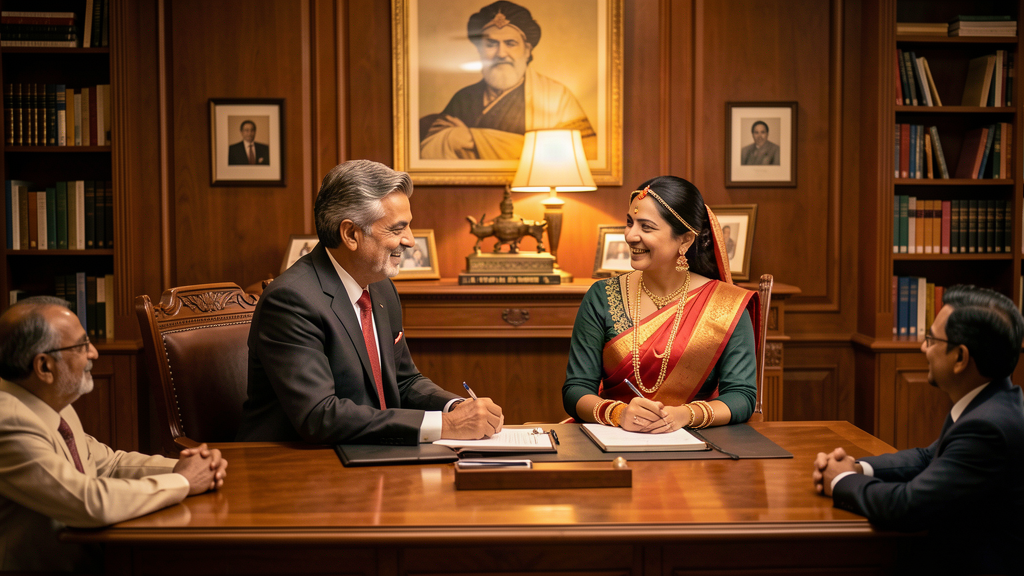
Court marriage in Ghaziabad is governed by the Special Marriage Act, 1954. It provides a legal framework for two adults to marry without requiring religious ceremonies, and it applies to all faiths. The process is straightforward in principle but involves specific documentation, a 30-day notice period, and procedural requirements that a court marriage lawyer in Ghaziabad can help you navigate efficiently. Bijlani & Co. assists couples with court marriage registrations in Ghaziabad. Our family lawyers handle the documentation, the notice filing at the Sub-Divisional Magistrate’s office, the objection process, and the actual marriage ceremony.
We also advise on inter-faith marriages, NOC requirements for foreign nationals, and post-marriage registration of marriage certificates for visa and passport purposes. Court marriage is particularly relevant for couples who face opposition from their families based on caste, religion, or community, and for NRI marriages where one party cannot be physically present for a traditional ceremony. Our court marriage lawyers in Ghaziabad understand the local procedural requirements and ensure that the registration is completed smoothly and within the required timelines.
Special Marriage Act 1954: Eligibility Criteria and Requirements
The Special Marriage Act applies to any two adults regardless of religion, provided they meet the eligibility criteria. Both parties must be unmarried at the time of marriage. Both must be at least 21 years old (male) and 18 years old (female). Both must be of sound mind and capable of giving valid consent. The parties must not be within the degrees of prohibited relationship unless their custom permits it. These requirements are strict — failure to meet any of them can result in the marriage being declared void or voidable.
For NRI marriages, additional requirements apply. If one party is a foreign national, they must provide a copy of their passport, a visa valid for at least 30 days beyond the intended marriage date, and a No Objection Certificate or civil status certificate from their home country’s embassy or consulate in India. The NOC certifies that the foreign national is free to marry and that there is no legal impediment to the marriage under the laws of their home country. Our court marriage lawyers in Ghaziabad guide NRI couples through these requirements, ensuring that all documentation is complete before the notice is filed.
The Court Marriage Registration Process in Ghaziabad
The court marriage registration process in Ghaziabad follows the procedure laid down in the Special Marriage Act. Step 1: File a notice of intended marriage at the Sub-Divisional Magistrate’s office in Ghaziabad. The notice must include the names, addresses, ages, and occupations of both parties, and must be filed at least 30 days before the intended marriage date. The SDM publishes the notice on the notice board of the office, making it publicly available for anyone to inspect and object to.
Step 2: The 30-day notice period. During this period, any person can object to the marriage on the grounds that it would violate any of the eligibility criteria under the SMA. If an objection is raised, the SDM investigates the objection and decides whether it is valid. If the objection is found to be valid, the marriage cannot proceed. If the objection is found to be invalid, or if no objection is raised, the marriage can proceed. The 30-day period is a statutory requirement and cannot be shortened, except in cases where the marriage is between two persons who are already married to each other under a different personal law.
Step 3: The marriage ceremony. After the 30-day notice period expires without any valid objection, the parties can proceed with the marriage ceremony before the SDM or a designated marriage officer. The ceremony requires three witnesses, who must be present at the time of the marriage and must sign the marriage certificate. The parties declare that they are marrying of their own free consent, and the marriage officer enters the declaration in the marriage register. The marriage certificate is then issued to the parties.

Documents Required for Court Marriage in Ghaziabad
The documents required for court marriage in Ghaziabad include proof of age for both parties (birth certificate, passport, or Aadhaar card), proof of identity (Aadhaar card, passport, or voter ID card), proof of address for both parties (Aadhaar card, passport, or utility bill), proof of unmarried status (affidavit of unmarried status, or divorce decree if previously married, or death certificate of former spouse), passport-size photographs of both parties, and three witnesses with their identity proof and address proof. For NRI marriages, additional documents include the foreign national’s passport, valid visa, NOC from their home country’s embassy, and proof of their current address in India.
Our court marriage lawyers in Ghaziabad prepare a complete document checklist at the beginning of every engagement and verify that all documents are in order before the notice is filed. This prevents delays during the 30-day notice period and ensures that the marriage ceremony proceeds smoothly. We also prepare the affidavits and declarations required under the SMA, ensuring that they comply with the specific requirements of the Ghaziabad SDM’s office.
Inter-Faith Marriages and Family Objections
Inter-faith marriages are one of the most common reasons couples choose court marriage in Ghaziabad. The Special Marriage Act applies to all faiths, and it does not require conversion to either party’s religion. This makes it the preferred legal framework for couples from different religious backgrounds who want to marry without changing their faith. Our court marriage lawyers in Ghaziabad specialise in inter-faith marriages and understand the specific challenges that these couples face — family opposition, community pressure, and procedural complications.
When family members raise objections during the 30-day notice period, our lawyers respond to the objections with evidence that the marriage meets all the eligibility criteria under the SMA. We also advise couples on safety measures — obtaining a protection order under the Special Marriage Act if there is a threat of violence or coercion, and ensuring that the marriage ceremony is conducted in a secure environment. In cases where the couple faces serious threats from family or community members, we file a protection application before the Magistrate before the marriage to ensure that the couple’s safety is protected during and after the ceremony.
Post-Marriage Registration for Visa and Passport
After the court marriage is completed, the marriage certificate must be registered with the relevant authorities for visa and passport purposes. For NRI couples, the marriage certificate is submitted to the embassy or consulate of the foreign national’s home country for visa processing. The certificate must be attested by the Ministry of External Affairs and, in some cases, by the embassy of the destination country. Our court marriage lawyers in Ghaziabad assist with the post-marriage registration process, including attestation, apostille, and submission to the relevant authorities.
Why Choose Bijlani & Co. for Court Marriage in Ghaziabad
Our court marriage lawyers in Ghaziabad have handled hundreds of court marriage registrations across inter-faith, NRI, and domestic marriages. We understand the procedural requirements of the Ghaziabad SDM’s office, the documentation standards, and the common objections that arise during the notice period. We prepare every engagement thoroughly, ensuring that the documentation is complete, the notice is filed correctly, and the marriage ceremony proceeds without complications. We also advise on post-marriage registration for visa, passport, and other legal purposes.
How long does court marriage take in Ghaziabad?
The minimum timeline for court marriage in Ghaziabad is 30 days — the notice period required under the Special Marriage Act. If no objections are raised, the marriage can be completed immediately after the 30-day period. Our court marriage lawyers prepare all documentation in advance to ensure that the process is completed as soon as the notice period expires.
Can we get married in Ghaziabad if we are from different states?
Yes. The Special Marriage Act applies to any two adults regardless of their state of residence. You can file the notice of intended marriage at the SDM’s office in Ghaziabad if at least one party has resided in Ghaziabad for at least 30 days before filing the notice. Our court marriage lawyers advise on the residency requirements and help you prepare the necessary documentation.
What if family members object to the court marriage?
Family objections during the 30-day notice period are common, particularly for inter-faith and inter-caste marriages. Our court marriage lawyers respond to objections with evidence that the marriage meets all eligibility criteria under the SMA. If the objections are based on caste or religion, they are legally irrelevant under the SMA. If there is a genuine legal objection — such as one party being already married — we advise on the appropriate course of action. In cases of threat or coercion, we file protection applications before the Magistrate.
Is court marriage valid for visa and immigration purposes?
Yes. Court marriage certificates issued under the Special Marriage Act are valid for all legal purposes, including visa applications, passport applications, and immigration. For NRI couples, the marriage certificate must be attested by the Ministry of External Affairs and, in some cases, by the embassy of the destination country. Our court marriage lawyers assist with the post-marriage registration and attestation process.
Need Court Marriage Registration in Ghaziabad?
Bijlani & Co. handles court marriage registrations under the Special Marriage Act, 1954 across Ghaziabad. Contact us for immediate assistance.
Phone: 085958 09471
Email: write@bijlani.in
Office: 141 Patiala House Courts, New Delhi
Related Practice Areas
Family Lawyer Ghaziabad
Complete family law services including divorce, custody, and marriage registration.
Divorce Lawyer Ghaziabad
Section 13, 13B, 24, 25 Hindu Marriage Act — contested and mutual consent divorce.
Advocate in Ghaziabad
General legal representation and documentation services across Ghaziabad.
Marriage Registration vs Court Marriage: The Difference
Marriage registration and court marriage are not the same thing. Marriage registration is the process of registering an already solemnised marriage — you have already had your wedding ceremony, and you now want a government-issued marriage certificate for visa, passport, or property purposes. Court marriage under the Special Marriage Act, 1954 is the actual solemnisation of the marriage before a Marriage Officer — there is no traditional ceremony. Both processes result in a valid marriage certificate, but the procedures, timelines, and documentation requirements differ. A court marriage lawyer in Ghaziabad will advise you on which process suits your situation. For couples from different religions or different states, court marriage under the Special Marriage Act is often the preferred route because it does not require conversion and provides a single uniform legal framework.
Objections and Hearing Process in Court Marriage
After filing the notice of intended marriage, the Marriage Officer publishes it in the office register for public inspection. During this 30-day period, any person can object to the marriage on the grounds that it violates the conditions of the Special Marriage Act — for example, that one party is already married, that the parties are within prohibited degrees of relationship, or that one party lacks mental capacity. If an objection is filed, the Marriage Officer must inquire into the objection before solemnising the marriage. Most objections are not legally sustainable, and the Marriage Officer typically overrules them. A court marriage lawyer in Ghaziabad will prepare a response to any objection and present legal arguments before the Marriage Officer to ensure the marriage can proceed. If the objection is found to be valid, the parties may need to address the concern before the marriage can be solemnised.
Witness Requirements: Who Can Witness a Court Marriage?
The Special Marriage Act, 1954 requires three witnesses at the time of solemnisation. These witnesses must be adults (18 years or older), must have personal knowledge of the parties, and must sign the marriage certificate as attesting witnesses. The witnesses can be friends, family members, colleagues, or neighbours — there are no restrictions on who can serve as witnesses under the Act. However, the witnesses must be present at the solemnisation ceremony and must be able to identify the parties. A court marriage lawyer in Ghaziabad will ensure that your three witnesses are available on the date of solemnisation and have valid photo identification. The lawyer will also explain to the witnesses what to expect during the ceremony: the Marriage Officer will ask the parties three questions (whether they are willing to take each other as spouses, whether they are already married, and whether they are within prohibited degrees of relationship), and the witnesses will sign the marriage certificate after the ceremony. The Marriage Officer retains the original certificate, and a certified copy is provided to the parties for passport, visa, and other purposes.
Related Legal Guides
Need Expert Legal Representation in Ghaziabad?
Advocate Nilesh Bijlani and the team at Bijlani & Co. handle all practice areas across Delhi NCR courts.
Consult an Advocate in GhaziabadRelated Practice Areas
Explore our full range of legal services across Delhi NCR.