Civil Law | Property Disputes, Recovery | Delhi NCR
Property Disputes in Delhi: A Complete Legal Guide
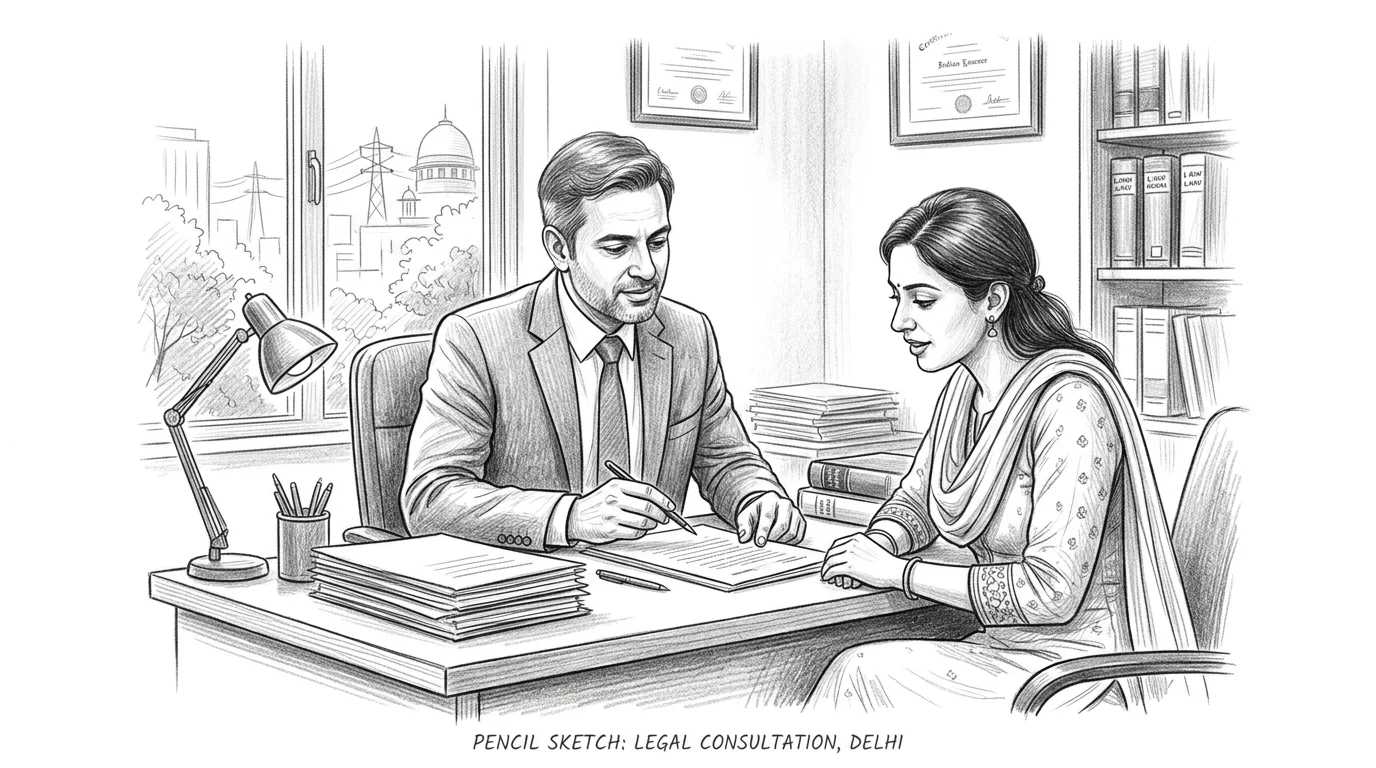
Property disputes in Delhi are among the most common civil matters that come before the courts, and they are also among the most complex. Title disputes, boundary conflicts, tenancy issues, partition suits, and specific performance claims each follow different legal frameworks and timelines. Whether you are defending ownership of property you hold or seeking enforcement of a sale agreement, understanding the options available in Delhi courts is the starting point.
Property law in India combines the Transfer of Property Act 1882, the Registration Act 1908, the Delhi Rent Control Act 1958, and the Specific Relief Act 1963 with centuries of judicial precedent. A civil lawyer who has practiced across Delhi courts can guide you through the right forum, the right procedure, and the right evidence strategy.
Types of Property Disputes in Delhi
The most common disputes fall into several categories. Title disputes arise when two or more parties claim ownership of the same property. These often involve ancestral property, jointly purchased property, or property acquired through disputed inheritance. Boundary disputes occur when adjacent owners disagree on the exact boundary line — common in older Delhi neighbourhoods where survey records are outdated.
Tenancy and eviction disputes are governed by the Delhi Rent Control Act for pre-1957 buildings and residential premises rented below INR 3,500 per month. Outside this scope, landlords file ordinary civil suits under the Specific Relief Act. Partition suits arise when co-owned property needs to be divided. Specific performance suits are filed when a seller fails to execute a registered sale agreement after receiving consideration. Injunction applications stop construction on disputed land or prevent illegal possession.
Evidence for Property Ownership
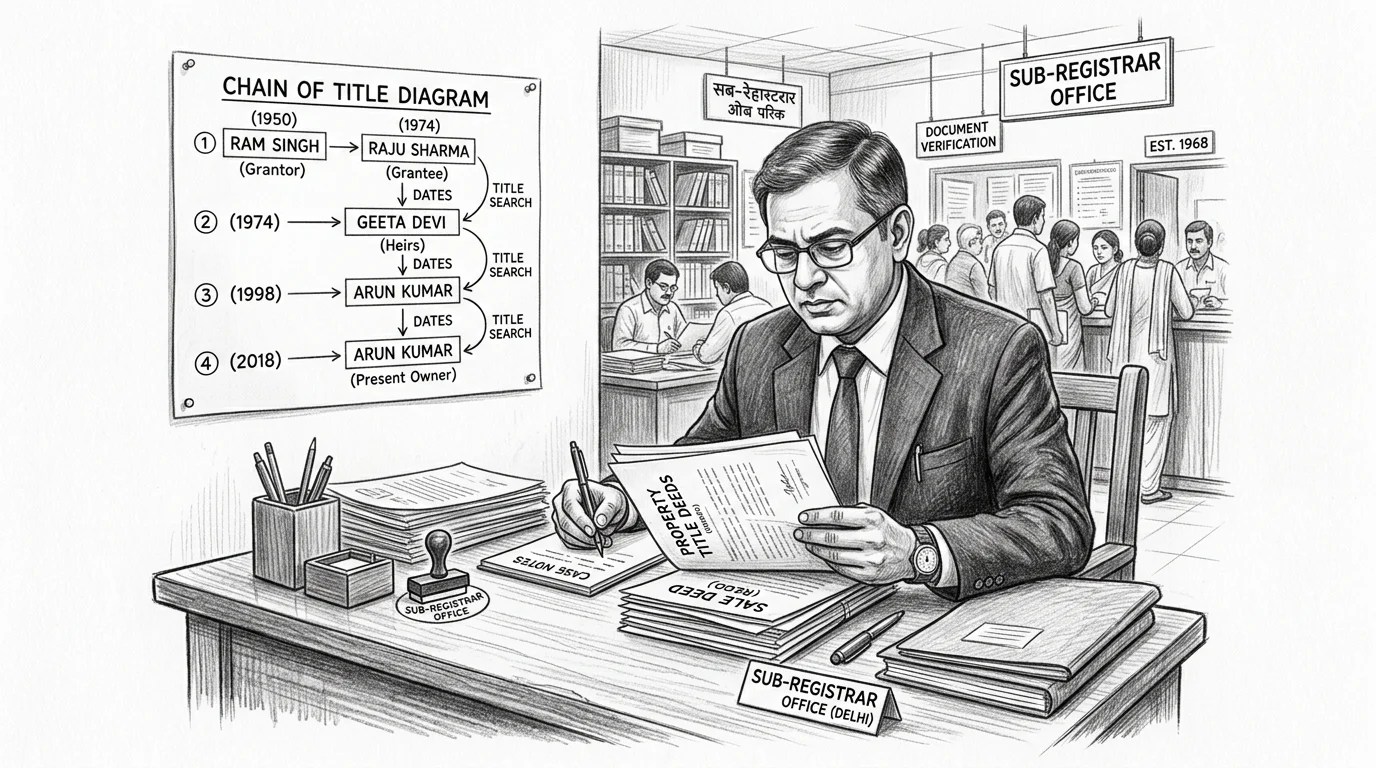
Proving ownership requires a strong documentary foundation. The primary evidence is a registered sale deed or gift deed. Without registration under the Registration Act, the document is not admissible as primary evidence. Supporting documents include property tax receipts in your name, mutation entries in municipal records, electricity and water bills in your name, previous title documents tracing the chain of ownership, evidence of possession, and witness testimony from neighbours or previous owners.
For ancestral property, additional evidence is needed: family tree documents, previous partition deeds, and statements from family members. For property acquired through inheritance, the succession certificate or legal heir certificate becomes critical. Your civil lawyer will help you assemble this evidence in the correct legal format.
Stopping Illegal Construction
If someone is constructing on land you claim to own, you can file an injunction application under Order 39 Rules 1 and 2 of the Civil Procedure Code. The court can issue an ad-interim injunction restraining further construction until the title dispute is resolved. The application must be filed promptly — delay weakens your case because the court may view it as acceptance of the other party’s possession.
Alongside the injunction, file a suit for declaration of title and permanent injunction. This establishes your ownership in the court’s records and provides a basis for recovering possession if the injunction is violated. If the construction is on government land or unauthorised colony land, additional remedies may be available through the municipal corporation or Delhi Development Authority.
Eviction and Tenancy
For premises covered by the Delhi Rent Control Act 1958, eviction follows specific grounds: non-payment of rent, bona fide requirement by the landlord, sub-letting without permission, or use for a purpose other than the agreed use. The Rent Controller has jurisdiction, and the process balances tenant protection with legitimate landlord rights.
For premises outside the Rent Control Act’s scope — commercial premises, newer residential buildings, and premises rented above INR 3,500 per month — landlords file ordinary civil suits for eviction under the Specific Relief Act. These suits follow standard civil procedure and can take 3 to 5 years in Delhi courts. Interim relief in the form of an injunction against sub-letting or unauthorised occupation is available during the proceedings.
Partition of Co-Owned Property
When multiple people own property jointly and one or more want to divide it, a partition suit is filed under the Partition Act 1893. The court first determines shares of each co-owner, then decides whether the property can be physically divided or must be sold with proceeds distributed. Physical division is preferred when feasible — the court appoints a local commissioner to survey and propose a division. When physical division is not feasible, the property is sold by public auction.
Partition suits in Delhi take 3 to 7 years, depending on ownership complexity and whether all co-owners cooperate. If some co-owners are uncooperative or cannot be located, the court can proceed with preliminary and final decrees in their absence.
Specific Performance of Sale Agreements
When a seller refuses to execute a registered sale agreement after receiving consideration, the buyer can file for specific performance under the Specific Relief Act. The court can order the seller to complete the transaction as agreed. This remedy matters in Delhi’s real estate market, where property prices have risen consistently and sellers sometimes try to back out for a higher offer.
Specific performance suits take 3 to 5 years in Delhi courts. During this period, the buyer can apply for an interim injunction restraining the seller from selling to a third party. If the seller has already sold to a third party, the remedy shifts to damages rather than specific performance — making the interim injunction critical.
Property Dispute Timelines
Injunction applications can be decided within 6 to 12 months. Title suits take 5 to 10 years including appeals. Partition suits take 3 to 7 years. Specific performance suits take 3 to 5 years. Evidence quality, court backlog, and cooperation from the opposite party all affect the timeline. Engaging a civil lawyer early reduces the timeline significantly through well-drafted pleadings and strategic interim applications.
Common Questions
How do I prove ownership of disputed property in Delhi?
Start with a registered sale deed or gift deed. Supplement with property tax receipts, mutation entries, utility bills, previous title documents, possession evidence, and witness testimony. For ancestral property, add family tree documents and previous partition deeds.
Can I stop my neighbour from building on disputed land?
Yes. File an injunction application under Order 39 Rules 1 and 2 of the CPC immediately. The court can issue an ad-interim injunction. File a parallel suit for declaration of title to establish ownership in court records.
What is the Delhi Rent Control Act and who does it apply to?
The Delhi Rent Control Act 1958 applies to residential premises rented for less than INR 3,500 per month and pre-1957 buildings. For commercial premises and newer residential buildings outside these criteria, landlords file ordinary civil suits for eviction under the Specific Relief Act.
How long does a property dispute take in Delhi courts?
Injunction applications: 6 to 12 months. Title suits: 5 to 10 years including appeals. Partition suits: 3 to 7 years. Specific performance: 3 to 5 years. The timeline depends on evidence quality, court backlog, and cooperation from the other party.
Related Practice Areas
- Civil Law — property disputes, contract disputes, injunctions, recovery suits
- Family Law — property division in divorce, ancestral property disputes
- Dispute Resolution — mediation for property settlements
Facing a property dispute in Delhi NCR
Bijlani & Co has extensive experience across Delhi courts in property disputes, title litigation, and contract enforcement. Contact us at +91-085958 09471 or write@bijlani.in for a confidential consultation.
Need a lawyer in Delhi? Consult our advocate in Delhi for comprehensive legal representation. We also specialise in Civil Law | Property Disputes, Recovery matters.