Arbitration Lawyer Delhi | Commercial Arbitration, Enforcement, ADR | Bijlani & Co
Arbitration in Delhi: A Complete Guide to Commercial Dispute Resolution

Arbitration is the most widely used form of alternative dispute resolution in commercial disputes. Parties agree to resolve their disputes outside court, with an independent arbitrator or tribunal delivering a binding decision. In India, arbitration is governed by the Arbitration and Conciliation Act 1996 (amended 2015 and 2019). For businesses in Delhi NCR, understanding arbitration procedure and enforcement mechanisms is essential for managing commercial risk.
The Delhi High Court has a dedicated Commercial Division and Arbitration Division that handles arbitration matters efficiently. The Delhi International Arbitration Centre (DIAC) provides institutional arbitration facilities. For international disputes, India is a signatory to the New York Convention, making Indian arbitration awards enforceable in over 160 countries.
Arbitration Agreements
An arbitration agreement is the foundation of any arbitration process. It can be a standalone agreement or a clause within a commercial contract. The agreement must be in writing and must clearly show that the parties intend to arbitrate disputes. Under Section 7 of the Arbitration Act, an arbitration agreement can be in the form of an arbitration clause in a contract or a separate arbitration agreement signed by the parties.
For an arbitration agreement to be valid, the subject matter of the dispute must be arbitrable. Certain disputes cannot be arbitrated in India: criminal offences, matrimonial disputes, insolvency matters, and disputes involving the right to property that is not freely alienable. Commercial disputes involving contracts, IP, construction, and financial services are generally arbitrable.
Types of Arbitration
Ad hoc arbitration is conducted without an institutional framework. The parties agree on the number of arbitrators, the procedure for appointment, the seat of arbitration, and the governing law. Ad hoc arbitration is common in domestic commercial disputes in Delhi because it offers flexibility and avoids institutional fees.
Institutional arbitration is administered by an arbitration institution such as DIAC, LCIA India, or SIAC. The institution provides procedural rules, appoints arbitrators, manages the timeline, and assists with enforcement. Institutional arbitration is preferred for complex disputes and international transactions because the institutional framework reduces procedural conflicts.
The Arbitration Process
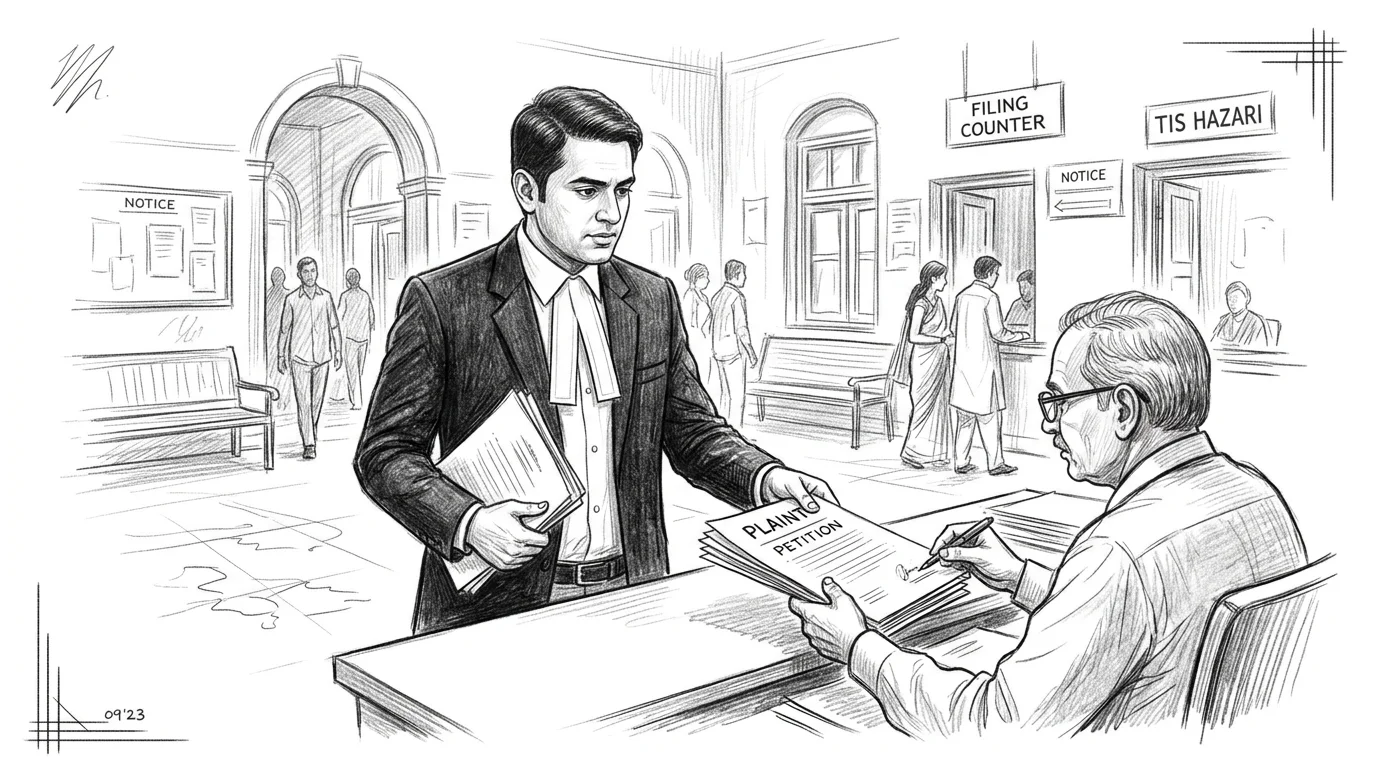
The arbitration process begins with a notice of arbitration from the claimant. The respondent files a statement of defence. The tribunal may hold hearings or decide on documents alone. The tribunal can also appoint experts, examine witnesses, and inspect property or documents. After hearing both sides, the tribunal delivers an award.
Under the 2019 amendments, the Arbitration Act mandates that awards be delivered within 12 months of the completion of pleadings. Fast-track procedures under Section 29B allow awards within 6 months for disputes below INR 1 crore. Emergency arbitrators can grant interim relief within 15 days of the request.
Interim Measures and Emergency Relief
Section 9 of the Arbitration Act allows parties to apply to the court for interim measures during arbitration: preservation of evidence, protection of assets, security for costs, and restraining orders against actions that would prejudice the arbitration. These applications are filed before the Delhi High Court or the relevant district court.
Emergency arbitrators can grant interim relief even before the tribunal is constituted. This is particularly useful when urgent relief is needed — for example, to prevent the dissipation of assets or the disclosure of confidential information. Emergency arbitrator orders are enforceable in the same manner as tribunal awards.
Enforcement of Arbitration Awards
Domestic arbitration awards (seated in India) are enforceable in Indian courts under Section 36 of the Arbitration Act. The party seeking enforcement files an application before the competent court along with the original award. The court must enforce the award unless specific grounds for challenge are established.
Foreign arbitration awards (seated outside India) are enforceable under Part II of the Act, which gives effect to the New York Convention. The application is filed before the Delhi High Court. The court can refuse enforcement only on narrow grounds: invalid arbitration agreement, lack of proper notice, award outside the scope of the agreement, improper tribunal composition, or the award being set aside or suspended by a competent authority.
Challenging Arbitration Awards
Awards can be challenged under Section 34 of the Arbitration Act on limited grounds: incapacity of a party, invalid arbitration agreement, improper notice or opportunity to be heard, award dealing with matters beyond the scope of the arbitration, improper tribunal composition, award being contrary to public policy, or the award being obtained through fraud or corruption.
The challenge must be filed within 3 months of receiving the award (extendable by 30 days for sufficient cause). The Delhi High Court has original jurisdiction over challenges to domestic awards. Once an award is set aside, the parties may need to re-arbitrate or pursue litigation.
Mediation as an Alternative
Mediation is a voluntary process where a neutral mediator helps parties reach a settlement. Under the Mediation Act 2023, mediation is encouraged as a first step before arbitration or litigation. Courts in Delhi can refer parties to mediation at any stage of proceedings. Settlements reached through mediation are enforceable as consent decrees.
Delhi High Court’s mediation centre provides free mediation services for civil and commercial disputes. The success rate at the Delhi mediation centre is approximately 60-65%. Mediation is particularly effective for disputes involving ongoing business relationships, where preserving the relationship is as important as resolving the immediate dispute.
Common Questions
How long does arbitration take in Delhi?
Domestic commercial arbitration typically takes 12 to 24 months from notice of arbitration to award. Fast-track procedures can reduce this to 6 months for disputes below INR 1 crore. International arbitration seated in Delhi follows similar timelines under institutional rules.
Can I appeal an arbitration award?
No. Arbitration awards are final and binding. They can only be challenged on limited grounds under Section 34 of the Arbitration Act. An appeal lies only against the court’s decision on the challenge petition, not against the award itself. This finality is one of arbitration’s main advantages over litigation.
Is arbitration cheaper than litigation?
Not always. Arbitration avoids some litigation costs — no court fees, faster resolution, and the ability to choose an expert arbitrator. But institutional fees, arbitrator fees, and venue costs can be substantial. For disputes below INR 50 lakh, the cost advantage of arbitration over litigation may be marginal.
Can I go to court if I have an arbitration agreement?
No. If your contract has a valid arbitration clause, you must arbitrate the dispute. Courts will refer parties to arbitration under Section 8 of the Arbitration Act if one party files a suit despite the arbitration agreement. The only exception is when the arbitration agreement is null and void or inoperative.
Related Practice Areas
- Civil Law — contract disputes, property disputes, recovery suits
- Corporate Law — commercial contracts, M&A disputes
- Employment Law — workplace mediation, service matters
Arbitration offers faster resolution of commercial disputes
Bijlani & Co represents clients in domestic and international arbitration proceedings before the Delhi High Court and DIAC. Contact us at +91-085958 09471 or write@bijlani.in.
Need a lawyer in Delhi? Consult our advocate in Delhi for comprehensive legal representation. We also specialise in Arbitration | Commercial Ar matters.