AI in Contract Review: Use Cases, Risks, and Liability
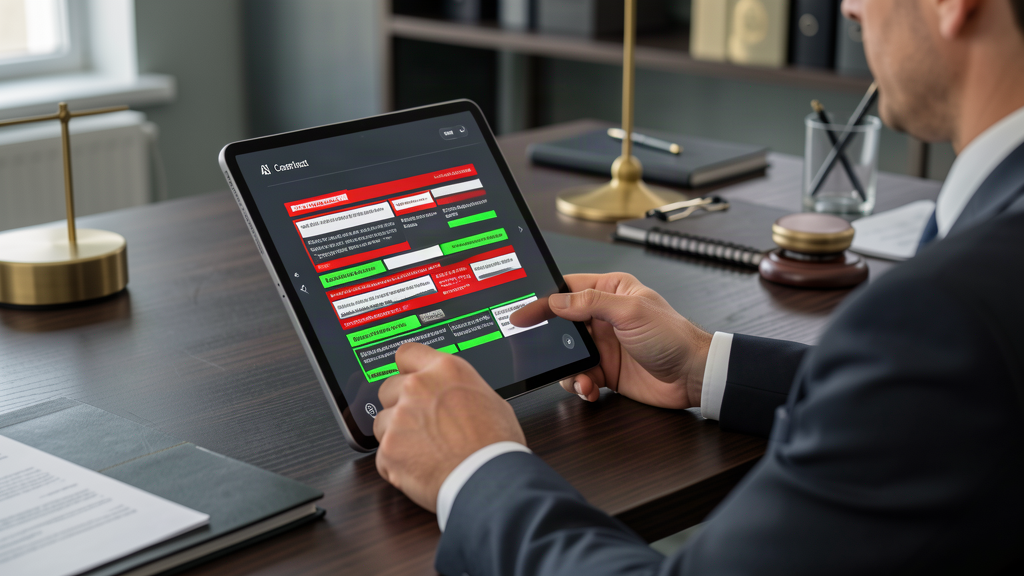
AI tools for contract review have moved from novelty to standard practice in law firms and corporate legal departments. Natural language processing models can now identify clauses, flag risks, compare versions, and suggest redlines in seconds. For lawyers, this means faster document review and more time for strategy. For clients, it means shorter turnaround times and lower costs on high-volume work.
But AI contract review is not a replacement for legal judgment. The technology works best as a force multiplier — handling the repetitive parts of document review while the lawyer focuses on the clauses that actually matter. Understanding where AI helps and where it falls short is important for anyone using or evaluating these tools.
What AI Contract Review Tools Do
Modern AI contract review tools use large language models trained on legal documents. They can: identify and extract key clauses (termination, indemnification, limitation of liability, governing law), flag unusual or non-standard provisions, compare documents to track changes between versions, extract metadata (dates, parties, values, renewal terms), and generate clause summaries for quick triage.
The speed advantage is significant. A lawyer reviewing a 200-page M&A agreement manually might take 8 to 12 hours. An AI tool can surface the key clauses and anomalies in 15 to 20 minutes, letting the lawyer focus on the parts that need judgment. For high-volume contract workflows — NDAs, MSAs, vendor agreements — this efficiency gain compounds quickly.
Risks of AI in Legal Work
The biggest risk is over-reliance. AI models make mistakes. They can hallucinate non-existent clauses, misinterpret standard language, or miss nuances that a trained lawyer would catch. If a lawyer relies entirely on an AI summary and misses a material clause, the consequences can be serious — missed deadlines, unenforced rights, or accepted liabilities.
Data confidentiality is another concern. Uploading sensitive contracts to a third-party AI platform means that contract data — including commercially sensitive terms — is processed by a model that may retain or use that data for training. Before using any AI contract review tool, review the provider’s data handling policy, data residency commitments, and indemnification provisions.
Liability and Professional Responsibility
Lawyers who use AI tools remain professionally responsible for the output. The Bar Council of India’s professional conduct rules and similar frameworks across jurisdictions hold lawyers accountable for the quality of their work, regardless of whether AI was used in producing it. A lawyer who submits an AI-generated brief without reviewing it can face professional conduct proceedings.
For clients, the question of liability is more complex. If a contract reviewed by AI misses a material defect, who is liable — the lawyer, the AI tool provider, or both? Most AI tool providers include broad liability waivers in their terms of service. The practical reality is that liability falls on the lawyer, who should treat AI output as a starting point rather than a final product.
Best Practices for Using AI in Contract Review
Use AI for what it does well: clause identification, document comparison, and initial risk flagging. Do not use it for legal judgment — deciding whether a clause is acceptable, assessing the commercial implications of a provision, or advising on negotiation strategy. These require the contextual understanding that AI does not yet have.
Always verify AI output against the source document. Read every clause the AI flags, and read surrounding clauses the AI did not flag. Cross-check dates, numbers, and party names. For high-value contracts, maintain a human review protocol that is not bypassed regardless of how confident the AI summary appears.
Common Questions
Are AI contract review tools accurate enough for legal work?
They are accurate enough for initial triage and clause identification, but not for final review. The best practice is to use AI to identify what needs human attention, then review the flagged items manually. Studies comparing AI output to lawyer review show that AI catches most standard clauses but misses anomalies and context-dependent risks.
Can I upload confidential contracts to an AI review tool?
Only if the tool’s data handling policy explicitly guarantees confidentiality and data deletion. Many general-purpose AI models retain uploaded data for training purposes. Look for legal-specific tools with SOC 2 certification, data processing agreements, and contractual commitments to data confidentiality.
Who is liable if AI misses something in a contract?
The lawyer remains liable for the quality of their work. AI tool providers typically include liability waivers. The practical answer is that if you use AI in contract review, you are responsible for verifying the output before relying on it.
Will AI replace lawyers doing contract review?
AI will change how contract review work is done, but it is unlikely to replace lawyers entirely. AI excels at speed and volume; lawyers excel at judgment, strategy, and risk assessment. The lawyers who adapt will use AI to handle the repetitive parts of review while focusing on higher-value advisory work.
Related Practice Areas
- Corporate Law — contract drafting, M&A, due diligence
- Cyber Law — data protection, IT Act, digital transactions
- M&A Process India — contract review in M&A transactions
Legal technology requires legal judgment
Bijlani & Co combines legal expertise with practical technology awareness to advise on AI, contracts, and emerging regulatory frameworks. Contact us at +91-96549-26593 or write@bijlani.in.